Start a New Vapor Smoothing 3D Prints Quote
STEP | STP | SLDPRT | STL | IPT | 3MF | 3DXML | PRT | SAT files and more!
Share drawings, sample photos, dimensions, or project notes and our team will follow up with a manufacturing review.
Vapor Smoothing Technology Overview
3D printing is an ideal choice for low-volume production, but surface finish has always been its shortcoming. Parts formed by SLS and MJF processes have a matte surface texture similar to sugar cubes; FDM technology leaves visible layer lines. Traditional post-processing methods like sanding, tumbling, or coating offer limited surface quality improvement. When appearance becomes a key consideration, engineers often turn to injection molding, CNC machining, or polyurethane casting.
The introduction of chemical vapor smoothing technology has completely changed this situation. This technology chemically treats 3D printed part surfaces via vaporized solvent, significantly improving surface quality and mechanical properties, making 3D printed parts truly suitable for low-volume end products. The process is compatible with most 3D printing polymers and elastomers, covering over 20 materials offered by KH-TAT.
How Chemical Vapor Smoothing Works
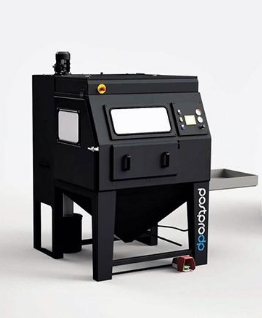
KH-TAT uses AMT PostPro3D chemical vapor smoothing equipment. Unlike physical removal processes like sanding or bead blasting, Vapor Smoothing does not remove material but restructures the surface through chemical action.
During processing, parts are placed in a sealed chamber along with vapor smoothing agent (FA 326). The system automatically matches optimized processing parameters based on different materials and geometric features. The chamber measures 600 x 400 x 400 mm, ensuring vapor fully contacts part surfaces. After vapor deposition, a controlled chemical melting layer forms, filling surface irregularities through liquefaction and material redistribution, improving gloss and smoothness.
After processing is complete, the chamber is heated to discharge residual solvent into a collection tank, leaving no residue on part surfaces. Smoothed parts can be delivered directly or undergo subsequent processing like dyeing.
What 3D Printed Materials Can Be Vapor Smoothed?
Compatible Materials for Chemical Vapor Smoothing through Xometry
| Material Name | Process | Quoting Process |
|---|---|---|
|
Nylon 12 |
SLS, HP MJF |
Instant Quote |
|
Nylon 12, Glass Bead |
SLS, HP MJF |
Instant Quote |
|
Nylon 11 |
HP MJF |
Instant Quote |
|
Thermoplastic Urethane, TPU 88A |
HP MJF |
Instant Quote |
|
Polypropylene (PP) |
HP MJF |
Requires Review |
|
Nylon 11 EX |
SLS |
Requires Review |
|
Nylon 12, Carbon-Filled (CF) |
SLS |
Requires Review |
|
Nylon 12, Aluminum-Filled (AF) |
SLS |
Requires Review |
|
Nylon 12, Mineral-Filled (HST) |
SLS |
Requires Review |
The table above shows every Xometry material vapor smoothed, including those that may require a manual review. You can instantly quote select materials by choosing "Vapor Smoothing" under the "Finishes" drop-down menu.
Vapor Smoothing Cost and Delivery (Care Fees)
Through KH-TAT's instant quoting system, you can quickly obtain Vapor Smoothing pricing and lead times for Common Materials like HP MJF and SLS. This process uses batch processing mode, with per-unit costs decreasing as order volume increases, making it cost-effective. Standard lead times add 1-5 business days to the original printing time.
For specialty materials like SLS high-performance nylon blends, Nylon 11 EX, Nylon 12 AF, Nylon 12 HST, and Nylon 12 CF, Vapor Smoothing processing requires manual review. Please select "Other" when choosing Surface Finish Options and submit a quote request — our engineers will evaluate for you.
Vapor Smoothing Technology Advantages
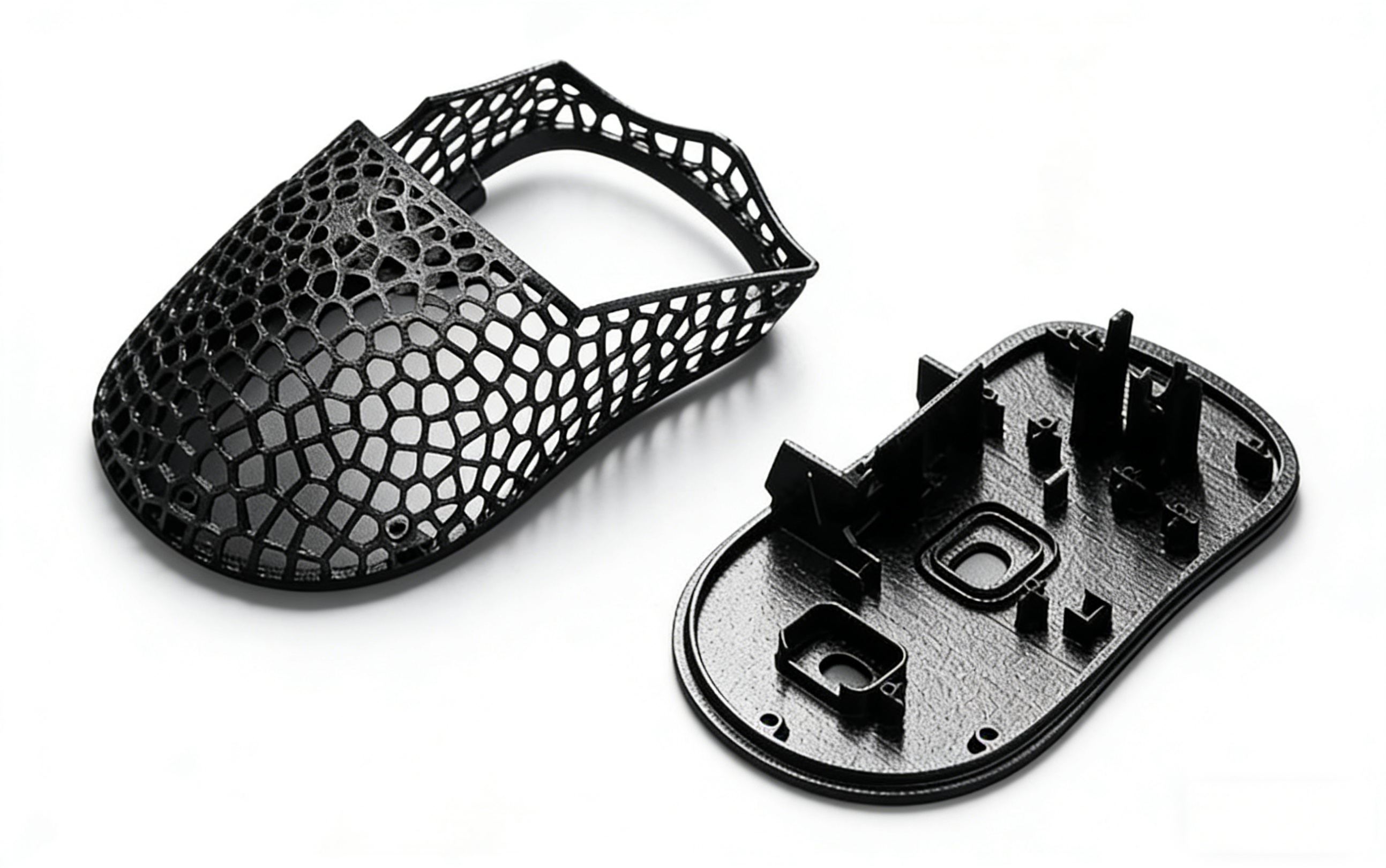
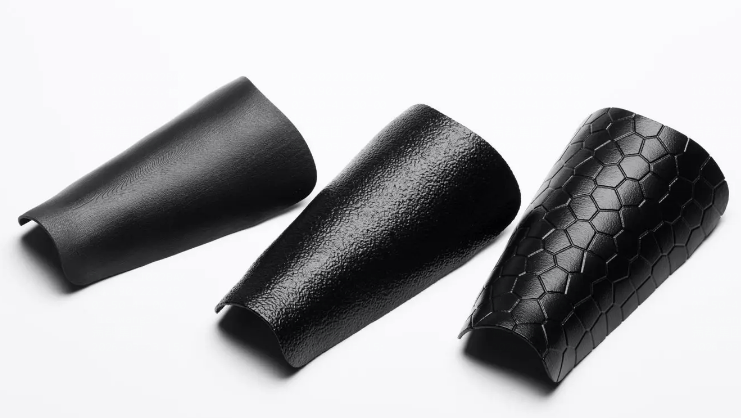
3D printed parts treated with chemical vapor smoothing show significantly improved appearance quality, with surface finish comparable to injection molding. Original SLS part surface roughness is typically above 250 μm Ra, which can be reduced to below 125 μm Ra after treatment, with some reaching 40 μm Ra — a surface improvement of up to 800% to 1000%. Note that this process forms a sealed smooth surface through material redistribution, but may still retain faint lines and structural traces.
Vapor Smoothing treatment is particularly suitable for industries with strict hygiene and appearance requirements like food processing, medical devices, and consumer goods. Studies show that treated Nylon 12 parts perform significantly better than untreated parts in terms of bacterial adhesion and growth, with multiple biocompatibility and safety test results meeting standards.
Additional advantages include:
- Uniformly sealed part surfaces with no additional coating
- Improved tensile strength, elongation at break, and flexural properties
- Surface is the substrate itself with no residual chemicals
- Significantly reduced hygroscopicity, improved dimensional stability
- Repeatable treatment results with closed-loop controllable process
- Non-visible areas can also be effectively treated
- Fine features and dimensional accuracy are preserved
- Improved appearance texture with more vibrant color expression
Chemical Vapor Smoothing for Health and Safety Products
Vapor Smoothing Passes Health and Safety Tests
| Test | Results | Details | Normative Reference |
|---|---|---|---|
|
Food Contact Test |
PASS |
SLS printed PA-12 parts chemically vapor smoothed with PostPro3D does not affect the consumer health nor influence the quality of food. |
According to regulation |
|
Skin Irritation Test |
PASS |
SLS printed PA-12 parts chemically |
ISO 10993-10 (2013); |
|
Cytotoxicity Test |
PASS |
MJF printed PA-12 parts chemically |
ISO 10993-5 (2009); |
|
Microbiological Test on MRSA Bacteria |
PASS |
MJF printed PA-12 parts chemically vapor smoothed with PostPro3D show a reduction of bacterial growth quantified as 99.88% against MRSA |
MOD ISO 22196: 2011 |
|
Microbiological Test on E. coli Bacteria |
PASS |
MJF printed PA- 12 parts chemically |
MOD ISO 22196: 2011 |
The chemical used for vapor polishing is safe and the closed-loop process of AMT’s PostPro3D system ensures that there is no extra residue left on the parts after smoothing. In fact, studies have shown that vapor-smoothed SLS and HP MJF parts conform to and pass multiple biocompatibility and safety tests concerning food contact, skin irritation, cytotoxicity, and bacterial growth. The results are summarized above and more details can be found in this AMT PostPro3D document on safety certifications.
Design Tips for Vapor Smoothing 3D Prints
- Add radii to sharp internal corners to prevent rounded voids
- Keep wall and feature thicknesses above 0.040" (1 mm) to avoid distortion or defects
- Keep wall thicknesses uniform, similar to injection molding
- Be mindful that orientation-specific build lines may still be present, but smoothed
- Racking marks may be visible depending on how the work was held during processing
- Flexible materials, like TPU 88A, may have more surface imperfections versus rigid materials
On-demand Webinar: Everything You Need to Know about Vapor Smoothing 3D Prints
Join industry experts for a webinar on making smooth, cost-effective, mechanically enhanced 3D prints with our vapor smoothing finish.Join industry experts for a webinar on making smooth, cost-effective, mechanically enhanced 3D prints with our vapor smoothing finish.
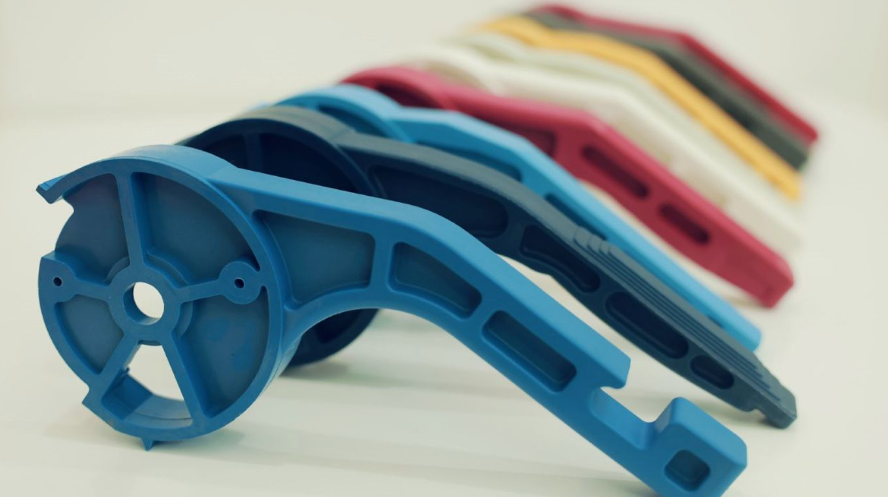
Vapor Smoothing 3D Printing Design Tips
·Adding fillet transitions at sharp internal corners effectively prevents voids or defects from forming after treatment.
·Wall and component thickness is recommended to remain above 0.040 inches (1mm) to avoid deformation or surface imperfections.
·Maintaining uniform wall thickness, similar to injection molding design principles, helps improve Vapor Smoothing result consistency.
·Note that texture lines related to build orientation may still be faintly visible after smoothing treatment.
·Depending on how parts are fixtured during processing, clamping areas may show slight abrasion marks.
·Compared to rigid materials, flexible materials (like TPU 88A) may have more surface micro-defects after Vapor Smoothing treatment.
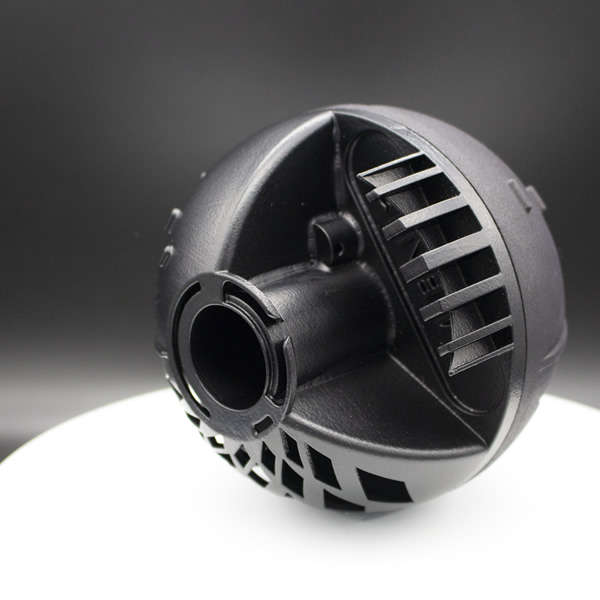
Vapor Smoothing Applications

Concept Models
Vapor smoothing gives models finer surface texture and more vibrant color representation, with the sealed surface structure enhancing overall visual effect, making concept models more valuable for display and artistic appeal.

Rapid Prototyping
Vapor smoothing does not significantly extend production cycles; surface treatment can be completed in a short time, helping development teams quickly obtain prototype parts with better surface texture and full functionality, accelerating product validation workflows.

Direct Digital Manufacturing
As a batch finishing process, Vapor Smoothing is suitable for surface treatment of small-to-medium scale customized parts. Improving appearance quality while maintaining dimensional accuracy, it is an ideal post-processing solution in the Direct Digital Manufacturing workflow.

Ready to get started on your vapor smoothing quote?
Upload your files and project notes for a manufacturing review.
Why Choose kh-tat for Vapor Smoothing?

Endless Options
Choose from millions of possible combinations of materials, finishes, tolerances, markings, and certifications for your order.

Easy to Use
Get your parts delivered right to your door without the hassle of sourcing, project management, logistics, or shipping.

Quality Assurance
We are ISO 9001:2015, ISO 13485, and AS9100D certified. Only the top shops that apply to become Suppliers make it through our qualification process.