Start a New HP Multi Jet Fusion Quote
STEP | STP | SLDPRT | STL | IPT | 3MF | 3DXML | PRT | SAT files and more!
Share drawings, sample photos, dimensions, or project notes and our team will follow up with a manufacturing review.
HP MJF 3D Printing Services
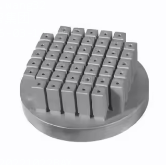
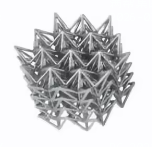
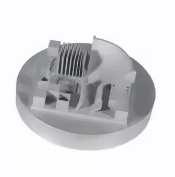
HP Multi Jet Fusion (MJF) is an advanced powder bed fusion technology that produces high-precision, high-durability plastic parts at relatively high speeds. Compared to other powder fusion processes likeSelective Laser Sintering (SLS) or Direct Metal Laser Sintering (DMLS), MJF has clear advantages in forming efficiency and detail performance. This technology balances economy, speed, and resolution, suitable for direct manufacturing of low-volume end-use parts,Rapid Prototyping and design validation, as well as bridge manufacturing before injection molding. MJF allows engineers to understand part performance in advance at lower cost, providing a reference for subsequent mass production.
Upload your 3D CAD files to quickly get quotes and estimated lead times for multiple materials. You can flexibly choose different process or material combinations, and the system will update pricing in real time to help you make optimal decisions.
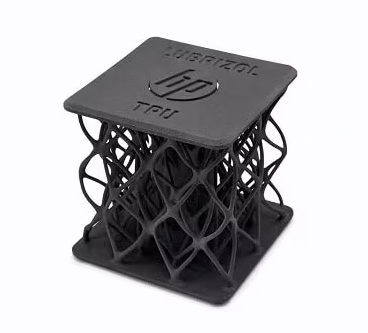
MJF Printing Materials
HP MJF Materials Available at Xometry:
| Material Name | Use Case Examples | Shore Hardness | Elongation at Break (XY, ZX %) | Impact Strength (XY, ZX kJ/m²) | Data Sheet |
|---|---|---|---|---|---|
|
Nylon 11 |
Snap fits, clips, living hinges |
80D |
55%, 40% |
6 kJ/m², 5 kJ/m² |
PA 11 Data Sheet |
|
Nylon 12 |
General-purpose functional parts |
80D |
20%, 15% |
3.6 kJ/m², 3.5 kJ/m² |
PA 12 Data Sheet |
|
Nylon 12, White |
General-purpose white parts; dyeable |
N/A |
17%, 9% |
4.5 kJ/m², 4.4 kJ/m² |
Nylon 12, White Data Sheet |
|
Nylon 12, Smooth |
Aesthetically demanding rigid parts |
N/A |
12%, 5% |
2.5 kJ/m², 2.0 kJ/m² |
Nylon 12, Smooth Data Sheet |
|
Nylon 12, Multi-Color (CB) |
Full-color realistic prototypes |
N/A |
20%, 14% |
3.1 kJ/m², 2.8 kJ/m² |
Nylon 12 (CB) Data Sheet |
|
Nylon 12, Glass-Filled |
Enclosures, housings, fixtures, and tooling |
82D |
10% |
3 kJ/m² |
PA 12 GB Data Sheet |
|
Polypropylene (PP) |
Chemical-resistant fluid containers |
N/A |
20% |
3.5 kJ/m², 3.0 kJ/m² |
PP Data Sheet |
|
TPU 88A |
Sports equipment, footwear, grippers |
88A |
280%, 150% |
No break |
TPU01 Data Sheet |
|
TPU 88A (M88A) |
Flexible, skin-safe wearables |
88A |
440%, 125% |
N/A |
TPU M88A Data Sheet |
Properties apply to US-based production. Not all options are available for Xometry's international economy option.
Resources from HP
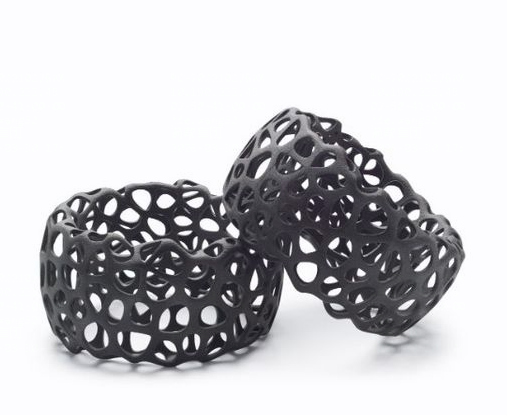
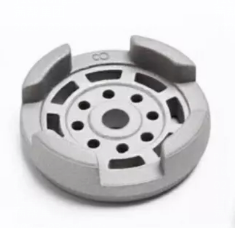
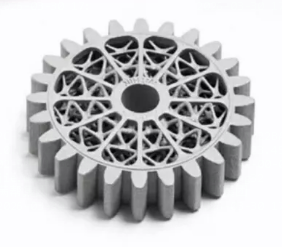
Applications for HP MJF

Concept Models
With MJF technology's high-speed response and detail capability, product developers can quickly obtain physical versions of design concepts for early validation and communication, with finished parts combining structural strength and fine detail.

Rapid Prototyping
The MJF process is suitable for manufacturing fully functional prototypes, which can include moving parts or integrated structures, meeting the practical needs of design iteration and functional testing.

Direct Digital Manufacturing
Multi Jet Fusion technology combines cost advantages with forming efficiency, making it an ideal choice for direct manufacturing of low-volume individual parts or customized products, capable of quickly responding to diverse production needs.
HP MJF Parts Vapor Smoothing Post-Processing
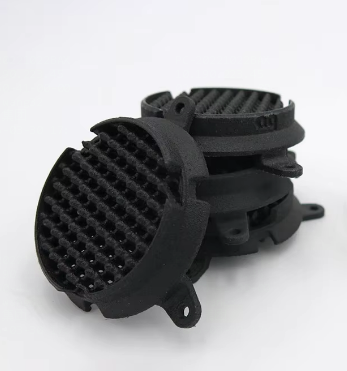
KH-TAT offers vapor smoothing surface treatment services that significantly improve the appearance and mechanical properties of 3D printed parts. This process uses AMT PostPro3D automated equipment for uniform surface treatment results. Combined with the cost advantages of HP MJF technology, vapor-smoothed parts can approach injection-molded part levels in both appearance and functional performance. After treatment, surfaces have a uniform, dense, semi-gloss texture, while also improving key performance metrics like ultimate tensile strength, flexural yield strength, and elongation at break. This post-processing is also suitable forSelective Laser Sintering (SLS) and Fused Deposition Modeling (FDM) process-made rigid plastic and elastomer parts, meeting application scenarios with higher surface quality and mechanical property requirements.
HP MJF Prototyping Tolerances
In the table below, you will find our standard MJF tolerances for prototype orders. These include one-off or first-time prints, non-production orders, and auto-quoted orders that have not received a manual engineering review.
MJF Prototype Tolerances Based on HP 5200-Series, Balanced Mode
| Material Type | Under 30 mm (1.2") | 30 - 50 mm (1.2" - 2.0") | 50 - 80 mm (2.0" - 3.2") | > 80 mm (3.2") |
|---|---|---|---|---|
|
Rigid Materials (Nylon, PP) |
± 0.70 mm (.028") |
± 0.85 mm (.033") |
± 1.40 mm (.055") |
± 1.75 % |
|
Rubber-Like (TPU) |
± 1.05 mm (.041") |
± 1.35 mm (.053") |
± 1.80 mm (.071") |
± 2.25 % |
Results are typical for MJF orders without additional engineering review.
HP MJF Engineer Reviewed & Production Tolerances
Tolerances tighter than prototype tolerancing can be guaranteed after additional engineering review. This includes higher volume production part orders and orders manually optimized by our engineering teams, often after an initial prototyping run.
Engineered & Production MJF Tolerances Based on HP 5200-Series, Balanced Mode
| Material Type | Under 30 mm (1.2") | 30 - 50 mm (1.2" - 2.0") | 50 - 80 mm (2.0" - 3.2") | > 80 mm (3.2") |
|---|---|---|---|---|
|
Rigid Materials (Nylon, PP) |
XY = ± 0.25 mm (.010") |
XY = ± 0.30 mm (.012") |
XY = ± 0.39 mm (.015") |
XY = ± 0.5 % |
|
Rubber-Like (TPU) |
XY = ± 0.60 mm (.024") |
XY = ± 0.60 mm (.024") |
XY = ± 0.60 mm (.024") |
XY = ± 0.75 % |
Results are typical for orders which have gone through manual engineering review and initial prototyping runs.
HP MJF Feature and Build Size
| Description | Tolerance Notes |
|---|---|
|
Manufacturing Standards |
|
|
Build Area |
Build area up to 15 x 11 x 15" (14 x 11 x 13" is the recommended usable area). |
|
Minimum Feature Size |
0.020" (0.040" recommended) or greater. |
|
Layer Thickness |
80 Microns (0.0031") |
|
HP Dimensional Accuracy Report |
Stresses during the build and other geometry considerations may cause deviation in tolerances and flatness. Part designs with thicker geometries, flat or broad parts, and parts with uneven wall thicknesses may be prone to significant deviations or warp.
Need to Compare Printing Processes?
Our quick reference guides let you quickly compare different 3D printing processes!
HP Multi Jet Fusion (MJF) Technology Overview
HP MJF Technology Basics
HP Multi Jet Fusionis a high-performance 3D printing technology that produces high-precision, high-durability plastic parts, suitable for direct manufacturing of low-volume end products andRapid Prototyping. This technology borrows from mature 2D inkjet printing principles and has significant advantages in inter-layer forming speed compared to other powder bed fusion processes.
How Multi Jet Fusion Technology Works
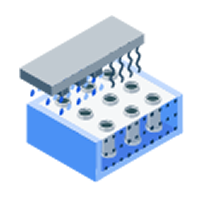
Like all powder bed-based 3D printing processes, Multi Jet Fusion builds layer by layer, using fusing agents and heat to solidify each layer of powder before spreading a new layer.
In traditional powder fusion processes like Selective Laser Sintering (SLS), Stereolithography (SLA), or Direct Metal Laser Sintering (DMLS), a single laser typically scans point by point, making the imaging process for each part relatively time-consuming. while HP Multi Jet Fusion's How It Works is more like inkjet printing, where the print head can deposit fusing agent across the entire build area in one pass, enabling simultaneous forming of multiple parts and greatly improving production efficiency.
Core Advantages of HP Multi Jet Fusion Technology
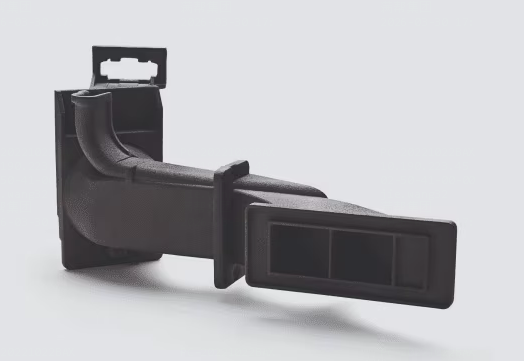
HP Jet Fusion technology demonstrates unique advantages in multiple aspects. Its standard forming parameters are optimized for high density, giving formed parts good sealing performance.
If you're familiar with the SLS process and want to improve low-volume production efficiency, Multi Jet Fusion is worth considering. This technology can print multiple parts simultaneously across the entire build volume, with forming speeds several times faster than SLS and other processes. Additionally, compared to SLS, MJF achieves more balanced mechanical performance across X, Y, and Z directions.
For products planned for injection molding, making 3D printed test parts before investing in metal molds is an effective way to reduce risk. While the SLA process can achieve extremely high detail precision, its photopolymer resin lags behind traditional thermoplastics in toughness and may experience performance degradation under UV and humid environments.
In contrast, Multi Jet Fusion technology maintains high precision while preserving the structural durability of traditional thermoplastics, especially when using glass fiber reinforced nylon materials. This makes MJF an ideal choice for validating part assembly and functionality before injection molding.
Why Choose kh-tat for HP MJF?

Endless Options
Choose from millions of combinations of materials, surface finishes, tolerance levels, marking methods, and certifications to flexibly match your order requirements for truly customized manufacturing.

Easy to Use
No need to handle procurement, project management, logistics, or shipping yourself — we handle everything, parts arrive directly at your door, letting you focus on your core business.

High Quality
KH-TAT is Certified to ISO 9001:2015, ISO 13485, IATF 16949:2016, and AS9100D, ensuring every part meets strict industry standards and quality requirements.