Start a New Metal Stamping Quote
STEP | STP | SLDPRT | STL | IPT | 3MF | 3DXML | PRT | SAT files and more!
Share drawings, sample photos, dimensions, or project notes and our team will follow up with a manufacturing review.
Stamping Process Overview
Metal stamping is a manufacturing process that stamps coils or sheets into specific shapes.Stamping covers a variety of forming technologies, including blanking, punching, embossing, and progressive die stamping.Depending on the complexity of the part, a single technology or a combination of technologies can be used.During the stamping process, the coil or sheet blank is fed into the stamping press, and the die is used to form the required features and surfaces on the metal.
Metal stamping is an ideal method for mass production of various complex parts, and is widely used in automotive door panels, gears, small electronic components inside mobile phones and computers, and other fields.This process serves multiple industries such as automotive, industrial, lighting, and medical.
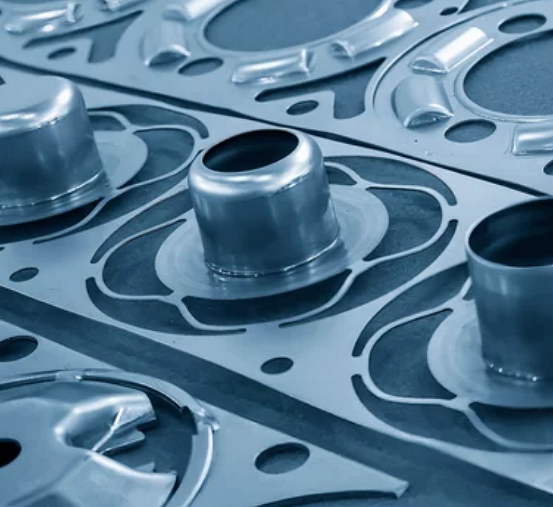
KH-TAT Stamping Capabilities
KH-TAT manufactures custom metal stampings in a variety of materials, including copper, brass, stainless steel, and alloy steel. We support production volumes exceeding one million pieces, maintaining tight tolerance control and offering highly competitive delivery times. Standard sheet metal stamping services are available for small, medium, and large parts. KH-TAT's supplier network is equipped with presses up to 10 feet in length and 20 feet in width, capable of stamping metals from 0.025 inches to 0.188 inches in thickness. Depending on the forming process and material, thicknesses up to 0.250 inches and beyond can be achieved.
Our project managers and expert team personally review and manually quote for each metal stamping project to ensure your unique needs are met, while providing a fast and convenient manufacturing experience.
Advantages and Disadvantages of Metal Stamping
Advantages:
- Capable of forming complex shapes and contours
- Supports mass production (thousands to millions of pieces/year)
- Can process thick metal sheets using processes such as fine stamping
- Low unit cost
Disadvantages:
- Long lead time for the first part (time required for mold making)
- Molds, inspection fixtures, and non-renewable engineering are the main upfront costs
- Requires multiple iterations of mold design to ensure reliable production
KH-TAT offers the following material options for custom metal stamping parts:
- Steel: CRS steels such as 1008, 1010, and 1018 are suitable for cold forming processes and are the preferred general-purpose material.
- Stainless Steel: Including 301, 304, and 316/316L. 301 has excellent tensile strength; 304 performs better at high temperatures and has good corrosion resistance; 316/316L has the best corrosion resistance but is more expensive.
- Copper: C110 copper has strong electrical conductivity and is easy to form.
- Brass: 230 (85/15) and 260 (70/30) brass have good formability and corrosion resistance, and are respectively called red copper and brass.
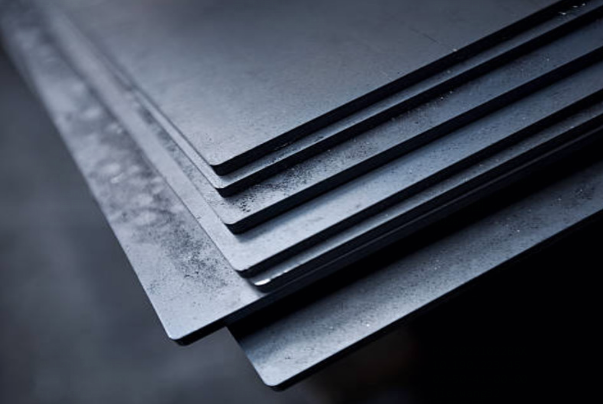
For other sheet metal materials, please contact our expert team. Stamped parts can be post-treated with sandblasting, powder coating, chemical plating, anodizing, and gold, silver, and electroless nickel plating. For more surface treatment options, please visit the Sheet Metal Processing homepage.
KH-TAT offers a variety of stamping processes to ensure your products are manufactured in the most efficient way. Our expert team will match the appropriate process based on your uploaded 3D model and technical drawings.
- Progressive Die Stamping: Uses multiple dies and steps to create deeper parts, forming various geometries. Suitable for high-volume production of large parts, such as automotive components. Transfer die stamping is similar, but the workpiece is removed from the metal strip and moves along a conveyor belt.
- Deep Drawing Stamping: Creates stamped parts with deep cavities, such as closed rectangles. Extreme deformation of the metal makes its structure more crystalline, forming rigid parts. Standard draw stamping is also commonly used.
- Four-Slide Stamping: Forms parts from four axes. Suitable for small, precision parts, such as mobile phone battery connectors. Offers high design flexibility and low cost. High-speed forming is widely used in aerospace, medical, automotive, and electronics industries.
- Hydraulic Forming: The sheet metal is placed in a bottom mold, and an upper oil bladder fills with oil to generate high pressure, pressing the metal into shape. Multiple parts can be formed simultaneously, quickly and precisely, but requires trimming dies for cutting.
- Blanking: The initial step of cutting the sheet metal into the desired shape before forming. Fine blanking produces smooth edges and a flat surface.
- Punching: Manufacturing small, round workpieces by applying significant force to harden the metal and remove burrs and rough edges.
- Stamping: The opposite of blanking: removing material from the workpiece.
- Embossing: Creating three-dimensional patterns on metal, which can be raised or recessed.
- Bending: Forming U-shaped, V-shaped, or L-shaped contours along a single axis. Flanging refers to bending lugs or parts of a workpiece.

Ready to start your metal stamping project?
Metal Stamping Production Batch Sizes
KH-TAT offers a variety of production batch size options:
- Small Batch Production: Quantities not exceeding 100,000 pieces, with a minimum order quantity of 1,000 pieces to ensure cost-effectiveness. Suitable for product development transitions and market testing, with lower unit prices.
- Medium Batch Production: 100,000 to 1,000,000 pieces, balancing the flexibility of small batches with lower unit prices, reducing upfront mold costs.
- Large Batch Production: Order volumes exceeding 1,000,000 pieces, highly scalable, with unit costs significantly reduced due to mold cost amortization.
- Small Batch Stamping: Lower output, limited mold modifications, low overall cost, suitable for parts with low flexibility requirements or new market expansion.
- Large Batch Stamping: Complex production process, variable factors, optimized with production line adjustments, high flexibility. Higher costs but ensures consistent quality, lower unit costs, and a capacity of hundreds of pieces per minute.
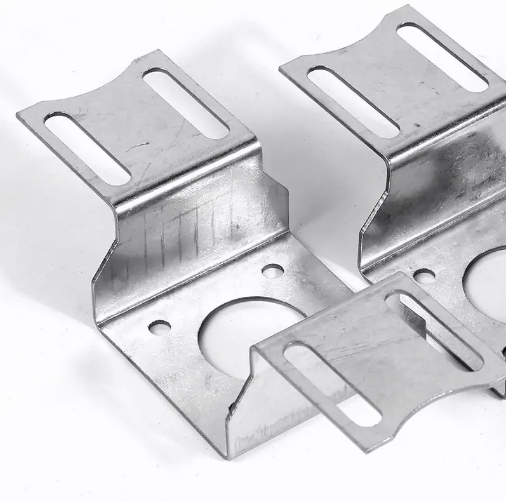
Strict Tolerance Control
Whether in the aerospace, automotive, telecommunications, or electronics industries, Precision Metal Stamping Services meets part shape requirements. Suppliers continuously improve die design and optimize output to meet tolerance demands. The tighter the tolerance, the higher the difficulty and cost.
High-precision metal stampings are used in brackets, clips, inserts, connectors, accessories, and parts for consumer electronics, power grids, aircraft, and automobiles. They are also used in implants, surgical instruments, temperature probes, medical device housings, and pump assemblies.
Regular inspections are typically performed after each stamping process to ensure compliance with specifications. A comprehensive production maintenance program detects stamping die wear, and measurement using inspection fixtures is a standard procedure on long-running production lines.
Metal Stamping Industry Applications KH-TATMetal Stamping Services covers multiple industries, including but not limited to:
- Automotive Metal Stamping: Manufacturing hundreds of parts, from chassis and door panels to seatbelt buckles.
- Aerospace Metal Stamping: Critical processes used in the manufacture of various parts and components.
- Medical Metal Stamping: Precision stamping meets the quality and tolerance requirements of the medical field, suitable for parts and components. Learn more about automotive, aerospace, and medical metal stamping.
Built-In Tool Management
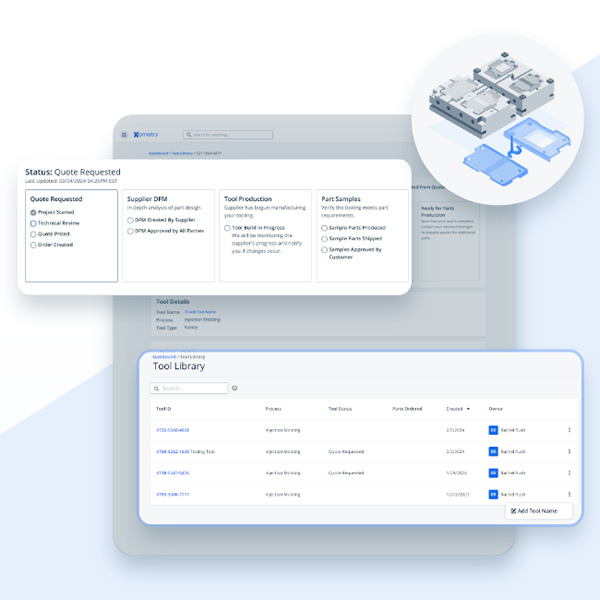
Built-in Tool Management: The KH-TAT platform incorporates multiple functions to simplify mold project management and enhance customer production transparency. Through the mold library, you can centrally view all mold quotes and orders in one space. The mold details page provides information on the current status, milestones, specific details, and related activities. Regardless of the project's stage, you can easily contact the KH-TAT team members responsible for your project.
The tool library and tool details page offer several advantages:
- More efficient management of tool quotes and orders
- Clear tool organization and categorization
- Detailed status updates and tool information
- Easy contact with the expert team
- Transparent and controllable project workflow