Start a New Prototype Molding Quote
STEP | STP | SLDPRT | STL | IPT | 3MF | 3DXML | PRT | SAT files and more!
Share drawings, sample photos, dimensions, or project notes and our team will follow up with a manufacturing review.
KH-TAT Prototype Tooling Services
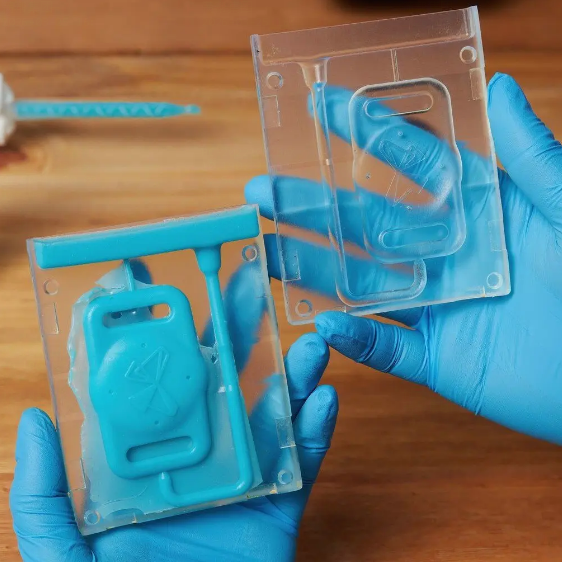
Our prototype tooling services help bridge the gap between initial prototypes and final production parts. KH-TAT's injection molding services cover multiple technologies, materials, and surface finish options, ensuring you receive the same high-quality parts as full production. Prototype tooling pricing includes tariffs to simplify procurement.
Project managers and engineers work closely together to understand your project's unique needs, helping you make informed decisions for the lowest cost and shortest lead times. Simply upload your 3D CAD file to the KH-TAT instant quote engine — most projects qualify for auto-quoting, allowing you to budget and plan without waiting. When ready, submit a review request and our team will work closely with you at every step
Why Start with Injection Molding Prototypes?
Why Start with Injection Molding Prototypes?
Deciding whether to begin with prototype tooling or go straight to production tooling can be challenging. KH-TAT understands every project is unique, and our experts will work with you to make the right decision. Prototype tooling is best for:
- Low-cost tooling: Affordable materials and simple mold design, optimized for low-volume production.
- Fast delivery: Receive parts in as fast as 5 business days!
- Limited runs: Ideal for projects requiring small quantities of high-quality parts.
- Break-even cost: Per-unit cost is comparable to or lower than other rapid prototyping processes like 3D printing.
- Product validation: Gain confidence in your design before investing in expensive production-grade tooling.
Prototype Injection Molding Considerations
When considering Prototype Tooling, the following key aspects require attention. The table below helps determine if a project is suitable for Prototype Tooling, or if bridge tooling or Production Tooling services are needed.
| Topic | Considerations |
|---|---|
| Tool Life | Prototype Tooling is made from softer materials and wears faster. |
| Mold Texture & Polishing | Prototype Tooling surface finish wears quickly with low cost-effectiveness. Grade B to D SPI Surface Finish is recommended. |
| Gate Type | Gate design may be limited to edge gating, direct gating and fan gating. Bridge or Production Tooling supports more advanced gating methods. |
| Mold Grade |
Grade 105 and 104 molds are most commonly used for prototyping. Higher grade molds are suitable for high-volume production services. |
| Material Selection | All injection molding materials can be used with Prototype Tooling. Abrasive materials (such as glass fiber reinforced materials) may shorten tool life. |
| Mold Origin | KH-TAT offers domestic and international mold manufacturing options. Regardless of where the mold is produced, ownership belongs to the customer |

Ready to start a molding project?
Why Choose Kh-tat for Prototype Tooling?

Unlimited Options
Choose from millions of combinations of materials, surface finishes, tolerance levels, marking methods, and certifications to flexibly match your order requirements for truly customized manufacturing.

Easy to Use
No need to handle procurement, project management, logistics, or shipping yourself — we handle everything, parts arrive directly at your door, letting you focus on your core business.

Quality Assurance
KH-TAT is Certified to ISO 9001:2015, ISO 13485, IATF 16949:2016, and AS9100D, ensuring every part meets strict industry standards and quality requirements.
Instant Pricing & Lead Time Estimation
Simplify your budgeting and procurement with the KH-TAT instant quote engine. Upload a 3D CAD file to receive an auto-quote estimate including price and lead time — plan your project without waiting for a manual quote. This powerful tool provides the information upfront, saving you valuable time. When you're ready to proceed, our expert team will conduct a full review, confirm and finalize the quote, and provide consulting support to ensure smooth project execution.