Start a New Carbon DLS Quote
STEP | STP | SLDPRT | STL | IPT | 3MF | 3DXML | PRT | SAT files and more!
Share drawings, sample photos, dimensions, or project notes and our team will follow up with a manufacturing review.
Overview: What is Carbon DLS™ Technology?
Carbon DLS™ Technology Basics
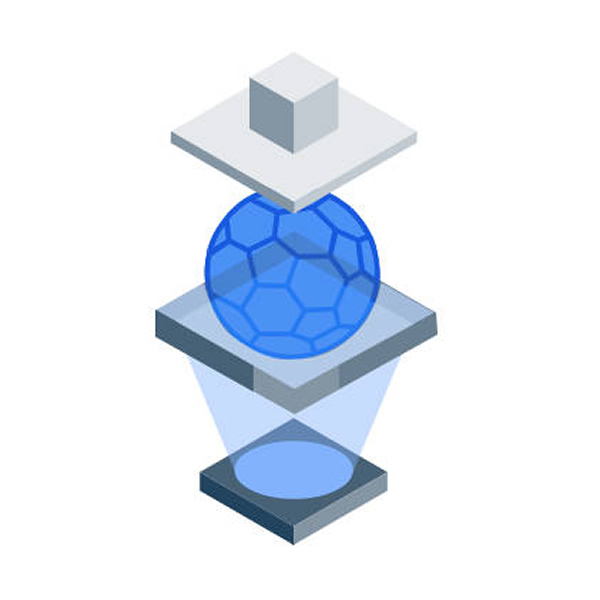
Carbon DLS (Digital Light Synthesis) is an advanced 3D printing technology that produces parts with end-product-grade durability, high resolution, and excellent surface finish through the synergy of digital light projection, oxygen-permeable optics, and programmable liquid resins.Early versions were also called Continuous Liquid Interface Production (CLIP), with its continuous forming method differing from traditional layer-by-layer processes, giving parts isotropic mechanical properties.
DLS™ Materials
DLS™ Materials Available at Xometry:
| Material Name | Description | Shore Hardness | Elongation at Break (%) | Impact Strength, Izod Notched (J/m) | Data Sheets |
|---|---|---|---|---|---|
|
RPU 70 |
Rigid polyurethane |
80D |
100% |
15 J/m |
RPU 70 Data Sheet |
|
RPU 130 |
Impact-resistant polyurethane |
77D |
100% |
75 J/m |
RPU 130 Data Sheet |
|
UMA 90 |
General-purpose, customizable color |
86D |
30% |
30 J/m |
UMA 90 Data Sheet |
|
EPX 82 |
Heat-resistant epoxy |
89D |
5% |
45 J/m |
EPX 82 Data Sheet |
|
MPU 100 |
Medical-grade, biocompatible |
81D |
25% |
30 J/m |
MPU 100 Data Sheet |
|
FPU 50* |
Semi-rigid polyurethane |
71D |
200% |
30 J/m |
FPU 50 Data Sheet |
|
EPU 40 |
Highly-elastic polyurethane |
72A |
400% |
N/A |
EPU 40 Data Sheet |
|
EPU 41 |
Production-grade elastomer |
71A |
300% |
N/A |
EPU 41 Data Sheet |
|
EPU 46 |
Customizable-color elastomer |
80A |
300%-330% |
N/A |
EPU 46 Data Sheet |
|
SIL 30 |
Extra soft silicone-urethane |
35A |
350% |
N/A |
|
|
LOCTITE 3D IND405 Clear |
Rigid, high-strength clear resin |
79D |
126% |
72 J/m |
LOCTITE 3D IND405 Data Sheet |
* Available by special request.
More carbon 3D materials are available upon request by selecting Material: Other and writing in the specific resin.
Available Finishes for Carbon DLS™ Parts

Ready to get your 3D printing quote?
Free shipping available for domestic 3D printing orders
Typical Applications of Carbon DLS™ Technology
Rapid Prototyping
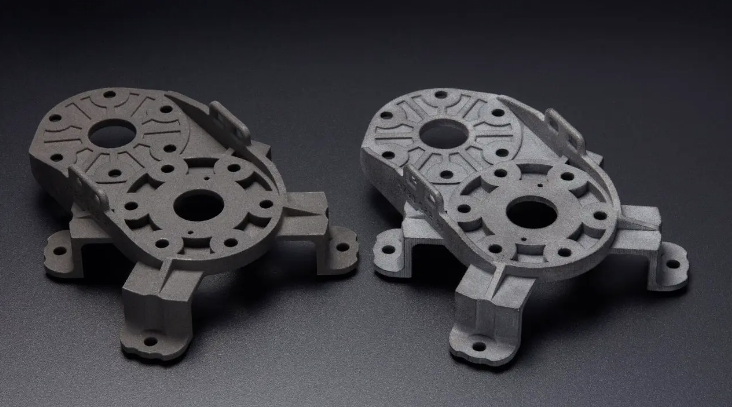
Can produce robust, flexible, and colorful functional prototypes, helping development teams validate design and performance in early product stages.

End-Use Functional Components
DLS materials feature high density and excellent mechanical properties, designed for real-world use environments, suitable for manufacturing end-use parts that can be directly applied.

Direct Digital Manufacturing
duction of small-to-medium sized parts, supporting on-demand manufacturing and fast delivery, providing efficient solutions for low-volume customized production.
Carbon DLS™ 3D Printing Technology Advantages
Carbon DLS™ General Tolerances
| Description | Tolerance Notes |
|---|---|
|
General Tolerances |
+/- 0.003” for the first inch is typical, plus +/- 0.010” for every inch thereafter* |
|
Build Size |
7.4” x 4.6” x 12.8” is typical. |
|
Ideal Part Size |
Part's below 2" x 1" x 3" or smaller tend to have the best production economy of scale. |
|
Minimum Wall Thickness |
0.030" or larger is suggested for any walls, text, or lattice features. |
|
DLP Pixel Resolution |
Approximately 0.005" square |
* General tolerances for Digital Light Synthesis™ are represented. Build stresses, geometry, support strategy, and other factors may cause deviation in tolerances and flatness. Improved tolerances may be possible after a manual quote review following successful completion of a test build, and are approved on a case-by-case basis. General tolerances apply before secondary finishing or post-processing unless otherwise specified.
Please check out Xometry's Manufacturing Standards for more information.
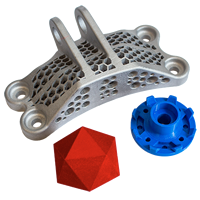
Need to Compare Printing Processes?
Our quick reference guides let you quickly compare different 3D printing processes!
Batch Production Scalability
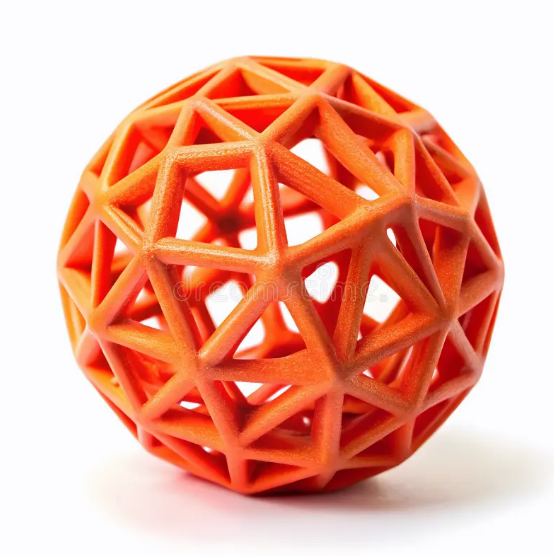
Compared to photopolymer-based 3D printing technologies like Stereolithography (SLA) or PolyJet, Carbon DLS's core difference lies in its unique secondary thermal curing process.Post-build thermal treatment activates dormant epoxy or polyurethane components in the resin, giving parts mechanical strength far exceeding single UV curing, meeting performance requirements in real-world environments.
Additionally, DLS uses a continuous forming method without pausing between layers, avoiding the anisotropy common in traditional layer-by-layer processes.Finished parts have consistent mechanical properties in all directions, i.e., isotropic.This contrasts significantly with technologies like Fused Deposition Modeling (FDM), where Z-axis strength is typically lower than the XY plane, limiting applications in complex load-bearing structures.
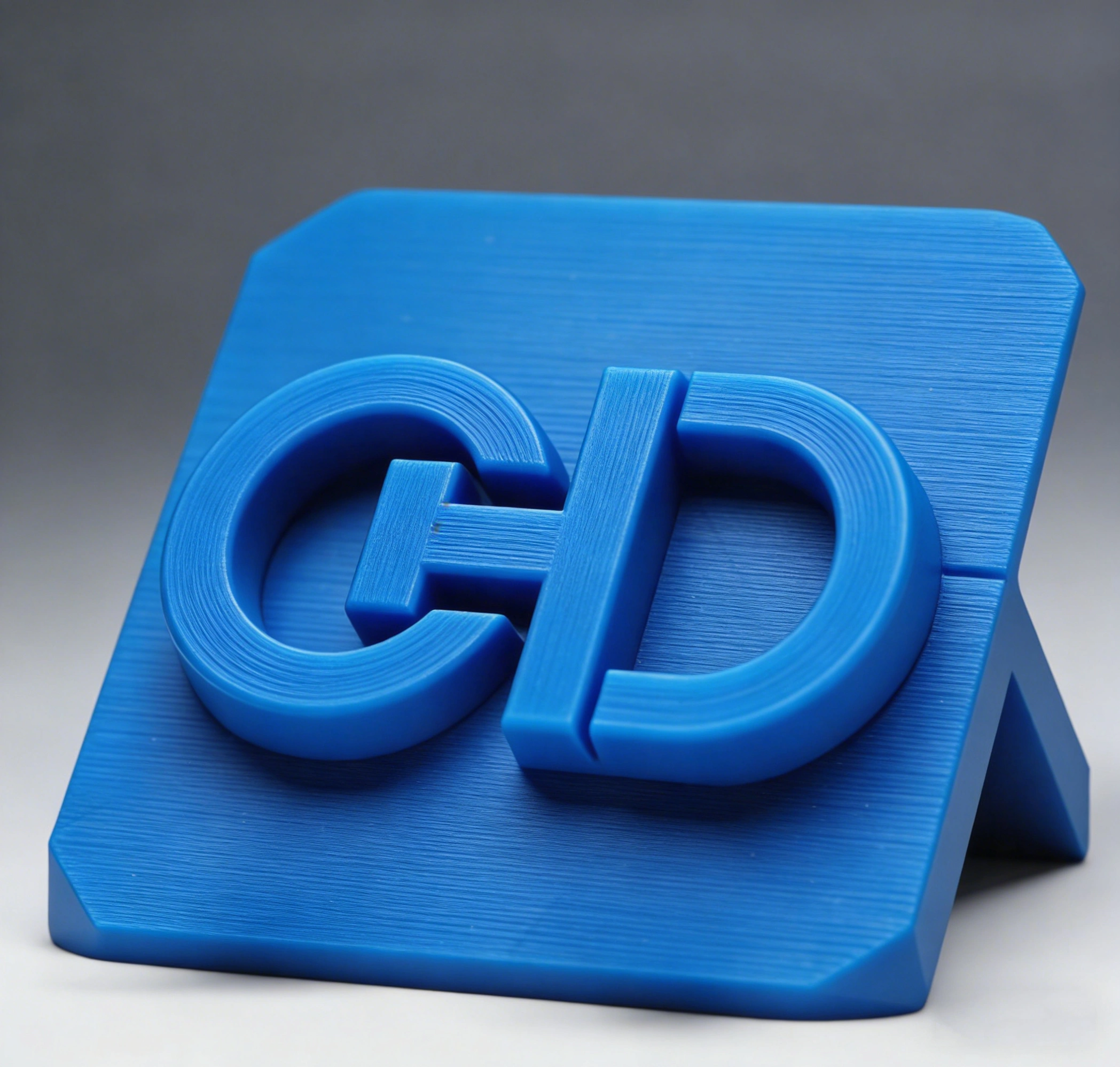
Why Choose Us for 3D Printing?

Unlimited Options
Choose from millions of combinations of materials, surface finishes, tolerance levels, marking methods, and certifications to flexibly match your order requirements for truly customized manufacturing.

Easy to Use
No need to handle procurement, project management, logistics, or shipping yourself — we handle everything, parts arrive directly at your door, letting you focus on your core business.

Quality Assurance
KH-TAT is Certified to ISO 9001:2015, ISO 13485, IATF 16949:2016, and AS9100D, ensuring every part meets strict industry standards and quality requirements.