KH-TAT Custom Overmolding Solutions
As a specialized supplier of custom overmolded components, KH-TAT provides end-to-end injection molding services from prototype trials to volume production, ensuring product quality and delivery reliability.
We develop customized technical plans for every injection project, precisely matching requirements regardless of the client team's experience level. Technical capabilities cover complex structural parts, including special designs involving side actions, sliding cores, or hand-loaded inserts.
We are committed to building long-term manufacturing partnerships. Each client receives dedicated support from a project manager and engineering experts throughout the entire process, from design validation to full production. Our services cover all major industries, with particularly rich experience in specialized areas like medical injection molding, and we offer both US-based and China-based injection manufacturing resources.
Overmolding is a flexible manufacturing process that uses injection equipment to bond one material (typically a thermoplastic elastomer like TPE/TPV) to another substrate material (often a rigid plastic). This process combines aesthetic design, tactile optimization, and functional requirements, delivering multiple benefits including improved grip comfort, vibration absorption, enhanced impact resistance, upgraded surface protection, and improved chemical isolation.
The core value of this process lies in achieving seamless integration of multiple materials into a single durable component through mechanical interlocking or chemical bonding. It is especially suitable for projects pursuing personalized design, structural flexibility, or composite functionality, while effectively reducing manufacturing costs by consolidating multiple separate parts into one integrated assembly.
Overmolding Materials
While TPEs like TPU and TPV are widely favored for overmolding due to their flexibility, durability, and strong bonding capabilities, other materials such as Nylon, Polypropylene (PP), and Polycarbonate (PC) are also popular choices for specific applications. The table below compares these commonly used overmolding materials, highlighting their unique properties and advantages.
| Overmolding Material | Common Applications | Properties | Compared to TPEs | Suitable Overmolding Techniques |
|---|---|---|---|---|
|
Thermoplastic Vulcanizate (TPV) |
• Seals |
• Good chemical resistance |
-- |
• Elastomer over rigid plastic |
|
Thermoplastic Polyurethane (TPU) |
• Handles |
• High elasticity |
-- |
• Elastomer over rigid plastic |
|
Liquid Silicone Rubber (LSR) |
• Medical devices |
• Heat-resistant |
More heat-resistant and biocompatible than TPEs, but less flexible and not as easy to bond with rigid plastics |
• Elastomer over rigid plastic |
|
Polycarbonate (PC) |
• Electronics housings |
• High impact strength |
Better impact strength and transparency; lacks softness and grip-enhancing properties |
• Rigid plastic over metal |
|
Nylon (Polyamide, PA) |
• Overmolded metal parts |
• High strength • Rigidity • Resistance to wear • Suitable for bonding with softer materials |
Higher strength and wear resistance, but lacks flexibility and softness |
• Rigid plastic over metal • Rigid plastic over rigid plastic |
|
Polypropylene (PP) |
• Packaging • Consumer products |
• Low cost |
More affordable, but generally less durable, flexible, and bondable. |
• Rigid plastic over metal |
Kh-tat Overmolding Finishes
Overmolding Design Guidelines
- Wall thickness in the range of 0.060" to 0.120" (1.5mm to 3mm) generally achieves the best interlayer bonding.
- Maintain corner radii of no less than 0.020" or 0.5mm to help distribute localized stress concentrations.
- Thick TPE overmold areas are recommended to have hollowed structures to reduce sink mark risk, lower part weight, and shorten cycle time.
- Avoid excessively deep or poorly vented closed grooves and ribs.
- Use gradual transitions between different wall thicknesses to prevent flow defects like backflow and trapped air.
- TPE/TPV overmold thickness should not exceed the substrate material, especially for flat or slender parts, to avoid warpage.
- Overmolding relies on mechanical or chemical bonding with the substrate; ensure material compatibility during selection.

Other Types of Injection Molding at Kh-tat
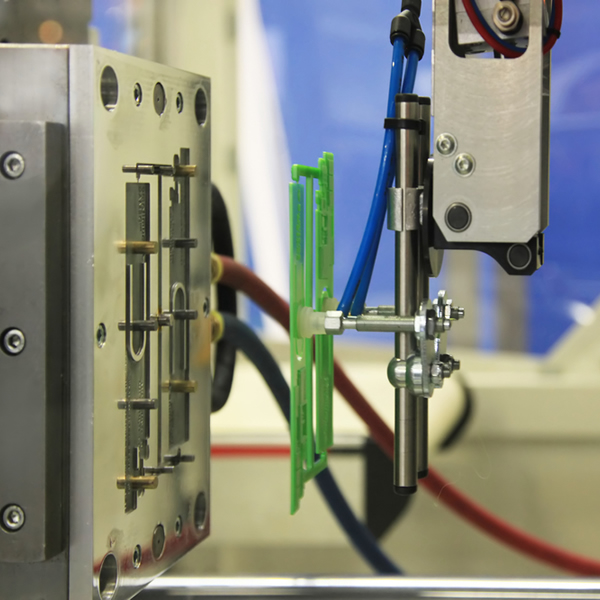
Custom Plastic Injection Molding
Auto-quote estimates for prototype and volume production with wide material and finish selections. Every order includes engineering review and full project management.
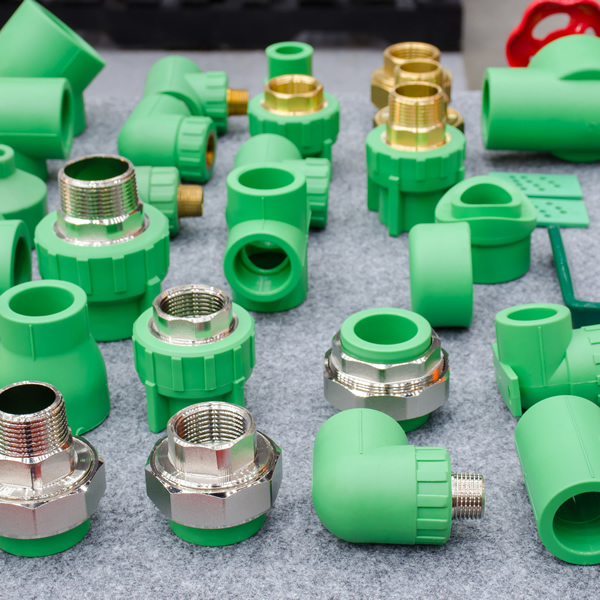
Insert Molding Services
High-quality prototype and production parts with robust structure and full functionality via insert embedding technology.
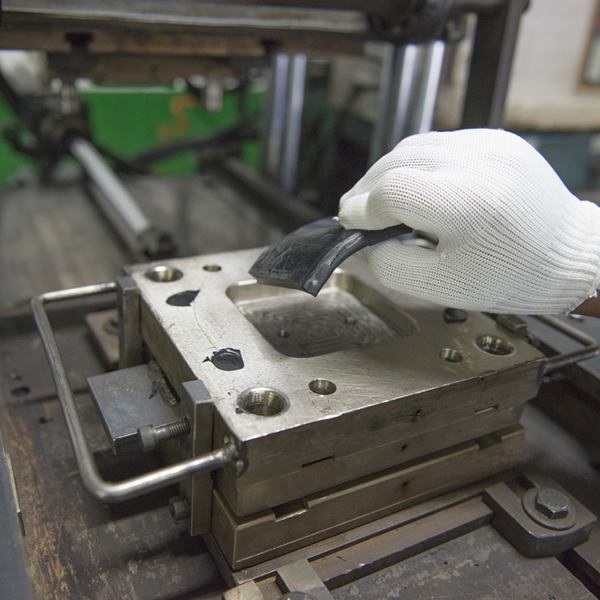
Compression Molding Services
For high-strength, high-durability component manufacturing under harsh operating conditions.
Why Choose Kh-tat for Overmolding?

Endless Options
Choose from millions of possible combinations of materials, finishes, tolerances, markings, and certifications for your order.

Easy to Use
Get your parts delivered right to your door without the hassle of sourcing, project management, logistics, or shipping.

Vetted Network
We are ISO 9001:2015, AS9100D, IATF 16949, and ISO 13485 certified. Only the top molding shops that apply to become suppliers pass our qualification process.