
Start a New Urethane and Silicone Casting Quote
STEP | STP | SLDPRT | STL | IPT | 3MF | 3DXML | PRT | SAT files and more!
Share drawings, sample photos, dimensions, or project notes and our team will follow up with a manufacturing review.
Urethane Casting Process Overview
Urethane casting produces production-grade rigid plastic, rubber and silicone parts that meet end-use requirements. As a specialized urethane casting service provider, KH-TAT offers domestic US and international manufacturing options, balancing lead time and cost control, with duties included in prototype pricing. This process uses soft tooling technology, combining 3D printed master patterns with RTV silicone molds to deliver professional-grade results for low-volume production.
When order quantities range from 1 to 100 pieces with high requirements for color accuracy, surface quality and structural toughness, cast urethane is the ideal choice. This process serves as an alternative to insert molding or overmolding for low-volume production, while offering extensive material options. Urethane and silicone casting bridge the gap between 3D printed rapid prototypes and injection molded production parts, balancing quality, cost and lead time. Finished parts can achieve transparent effects, color matching, spray painting (including EMI shielding), insert encapsulation and various custom surface finishes.
Urethane Casting Material System
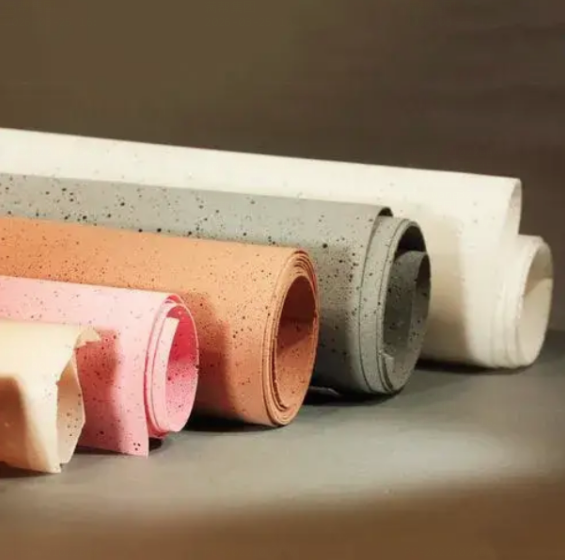
Urethane is a widely used thermoset material known for high strength, excellent durability, strong abrasion resistance and tunable properties. Different urethane formulations can mimic the mechanical properties of various common thermoplastics. For example, Rigid Urethane cast parts perform similarly to polycarbonate, while Flexible Urethane resembles polypropylene. We categorize urethane materials into functional classes for quick selection, ensuring optimal performance match for your project.
Cast Urethane Materials
| Material Category | Property Description | Typical Applications |
| Rigid Urethane | High rigidity, impact-resistant, dimensionally stable | Housings, structural parts, industrial components |
| Semi-Rigid Urethane | Balanced rigidity and toughness | Handles, shock absorbers, protective covers |
| Flexible Urethane | Excellent elasticity, high rebound rate | Seals, cushions, hoses |
| Clear Urethane | High optical clarity, yellowing-resistant | Lenses, clear housings, display pieces |
Note: Equivalent materials may be used based on availability and the location of work performed.
Cast Silicone Material Options
Silicone is not only used for making casting molds — it is also an excellent part material in its own right. This material offers durability, elasticity, tear resistance, chemical stability, easy cleaning, and high-temperature resistance. Silicone rubber covers a wide hardness range, from ultra-soft Shore A 10 up to medium Shore A 60. Silicone casting is widely used in medical devices, surgical training models, prop making, soft-touch housings, kitchenware, and more.
- Shore A 10 (TC-5005 or equivalent)
- Shore A 20-30 (TC-5130 or equivalent)
- Shore A 30-40 (TC-5140 or equivalent)
- Shore A 40-50 (TC-5150 or equivalent)
- Shore A 50-60 (Smooth-Sil™ 960 or equivalent)
Available Finishes for Urethane Casted Parts
Urethane Color Options
Urethane materials achieve various color effects through pigment mixing. Base materials naturally range from amber to milky white; KH-TAT's clear urethane uses a colorless formulation. Standard color options:
- Black
- Matched to specified color number
- Natural (no pigment added)
- Clear (unpigmented)
Ready to Get a Urethane Casting Quote?
Applications of Urethane Casting

Low-Volume Production
When order quantities don't justify injection mold investment, urethane casting becomes the ideal choice. First production parts can be delivered weeks before production tooling is ready, meeting transition supply needs.

Advanced Prototyping
Tooling costs are relatively manageable with this process, supporting design modifications during iteration. The same silicone mold works with different material formulations, facilitating comparative validation of multiple material design options.

Market Testing Applications
Finished parts combine end-use functionality with high-quality surface aesthetics, suitable for consumer research, UX evaluation, and concept model displays. Casting supports rapid modifications, buying time for subsequent testing or product launch.
Urethane Casting Process Overview
Process Principle
Urethane casting produces production-grade rigid and flexible rubber parts. This process uses 3D printed master patterns to create silicone molds, providing a cost-effective solution for low-volume production as a supplement or alternative to injection molding.
The core difference lies in mold material: urethane casting uses soft silicone molds, while injection molding relies on CNC-machined hard metal molds. Silicone molds have relatively limited wear resistance, but for small-batch orders seeking production-grade quality, their overall cost advantage is significant.
Three-Stage Process
- Master Pattern Fabrication:High-precision 3D printing technologies such as PolyJet or SLA are used to produce master patterns, ensuring surface finish and detail reproduction. Manual finishing is typically applied to master patterns before molding for optimal surface results.
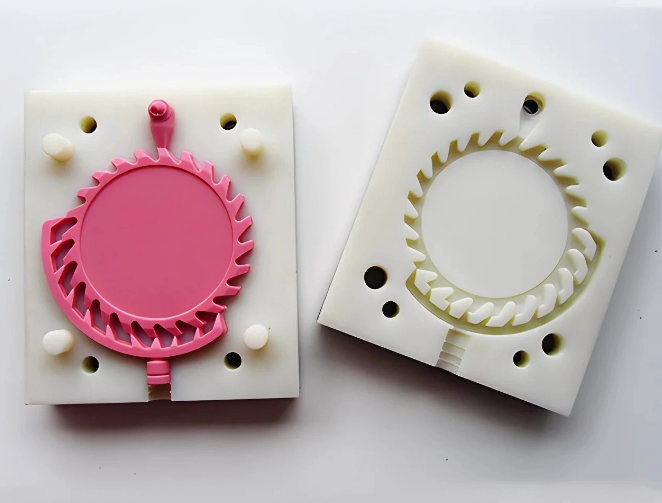
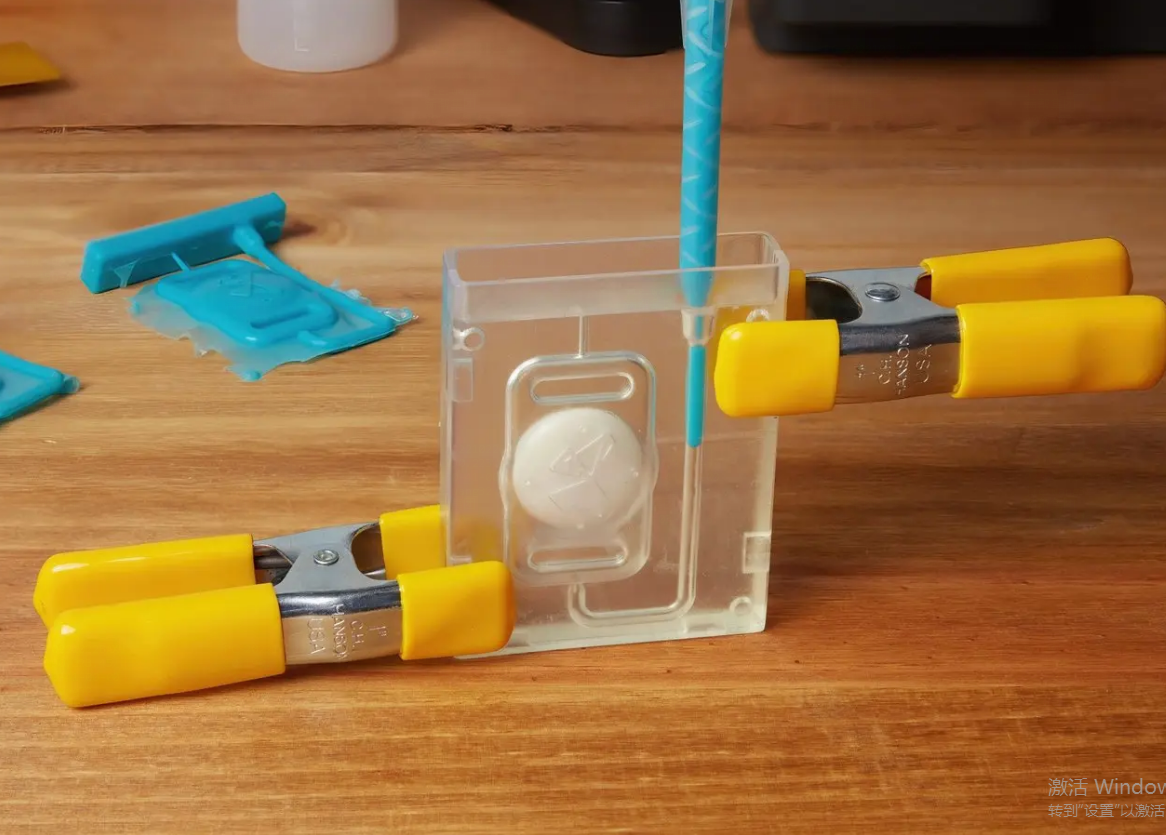
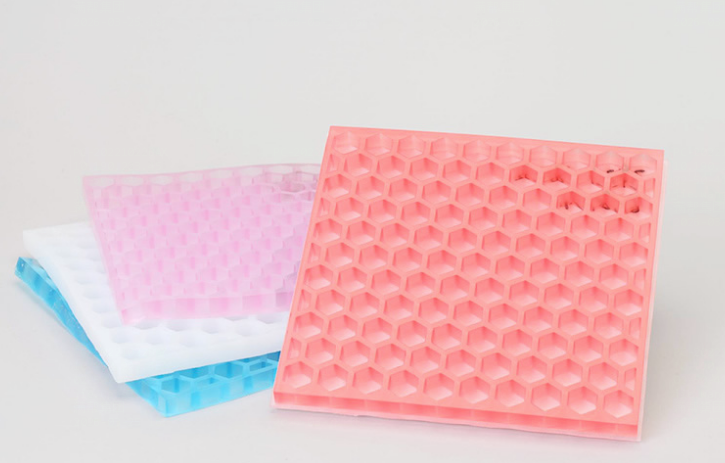
- Silicone Mold Replication:The master pattern is immersed in liquid silicone, which cures to encapsulate all feature contours. After curing, the mold is split into two halves and the master pattern is removed, forming a cavity perfectly matching the part shape.
- Material Casting:Liquid urethane or silicone is poured into the mold and placed in a dedicated chamber for bubble removal — opaque parts typically use pressure, while transparent parts tend to use vacuum for improved optical clarity. After the material cures, the mold is opened and the finished part is removed. This process repeats until the required quantity is complete.
Process Advantages
Mold fabrication is low-cost and fast, requiring no high initial investment. Most 3D printing technologies require extensive post-processing to achieve similar appearance, while cast parts directly achieve near-commercial product surface quality and material performance. This process is especially suitable for developing plastic parts with high color matching requirements, complex structures or rubber-like feel.
Urethane Casting Tolerances
Typically Cast Urethane Part Tolerances
| Description | Tolerance Notes |
|---|---|
|
Distance Dimensions |
+/- 0.010” or +/- 0.003” per inch, whichever is larger, is typical. Irregular or overly-thick geometries may cause deviances or deflection due to shrinkage. |
|
Shrink Mitigation |
A shrinkage rate of +0.15% can be expected due to thermal expansion of the liquid, and the response of the flexible mold. |
|
Surface Quality |
Surface finish is externally smoothed to a satin or matte surface. Grow lines may be present on internal or difficult-to-access features. Polishing or custom finishes must be clearly defined and agreed upon at the point of order. |
|
Feature Definition |
Sharp corners and text may appear slightly rounded. |
|
Size Recommendation |
We can offer urethane cast parts as large as 30” (0.762 m) long. |
This table is based on the assumption that designs have an adequate draft, radii, and coring for manufacturability. Please see Xometry's Manufacturing Standards for more information on tolerances per process.
FAQ About Urethane Casting
Why Choose Kh-tat for Urethane Casting?

Endless Options
Choose from millions of combinations of materials, surface finishes, tolerance levels, marking methods, and certifications to flexibly match your order requirements for truly customized manufacturing.

Easy to Use
No need to handle procurement, project management, logistics, or shipping yourself — we handle everything, parts arrive directly at your door, letting you focus on your core business.

Quality Assurance
KH-TAT is Certified to ISO 9001:2015, ISO 13485, IATF 16949:2016, and AS9100D, ensuring every part meets strict industry standards and quality requirements.