Start a New Selective Laser Sintering Quote
STEP | STP | SLDPRT | STL | IPT | 3MF | 3DXML | PRT | SAT files and more!
Share drawings, sample photos, dimensions, or project notes and our team will follow up with a manufacturing review.
What is SLS 3D Printing?
Selective Laser Sintering (SLS) is an industrial-grade additive manufacturing technology that produces High Precision, high-durability plastic parts, suitable for direct end-use production, low-volume manufacturing, and Rapid Prototyping.SLS is one of the cost-effective options in industrial 3D Printing Services, as it requires no additional support structures during forming and can batch multiple parts simultaneously, improving production efficiency.
The SLS process primarily uses nylon powder materials and can be filled with reinforcing components like carbon fiber, glass, or flame retardants based on application needs to enhance rigidity, heat resistance, or other functional properties.
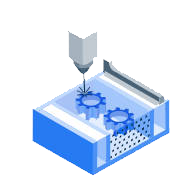
This technology uses high-power lasers (such as CO2 lasers) as the energy source, selectively fusing plastic powder particles by scanning the powder bed surface to form solid cross-sections matching the 3D model. After each layer is scanned, the powder bed lowers by one layer height, then a new layer of powder is spread, and the process repeats until the part is fully formed. Part geometry data comes from CAD files or 3D scan data, ensuring forming results are highly consistent with design intent.
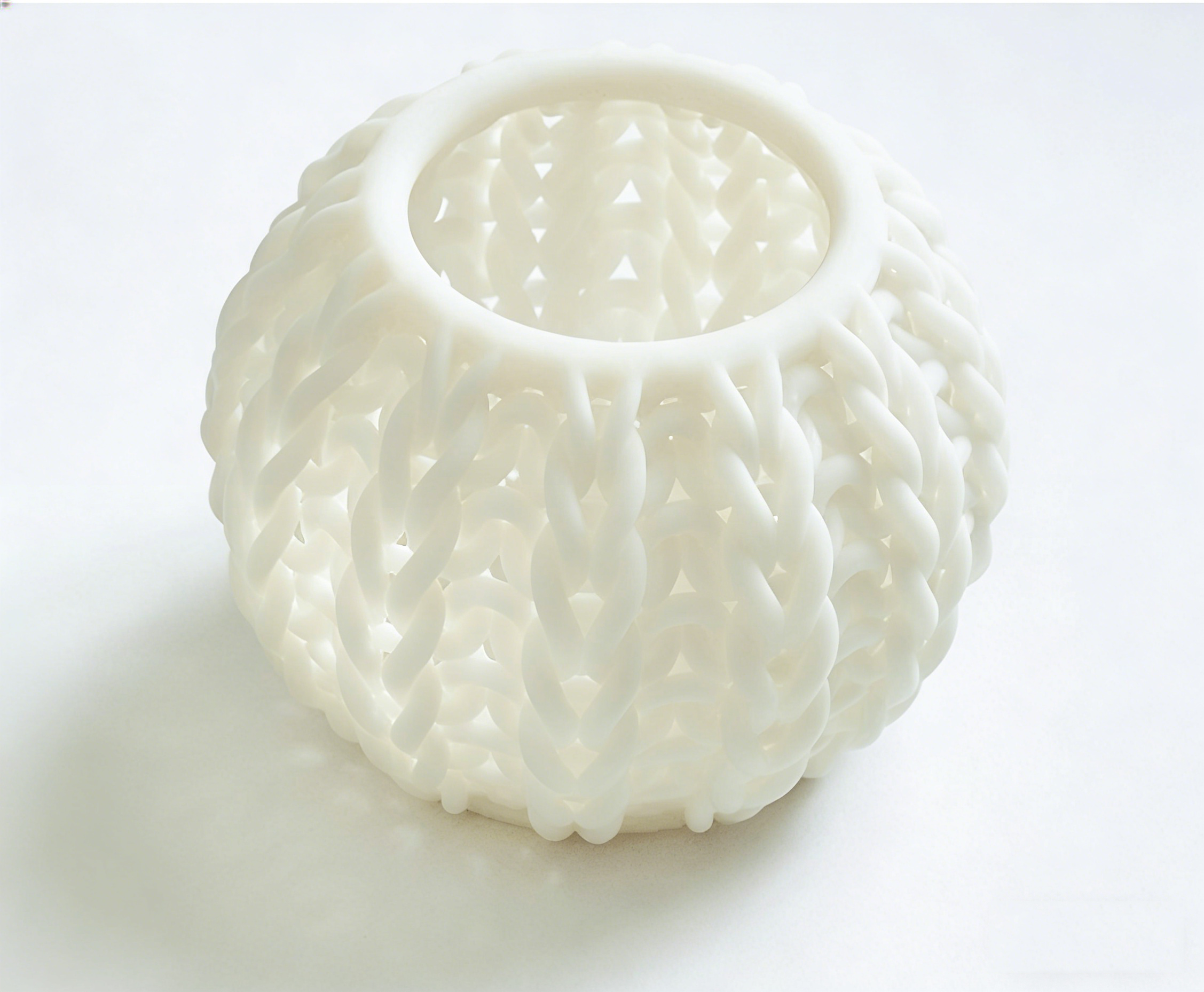
Unfilled SLS Materials
| Material Name | Use Case Examples | Shore Hardness | Elongation at Break (%) | Impact Strength, Notched (kJ/m²) | Data Sheets |
|---|---|---|---|---|---|
|
Nylon 11 EX |
Higher flexibility, snap-fit features |
77D |
45% |
No break |
Nylon 11 EX Data Sheet |
|
Formlabs Nylon 11 |
Fatigue-resistant parts, snap-fits, clips, living hinges |
N/A |
40% |
71 J/m |
Formlabs Nylon 11 Data Sheet |
|
Nylon 12 |
General-purpose, white & dyeable components |
75D |
18% |
4.8 kJ/m² |
|
|
Formlabs Nylon 12 |
General-purpose dark gray parts, functional prototypes |
N/A |
11% |
32 J/m |
Formlabs Nylon 12 Data Sheet |
|
Nylon 12, Smooth |
Highly visible, extra smooth parts |
81D |
13% |
N/A |
Nylon 12, Smooth Data Sheet |
|
Nylon 12, Flame Retardant (FR) |
Meets FAR 25.853 60-second burn, automotive & aerospace ducts |
73D |
24% |
N/A |
|
|
PK 5000 |
High-performance PolyKetone, under-the-hood parts |
N/A |
41% |
8 kJ/m² |
PK 5000 Data Sheet |
|
TPU 88A |
White & dyeable flexible parts, sports gear, gaskets |
88A |
250% |
No break |
TPU 88A Data Sheet |
Properties apply to US-based production. Not all options are available for Xometry's international economy option.
Filled SLS Materials
| Material Name | Use Case Examples | Shore Hardness | Elongation at Break (%) | Impact Strength, Notched (kJ/m²) | Data Sheets |
|---|---|---|---|---|---|
|
Nylon 12, Glass-filled (GF) |
Extra rigid, protective enclosures |
80D |
5.5%-9% |
5.4 kJ/m² |
Nylon 12, GF Data Sheet |
|
Formlabs Nylon 12, GF |
Dark gray stiff, stable, functional parts |
N/A |
4% |
36 J/m |
Formlabs Nylon 12, GF Data Sheet |
|
Nylon 12, Carbon-Filled (CF) |
Warp-resistant, engine bay components |
N/A |
4% |
5.3 kJ/m² |
Nylon 12, CF Data Sheet |
|
Nylon 12, Mineral-Filled (HST) |
High-heat applications requiring stiffness |
75D |
3-5% |
N/A |
Nylon 12, HST Data Sheet |
Properties apply to US-based production. Not all options are available for Xometry's international economy option.
KH-TAT SLS 3D Printing Surface Finish Options
Vapor Smoothing SLS 3D Printed Parts
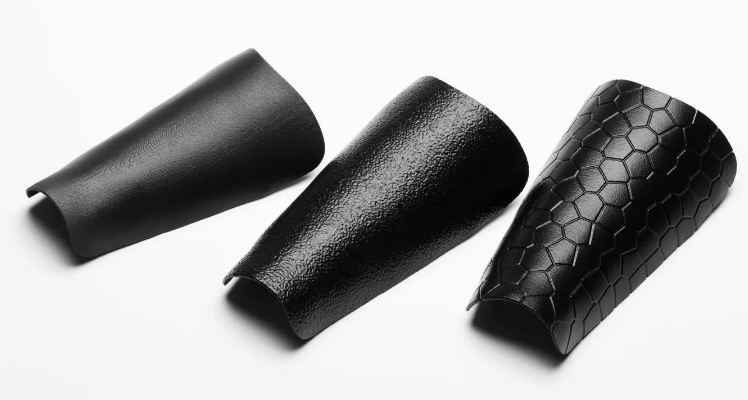
Xometry offers professional vapor smoothing to transform 3D printed parts into high-performance components with exceptional surface finishes. Utilizing AMT PostPro3D technology, this automated batch process creates a uniform, sealed, semi-gloss surface that rivals the aesthetics and durability of injection molding. Our color-dyed finishes can also be combined with vapor smoothing for additional customization options.
Beyond aesthetics, the vapor smoothing process can improve the overall performance of 3D-printed parts by enhancing key mechanical properties, including ultimate tensile strength, flexural yield, and percent elongation to break. We offer this service for both SLS and HP Multi Jet Fusion, supporting a wide range of rigid plastics and elastomers.

Ready to get started on your 3D printing quote?
Free shipping available for domestic 3D printing orders
Video: What is SLS 3D Printing?
Learn more about SLS 3D printing and how it works in this animation by Us:
Applications for Selective Laser Sintering

Concept Models
With SLS technology's rapid response and forming capability, product developers can quickly obtain physical versions of design concepts for early validation and iterative optimization, with finished parts combining structural strength and detail presentation.
Rapid Prototyping
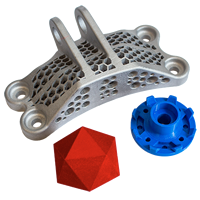
The SLS process is suitable for manufacturing fully functional prototypes, which can include moving parts or integrated structures, meeting the practical needs of design iteration and functional testing.

Direct Digital Manufacturing
SLS technology offers high precision and good consistency, making it an ideal choice for direct manufacturing of low-volume individual parts or customized products, capable of quickly responding to diverse production needs.
Core Advantages of Selective Laser Sintering (SLS)
SLS General Tolerances
| Description | Tolerance Notes |
|---|---|
|
General Tolerances |
|
|
Build Area |
|
|
Minimum Feature Size |
0.030" or greater |
|
Typical Layer Thickness |
0.12 mm / .0047" |
* General tolerances for selective laser sintering are represented. Build stresses, part geometry, and other factors can cause deviations in tolerances and flatness. Thicker geometries, flat or broad parts, and parts with uneven wall thicknesses are significantly more prone to deviations or warping. Improved tolerances are approved case-by-case after manual quote review and successful completion of a test build. Tolerances apply before secondary finishing or post-processing unless otherwise specified. See Xometry's Manufacturing Standards for more information.
Need to Compare Printing Processes?
Our quick reference guides let you quickly compare different 3D printing processes!
Selective Laser Sintering (SLS) Technology Overview
SLS Technology Basics
Selective Laser Sintering(SLS)is a powder bed-based 3D printing technology that produces high-precision, high-durability plastic parts, suitable for direct manufacturing of low-volume end products.SLSprocess is generally considered a close technical relative toDirect Metal Laser Sintering(DMLS), both using lasers to precisely melt powder materials and build solids layer by layer based on 3D CAD data.SLSprimarily uses nylon or polyamide powder, while DMLS uses metal powder, widely used in prototyping and small-scale production scenarios.
Advantages of Choosing KH-TAT SLS Services
KH-TATcan match suitable SLS manufacturing resources to your specific needs. We have a rigorously screened network of partner factories, including numerous specialized SLS service providers equipped with various sintering systems and diverse surface treatment and material processing capabilities. Available post-processing options include dyeing, sanding, painting, and electroplating to meet surface quality requirements for different applications. Whether for low-volume prototyping orMass Production, KH-TAT can source the parts you need from qualified manufacturing resources at competitive prices with on-time delivery.
Core Advantages of SLS 3D Printing
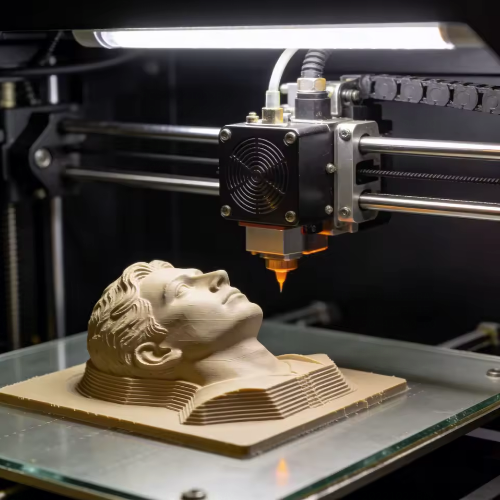
The SLS process is compatible with various powder materials including plastic, metal, ceramic, and glass powders, making it a widely used additive manufacturing method.Unlike most 3D printing technologies, SLS requires no additional support structures during forming and can batch multiple parts simultaneously, reducing labor and material costs. Additionally, since no support removal is needed, the risk of damaging complex internal geometries during processing is reduced.
Selective Laser Sintering technology is suitable for both Rapid Prototyping and direct manufacturing of low-volume functional end-use parts.Among them, nylon materials are particularly outstanding, with excellent impact strength, moderate flexibility, and outstanding environmental resistance. SLS nylon materials are also FDA-certified and meet USP Class VI/121C standards,suitable for skin-contact safe Applications。
With its combined advantages in complexity, design freedom, material diversity, fast delivery, and overall durability, SLS technologyis gaining increasing attention and application across numerous industries including Aerospace, automotive, medical, and consumer goods.
Why Choose kh-tat for SLS?

Unlimited Options
Choose from millions of combinations of materials, surface finishes, tolerance levels, marking methods, and certifications to flexibly match your order requirements for truly customized manufacturing.

Easy to Use
No need to handle procurement, project management, logistics, or shipping yourself — we handle everything, parts arrive directly at your door, letting you focus on your core business.

Quality Assurance
KH-TAT is Certified to ISO 9001:2015, ISO 13485, IATF 16949:2016, and AS9100D, ensuring every part meets strict industry standards and quality requirements.