Start a New Metal Binder Jetting Quote
STEP | STP | SLDPRT | STL | IPT | 3MF | 3DXML | PRT | SAT files and more!
Share drawings, sample photos, dimensions, or project notes and our team will follow up with a manufacturing review.
Fast and Cost-Effective Metal Part Manufacturing
Metal Binder Jetting is an advanced additive manufacturing technology that produces complex metal parts with excellent mechanical properties at lower cost.Compared to other metal processing technologies, binder jetting offers significant advantages in design freedom and per-unit cost, especially suitable for low-to-medium volume part manufacturing with complex structures and moderate precision requirements.
Binder jetting equipment features large build areas and high-speed printing capabilities, allowing multiple parts to be manufactured simultaneously in a single run, significantly improving production efficiency.Its speed and economy make it widely used in industries with clear requirements for part strength and delivery cycles, such as industrial equipment, Automotive Manufacturing, consumer goods, and oil & gas.
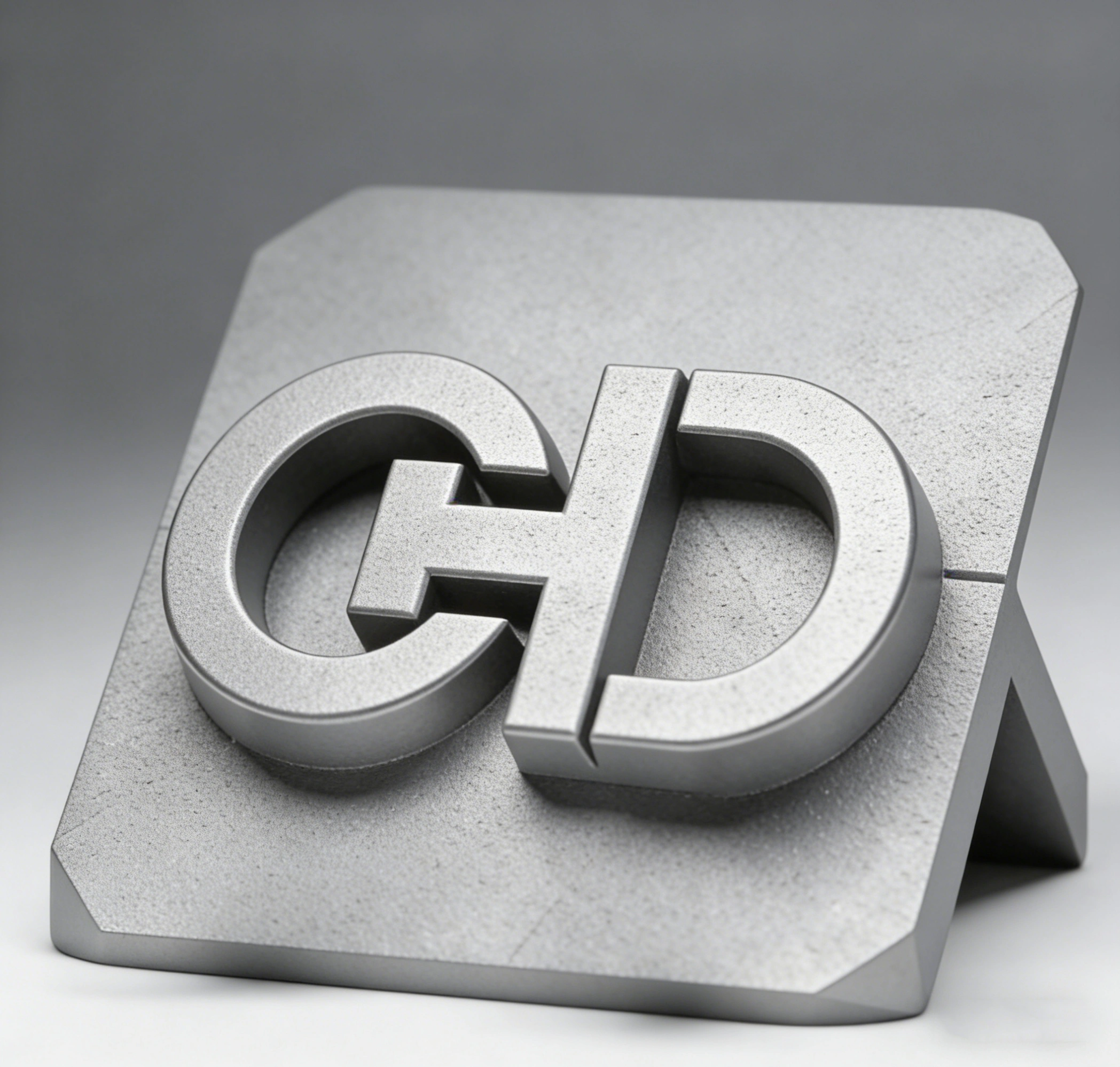
KH-TAT Metal Binder Jetting Printing Capabilities
| Feature | Description |
|---|---|
|
Build Size |
15" x 10" x 10" (400 x 250 x 250 mm) |
|
General Tolerances |
Depending on the part’s size and geometry, parts may shrink 0.8%–2.5% during cooling. Internal geometries, such as slots and holes, may shrink as much as 5% |
|
Layer Height |
0.004” (100 microns) |
|
Surface Roughness |
30 to 400 µin Ra, depending on build orientation, finish, and material used for the build |
|
Density |
Homogeneous with 98%+ density |
General tolerances for Metal Binder Jetting are represented. Build stresses and other geometry considerations may cause deviation in tolerances and flatness. Thicker geometries, flat or broad parts, and parts with uneven wall thicknesses are prone to significant deviations or warping. Improved tolerances may be possible after a manual quote review following successful completion of a test build, and are approved on a case-by-case basis. General tolerances apply before secondary finishing or post-processing unless otherwise specified. Please check out Xometry's Manufacturing Standards for more information.
Need to Compare Printing Processes?
Our quick reference guides let you quickly compare different 3D printing processes!
Metal Binder Jetting Process Principles
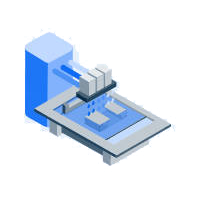
Metal binder jetting is a multi-step additive manufacturing process with the following core workflow:
·Building Phase: Print heads selectively deposit binder on the metal powder bed surface, bonding powder particles into a 3D blank, forming "green" parts. Unbonded loose powder provides natural support for overhanging structures without additional support structures.
·Curing Treatment: After the green part is removed from the powder bed, thermal curing is performed to further crosslink the binder, enhancing blank strength for subsequent handling.
·Sintering and Densification: Cured parts enter a high-temperature sintering furnace where binder is pyrolyzed and removed, and metal particles fuse and densify at high temperature to form the final metal object. Some processes offer copper infiltration to improve density and strength.
Note that parts undergo uniform shrinkage during sintering. Design stages should follow Design for Manufacturing (DFM) principles with pre-compensation of model dimensions (typically 1-2% reduction) and corresponding adjustments to critical features like hole diameters and wall thickness. Sintered parts may have minor porosity, suitable for most functional applications, but require comprehensive evaluation for applications requiring full density.
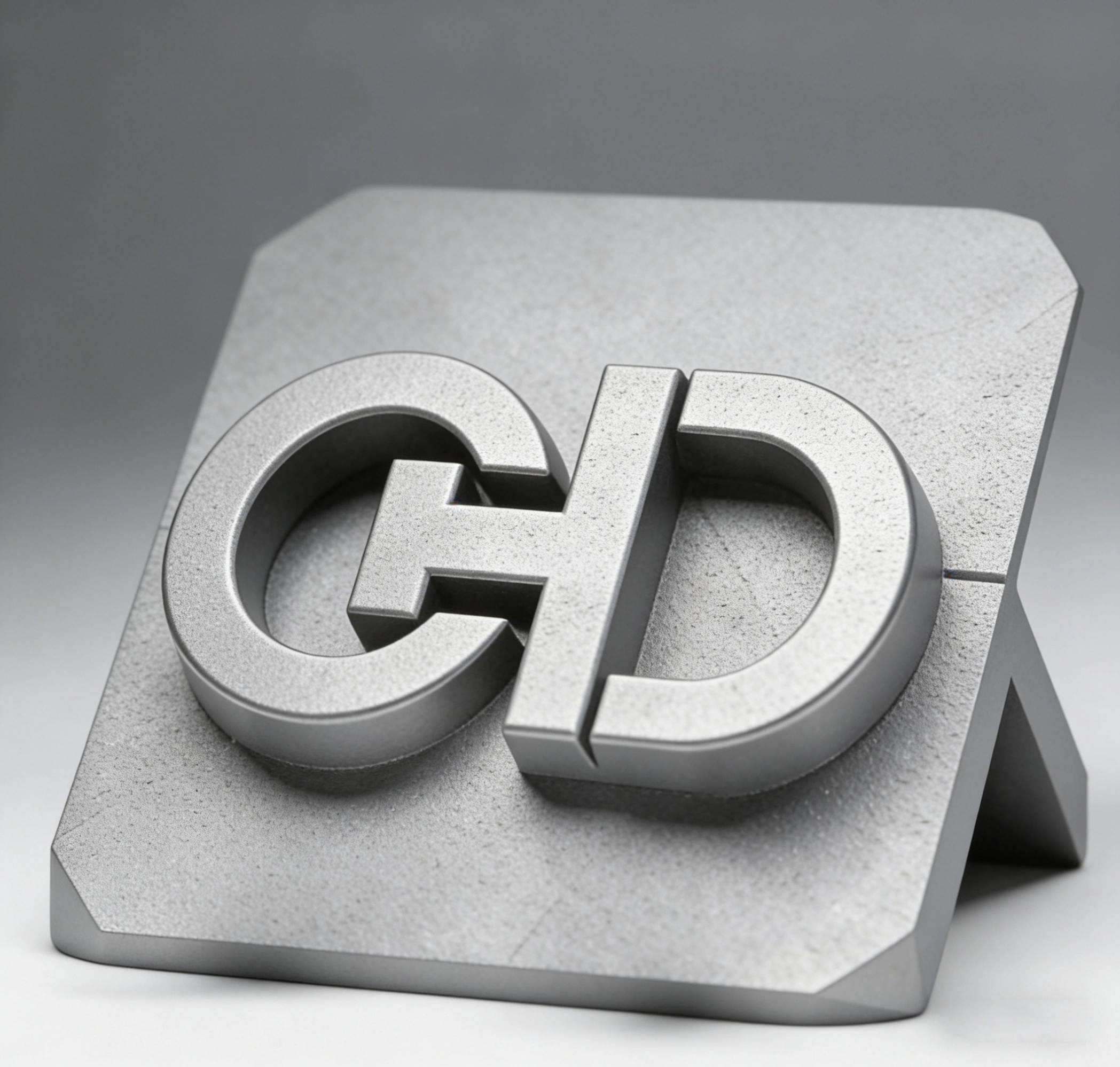
Metal Binder Jetting Materials Available at KH-TAT
| Material Name | Description | Data Sheets |
|---|---|---|
|
316L Stainless Steel |
A 98%+ dense 316L stainless steel metal with superb corrosion resistance, and excellent feature details. |
316L SS Data Sheet |
|
Stainless Steel 17-4PH |
A precipitation-hardening steel that combines high strength and hardness with moderate corrosion resistance. |
SS 17-4PH Data Sheet |
|
Other materials |
Other materials may be available upon request. |
-- |
Surface Finish Standards
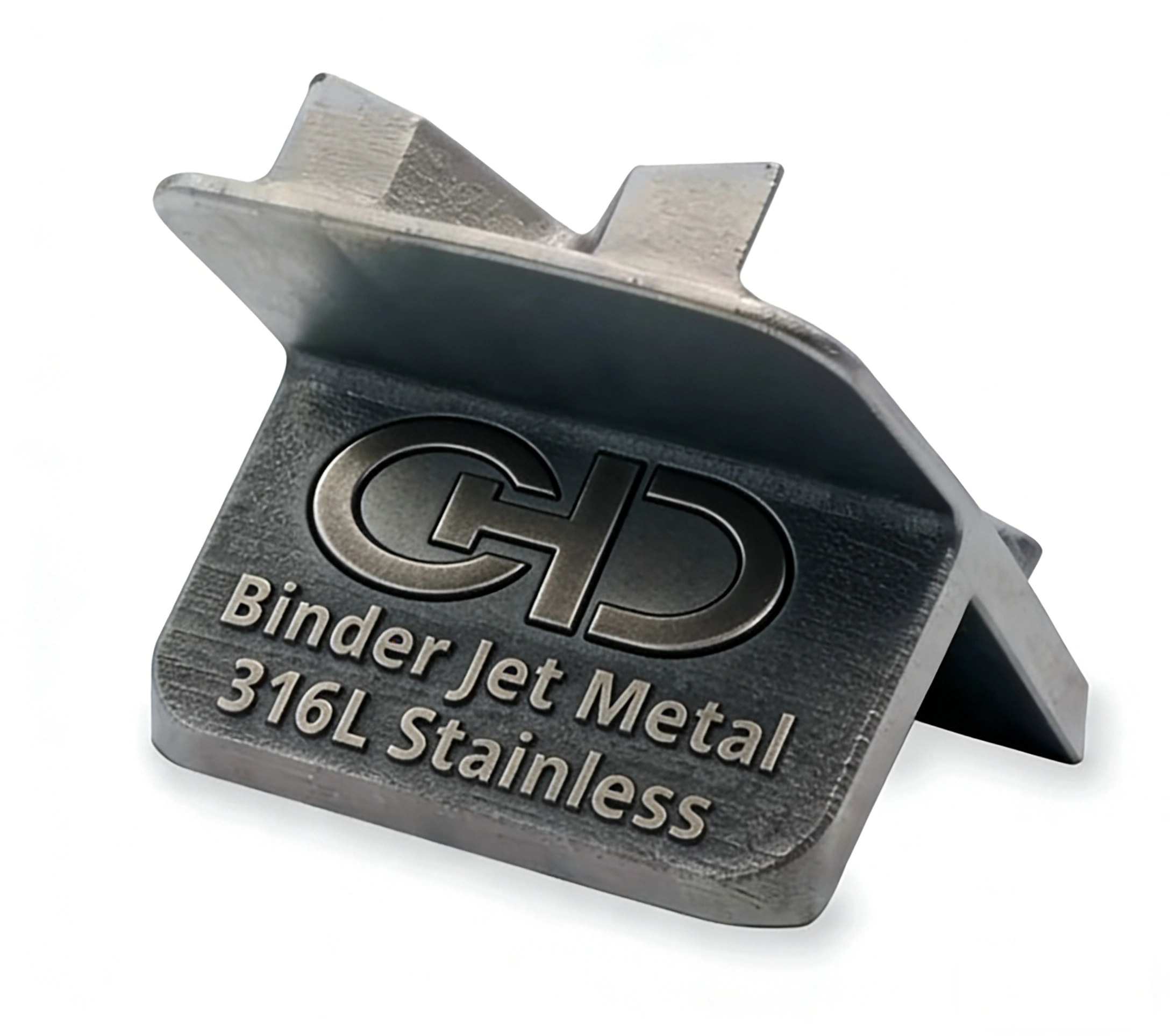
316L stainless steel parts formed via metal binder jetting technology receive standardized"Zirblast" post-treatment. This process uses zirconia-based ceramic beads for light bead blasting of part surfaces, effectively cleaning surfaces and improving texture without significantly altering fine features or critical dimensions.After treatment, parts have a uniform matte light gray appearance with a slight satin texture and fine feel, suitable for most general Applications. For further polishing, coating, or other customized surface treatments, separate evaluation can be conducted based on project requirements.
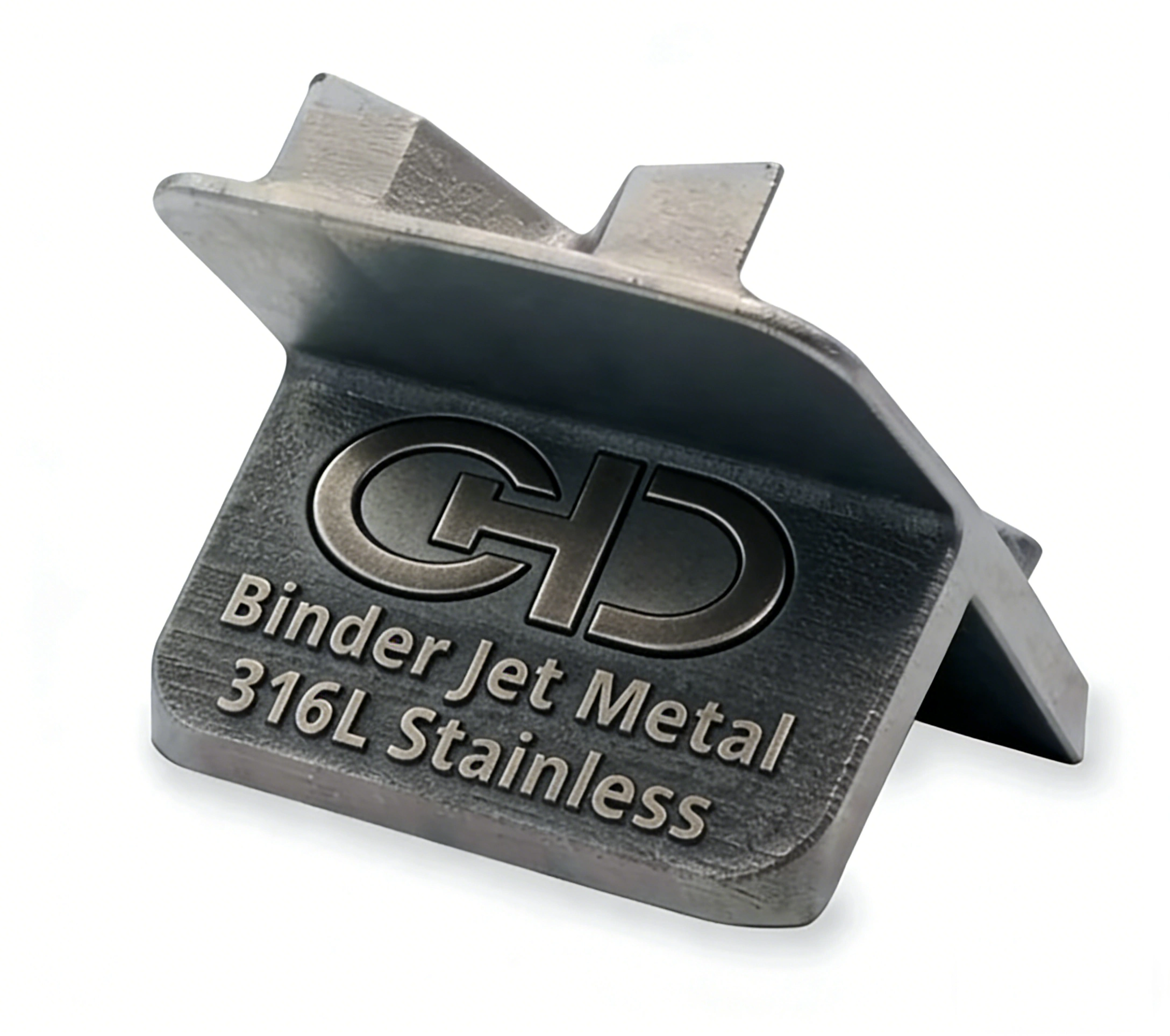
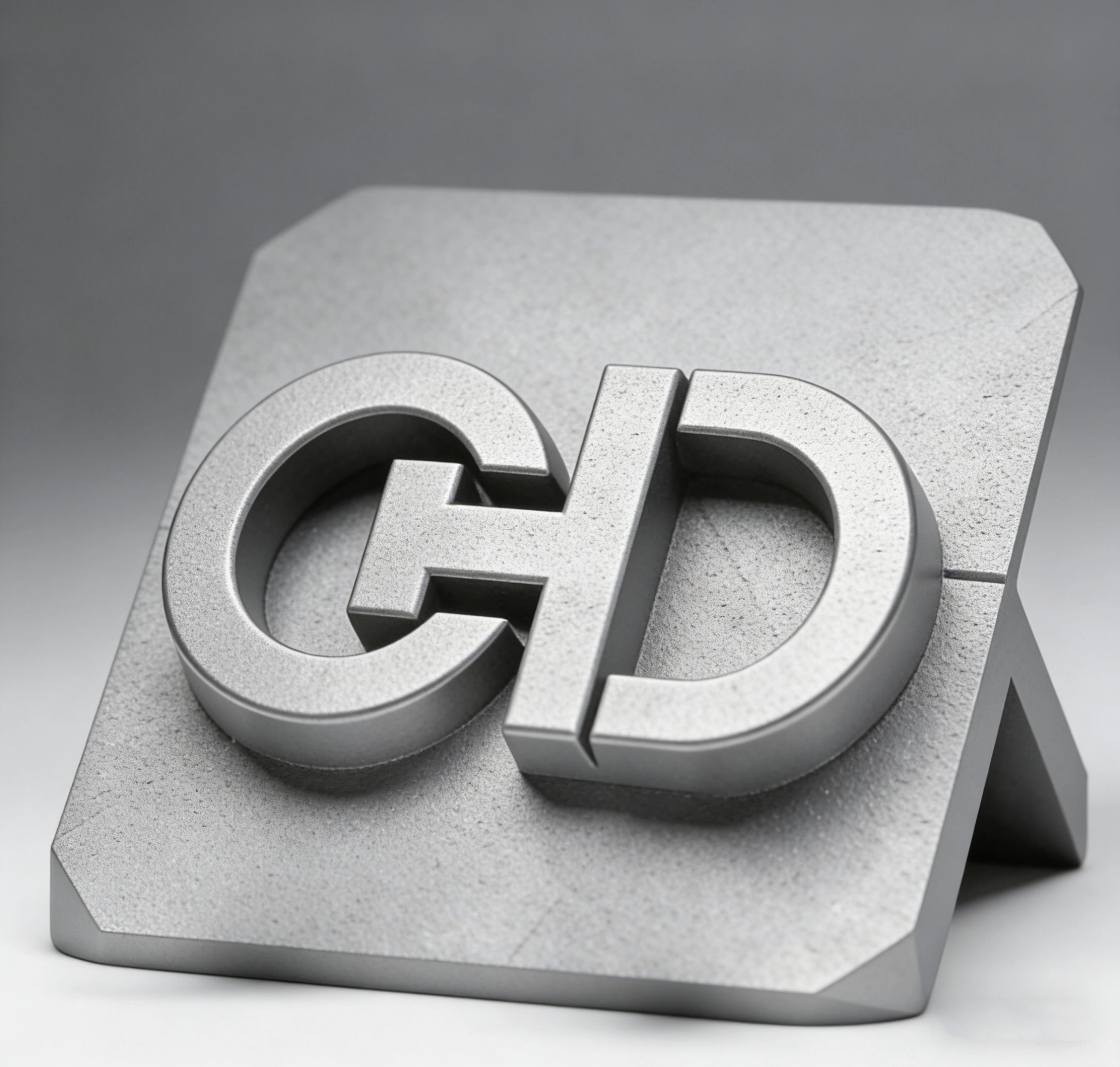
KH-TAT Metal Tile Display Piece
Binder Jetting Design Guidelines
| Feature | Recommendation |
|---|---|
|
Unsupported walls |
1.0 mm (0.04'') |
|
Supported walls |
1.0 mm (0.04'') |
|
Minimum feature size |
1.0 mm (0.04'') |
|
Minimum hole diameter |
1.0 mm (0.04'') |
|
Minimum escape hole diameter |
4.0 mm (0.157'') |
|
Minimum font size |
Arial 26 or greater |
To see more design-for-manufacturing recommendations, view our Binder Jetting Design Guide.
Best Applications for Metal Binder Jetting

Rapid Tooling and Fixtures
Metal Binder Jetting parts feature high strength and low cost, widely used in rapid tooling, jigs, and fixture manufacturing, significantly shortening tooling development cycles.

Prototyping
Binder jetting Metal 3D Printing is cost-effective with fast delivery, commonly used for making fully functional metal prototypes to support early product validation and iterative optimization.

Mass Production
High-density, high-durability metal characteristics make binder jetting an ideal choice for small-to-medium scale batch manufacturing of end-use parts, meeting industrial-grade application requirements.

Ready to Get a Quote on Metal Binder Jet Parts?
Free shipping available for domestic 3D printing orders
Why Choose kh-tat for Metal Binder Jetting?

Endless Options
Choose from millions of combinations of materials, surface finishes, tolerance levels, marking methods, and certifications to flexibly match your order requirements for truly customized manufacturing.

Easy to Use
No need to handle procurement, project management, logistics, or shipping yourself — we handle everything, parts arrive directly at your door, letting you focus on your core business.

Quality Assurance
KH-TAT is Certified to ISO 9001:2015, ISO 13485, IATF 16949:2016, and AS9100D, ensuring every part meets strict industry standards and quality requirements.