
Start a New Tube Bending Quote
STEP | STP | SLDPRT | STL | IPT | 3MF | 3DXML | PRT | SAT files and more!
Share drawings, sample photos, dimensions, or project notes and our team will follow up with a manufacturing review.
Tube Bending Technology Overview
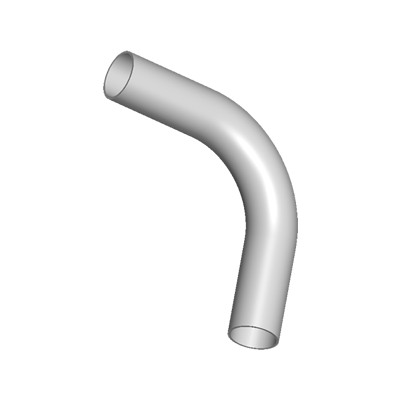
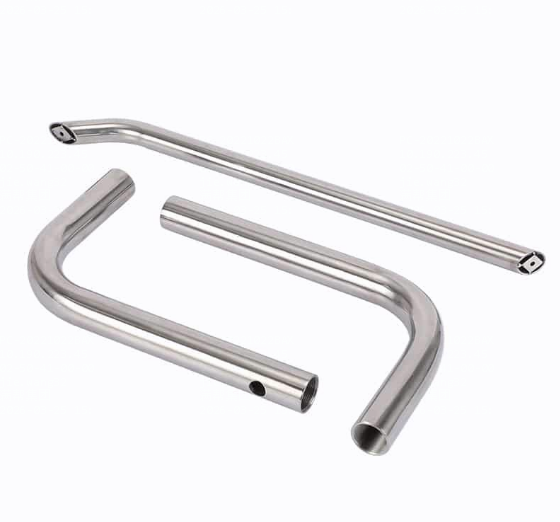
Tube bending is a series of manufacturing processes that alter pipe or tube shape to create specific geometries. During bending, tubing is loaded into a bender and mechanical force pushes it against dies and rollers to form the desired shape. Tubes can be 2D bent (openings in the same plane) or 3D bent (openings in differentsame plane)。CNCTube Bendingsupports multiple bends,reducing the need for elbow and straight pipe combinations when welding or fabricating complex shapes。
KH-TATprovides full custom tube bending services for various applications,including instant online quotes、DFM feedback and highly competitive lead times。whatever you needStandardrotary bending or high-precisionMandrel Bending,KH-TATvarious processes available,meets tube processing needs from low to high volume。we also offerLaser Tube Cutting Services,processes parts with holes、parts with slots and other cut features。tube bending servicesMaterial Selectionincluding stainless steel、Aluminumand alloy steel
Tube Bending Sizes and Tolerances
Our tube bending service is built around typical industry standards to ensure a smooth manufacturing experience. Xometry can achieve tighter tolerances after a manual review by one of our project engineers. In the list below, you'll find the standards and tolerances specific to our drawn or mandrel bending techniques for round profiles:
- Minimum bendable tube diameter: .250"
- Maximum bendable tube diameter: 2.000"
- Minimum bendable tube wall thickness: .035"
- Maximum bendable tube wall thickness: .188"
- Overall tube sheath envelope tolerance is +/- 0.125” typical
- Linear dimensions (excluding locations to bends) are +/- 0.010"
- Simple, single planar bends are +/- 0.010”
- Multiple surface or multi-planar bends are +/- 0.030”
- Angularity: +/- 2 degrees
- Tube center line radius tolerance is +/- 0.125” typical
- Tube end diameter tolerancing is +/- 0.020”
- Cut edges will be normal-to-surface as a default. Normal-to-edge cuts will require agreement at the time of order.
View more standards on our manufacturing standards page.
Tube Bending Material Options
- Welded Tube: Flat metal rolled into tubular form with welded edges.
- Seamless Tube: Made without welding by heating and drawing solid metal into tubular form.
- Extruded Tube: Made by heating metal and extruding through a preformed opening, enabling complex shapes — common for aluminum.
- Drawn Tube: Made by pulling tubing through a smaller die for higher precision and strength. Extruded and welded tubesall drawable
- DOM(drawn forming):welded tubing is drawn over a mandrel for forming,improves strength and surface finish
- HREW(hot-rolled welded tube):made from hot-rolled steel,lower-priced general-purpose tubing
- CREW(cold-rolled welded tube):andHREWsimilar,made from cold-rolled steel,slightly better surface finish
Tube Bending Design Tips
When designing bent tube parts, consider these DFM suggestions for smoother quoting and manufacturing:
- For multi-bend parts, keep centerline radius (CLR) consistent.
- Recommended bend radius to tube diameter ratio of 2:1 to 5:1, not exceeding 6 inches, measured by centerline radius.
- Bend distance shouldat least:OD2times(diameter less than1inches)OD3times(diameter1-2inches)OD4times(outerdiameter greater than2inches)
- cut features and end conditions default to perpendicular surface cuts.
learn moreTube Bending Design Tips
Tube Glossary
- Welded: Welded tube is made by rolling a flat piece of metal into a tube shape and then welding the edges together.
- Seamless: Seamless tube is made without any welding. It's formed by heating and stretching a solid piece of metal until it becomes a tube.
- Extruded: Extruded tube is made by pushing heated metal through a shaped opening. This process can create complex shapes and is commonly used for aluminum.
- Drawn: Drawn tube is made by pulling a tube through a smaller die, making it more precise and stronger. Extruded and welded tube stock can be drawn.
- DOM: Drawn Over Mandrel is like drawn where welded tube is drawn over a mandrel after welding to improve strength and finish.
- HREW: Hot Rolled Electric-Welded tube is made from hot-rolled steel. This is a less expensive tube used for general purposes.
- CREW: Cold Rolled Electric-Welded is similar to HREW but made from cold-rolled steel giving it a slightly better surface compared to HREW.
Ready to start your tube bending quote?
Design Tips for Tube Bending
When it comes to tube bending, there are a few things you can do when designing your parts to ensure a smoother quoting and manufacturing experience. We've compiled a few tube bending design for manufacturing (DFM) tips below. For additional tips, check out our top tube bending design tips article.
- For multi-bend parts, maintain a consistent center line radius (CLR)
- We recommend a bend radius to tube diameter ratio of 2:1 to 5:1, no greater than 6", using the center line radius (CLR)
- Bend distances should be at least 2X the outer diameter for tubes less than 1", 3X for 1"-2", and 4X for tubing with outer diameters greater than 2"
- Assume normal-to-surface cutting for cut features and end conditions.
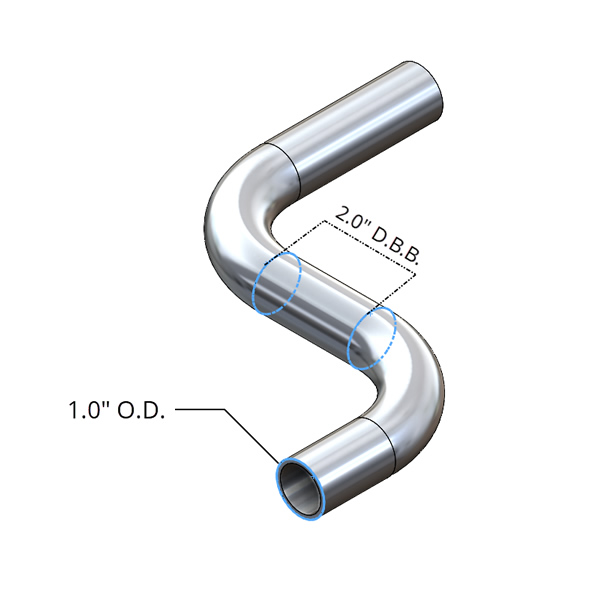
Recommended Center Line Radius to Outer Diameter
Beyond the bend distance guidelines, Xometry has found the following tube diameter (OD) to center line radius (CLR) combinations more readily available across a broad network.
Note: CLRs under 2X the OD are at a higher risk of manufacturing issues, especially when paired with thinner wall thicknesses. We recommend holding CLRs above 2X the tube OD for projects.
The list below shows a tube OD in decimals or fractions as the related CLR to help you design your project. It is recommended that single tubes contain only one CLR for ease of manufacturability.
OD to CLR Recommended Combinations:
- .188" (3/16") OD: CLR of .25", .5", .75", 1", 3.5", or 4"
- .25" (1/4") OD: CLR of .25", .5", .75", 1", or 1.25"
- .375" (3/8") OD: CLR of .75", 1", 1.25", 1.5", 2", or 3"
- .5" (1/2") OD: CLR of .75", 1", 1.25", 1.5", 1.75", 2", 2.5", 3", or 3.5"
- .625" (5/8") OD: CLR of 1", 1.25", 1.5", 1.75", 2", 2.5", 3.5", or 4"
- .75" (3/4") OD: CLR of .75", 1", 1.25", 1.5", 1.75", 2", 3", 3.5", or 4"
- .875" (7/8") OD: CLR of 1.5", 2", or 2.5"
- 1" OD: CLR of 1", 1.5", 2", 2.5", 3", 3.5", or 4"
- 1.25" (1 1/4") OD: CLR of 1.25", 1.5", 2", 2.5", 3", 3.5", or 4"
- 1.5" (1 1/2") OD: CLR of 1.5", 1.75", 2", 2.5", or 3"
- 1.75" (1 3/4") OD: CLR of 2.5", 3", 3.5", or 4"
- 2" OD: CLR of 2", 2.5", 3", or 4"
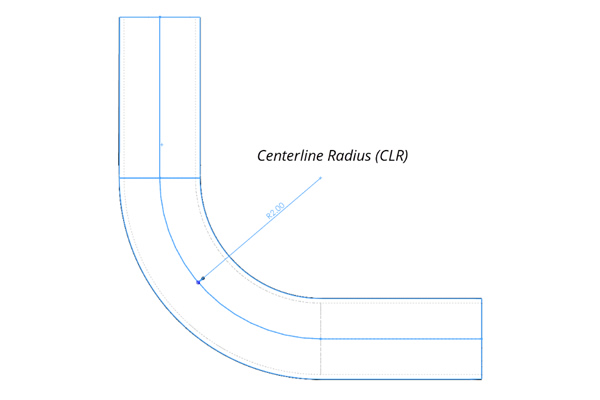
(Above: Center Line Radius, CLR)
Tube Bending Capabilities
KH-TAT provides comprehensive tube and pipe bending services covering the following core processes:
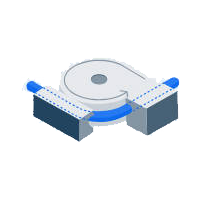
Mandrel Bending – Mandrel bending (also known as mandrel bending) is similar to rotary draw bending but fully maintains the tube's internal profile throughout the bend. This process uses an internal support structure called a mandrel to maintain tube structure during bending,ensures minimal unnecessary deformation.Mandrel Bendingmachine with long worktable and mandrel rod,mandrel positioned at the bend tangent point.tube slides over mandrel,mandrel remains stationary after machine clamps,completes the bend.this process is especially suitable for thin-wall、large-diameter and small-radius bent tubing,effectively prevents collapse during bending
rotary draw bending – rotary draw bending is the most commonly usedTube Bendingmethod。equipment uses clamp die、radius die(bend die)and pressure die,holds the tube in form throughout the bending process。tube clamped on bend die,driven by hydraulic or electric power“draw”bent around other dies,achieves high precision、repeatable bend results。this process can be manual、semi-manual or CNC operation,computer-controlled rotary draw bending achieves unparalleled precision,especially suitable for high-volume production。please note,setup time may be longer,and each unique bend requires custom tooling
roll bending – roll bending(also known as roll bending)uses three dies or rollers to secure the tube,piston presses downward,operator loads the tube“roll”through machine,forms a gradually curved arc。tube repositioned in the die,piston descends further,repeat the process until desired shape is achieved.this method is typically manual,motor drive can also be used for increased power input. roll bending achieves multiple bend angles and shapes without additional tooling,ideal for large, gradual bends,but precision and repeatability are relatively limited
compression bending – compression bending involves clamping the tube or pipe in place,applies force directly to bend。this process is mainly for single-bend applications,no internal support needed。bending typically results in oval cross-sections,and may flatten the bend area。bend angles generally limited to120degrees or less
Industries Served
Tube bending technology is widely used across industries, from architectural lighting to automotive exhaust systems, with diverse applications. The following industries are particularly well-suited for KH-TAT tube processing and bending services:
- Aerospace & Defense
- Automotive Manufacturing
- Architecture & Lighting
- Consumer Products
- Oil & Gas
- Marine & Shipbuilding
- Constrconstruction engineering
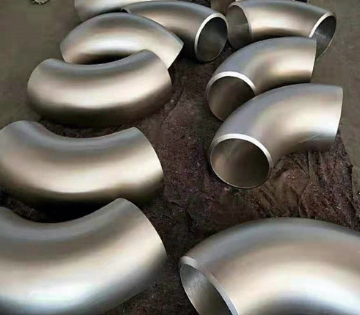
Why Choose Kh-tat for Tube Bending?

Unlimited Options
Choose from millions of combinations of materials, surface finishes, tolerance levels, marking methods, and certifications to flexibly match your order requirements for truly customized manufacturing.

Easy to Use
No need to handle procurement, project management, logistics, or shipping yourself — we handle everything, parts arrive directly at your door, letting you focus on your core business.

Quality Assurance
KH-TAT is Certified to ISO 9001:2015, ISO 13485, IATF 16949:2016, and AS9100D, ensuring every part meets strict industry standards and quality requirements.
Related Services
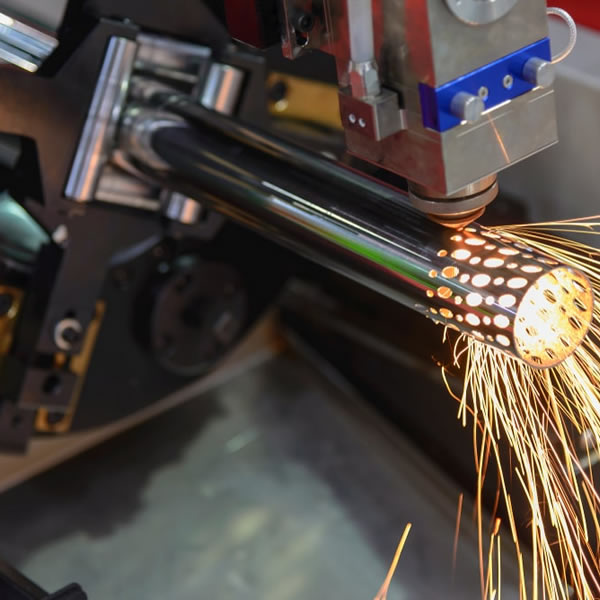
Laser Tube Cutting Services
Provides high-quality metal tube laser cutting for rectangular, square, and round tubing. Free international shipping, prototype prices include tariffs.
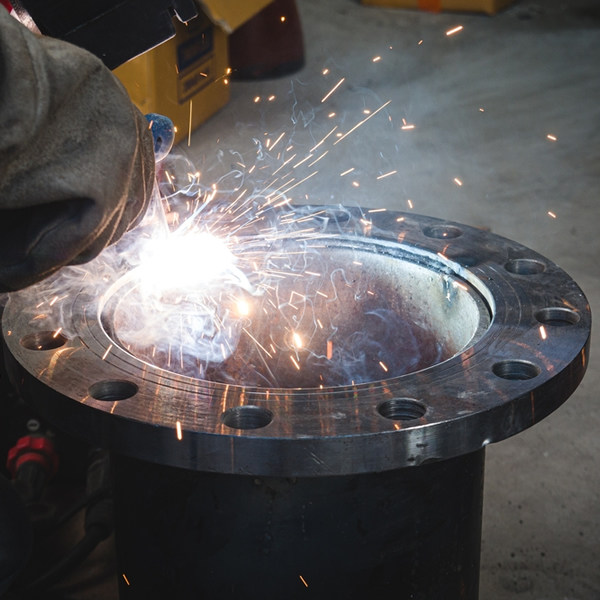
Custom Online Welding Services
KH-TAT provides high-quality custom welding services covering various materials, manufacturing processes, and finish options. Specific services depend on project requirements.
Note: KH-TAT does not guarantee availability of this service at all times.
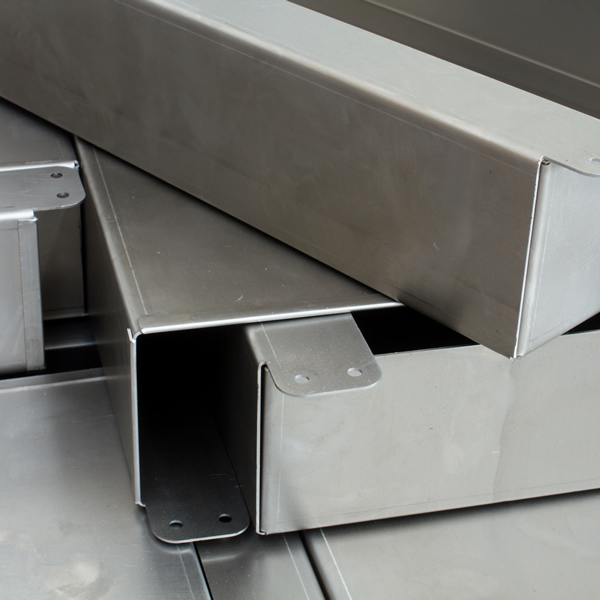
Sheet Metal Fabrication Services
Get instant quotes for custom formed sheet metal parts with rapid prototype and production delivery. ISO 9001:2015, ISO 13485, IATF 16949:2016, and AS9100D certified, with ITAR registration, ensuring part precision and quality. International prototype prices include tariffs.
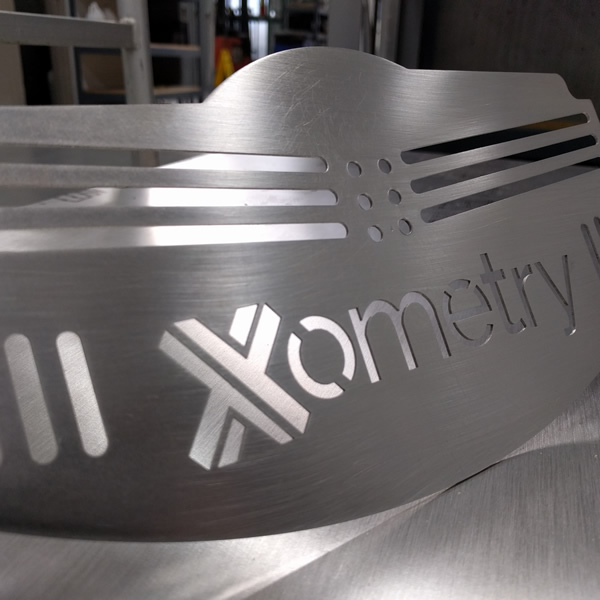
Laser & Sheet Cutting Services
Get instant quotes for laser and waterjet cut parts with no minimum order quantity, delivered in just a few days. International prototype prices include tariffs, with up to 35% lower pricing and 30% faster delivery times.