Start a New Production 3D Printing Service Quote
STEP | STP | SLDPRT | STL | IPT | 3MF | 3DXML | PRT | SAT files and more!
Share drawings, sample photos, dimensions, or project notes and our team will follow up with a manufacturing review.
Production Without Molds
KH-TAT integrates multiple industrial-grade 3D printing technologies, including Carbon DLS™, Multi Jet Fusion, and more, delivering exceptional print speed and precision. Combined with rich material selection from engineering thermoplastics to high-performance photopolymers, we can produce durable parts suitable for real-world use environments.
With additive manufacturing, you can quickly obtain fully functional end-use parts without expensive mold costs. Compared to traditional processes like injection molding, 3D printing has advantages in production cycles and cost control, especially suitable for the following industries:
- Medical and Dental
- Automotive Manufacturing
- Aerospace
- Robotics and Electronics
- Industrial Equipment and Consumer Goods
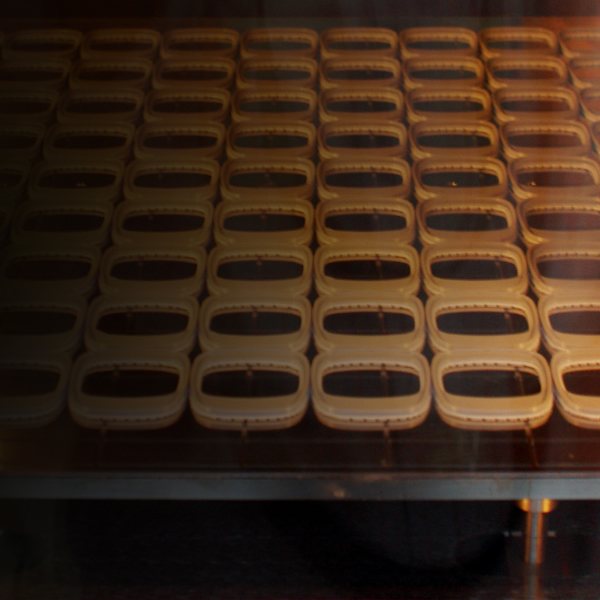
![[Webinar] 3D Printing vs. Injection Molding for Production](https://web13.zmpress.com/theme/skin-ghd/images/production-3d-printing-service-10.png)
[Webinar] 3D Printing vs. Injection Molding for Production
Learn about when to choose each method for plastic part production.
About Production-Grade Additive Manufacturing Applications
Production-grade 3D printing technologies typically share the following characteristics: capable of Efficient Manufacturing of large quantities of parts, large build volumes, support for nested part arrangement, and high-speed printing capabilities. These factors collectively determine the technology's production efficiency and economics.
Material selection is also a key consideration. While some 3D printing technologies are suitable for Prototyping, their material properties may not meet end-use requirements. For example, technologies like SLA and PolyJet excel at detailed models and concept displays, but the photopolymers used are relatively limited in strength and durability.
Notably, not all parts are suitable for batch production via 3D printing. Typically, smaller parts (longest side not exceeding a few inches) are better suited for efficient arrangement and batch manufacturing. Wide, flat geometries are prone to warping during forming, affecting mass production stability. Our engineering team can assess project feasibility and recommend the most suitable process solutions.
Below are two production-grade 3D printing technologies we recommend and widely apply:
HP Multi Jet Fusion (MJF)
Multi Jet Fusion is a powder-based 3D printing technology that works similarly to inkjet printing: print heads spray material and thermally activated fusing agent onto the powder bed surface, then heat sources fuse the material layer by layer. Since each spray covers the entire build area, MJF can manufacture multiple parts simultaneously, with print speeds up to 10x faster than traditional powder processes like SLS.
Compared with SLS, MJF provides more balanced mechanical properties across the X, Y, and Z axes,suitable for Applications requiring high precision and consistency.This technology is widely used for low-volume End-Use Part Production, Rapid Prototyping, and bridge manufacturing before injection molding. Although material selection is relatively focused, MJF still offers common engineering materials like nylon, polypropylene (PP), and thermoplastic polyurethane (TPU) to meet diverse functional requirements.
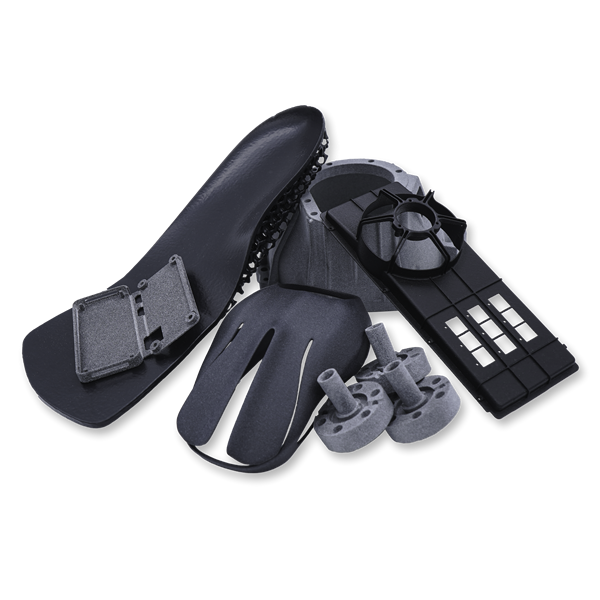
HP Multi Jet Fusion (MJF) 3D Printing Service
Quality prototypes and production parts. Free shipping on all US and international orders. ISO 9001:2015, ISO 13485, IATF 16949:2016, and AS9100D certified.
Selective Laser Sintering (SLS)
Selective Laser Sintering is a well-established powder bed 3D printing technology suitable for direct manufacturing of High Precision, high-durability parts.Its principle involves heating powder material to near-melting point and sintering it layer by layer via laser scanning, achieving highly controllable structure and properties.
The advantage of SLS lies in its ability to densely arrange parts within the build volume and handle larger geometries than MJF, making it more flexible in production applications. Although SLS primarily uses polyamide (nylon) materials, it also offers various general-purpose and engineering-grade powder options. Finished parts are typically grayish-white. We offer dyeing services with customizable colors to meet visual requirements for different application scenarios.
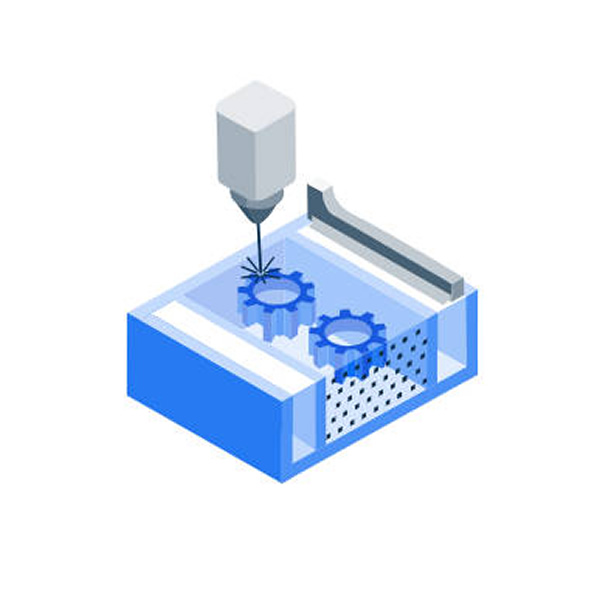
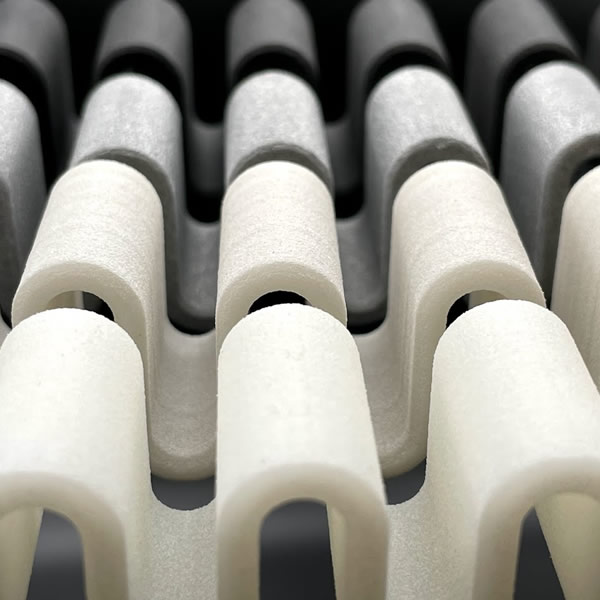
Selective Laser Sintering (SLS) 3D Printing Service
Quality prototypes and production parts | Rapid turnaround | Free shipping on all US and international orders | ISO 9001:2015, ISO 13485, IATF 16949:2016, and AS9100D certified.
Carbon Digital Light Synthesis™ Technology
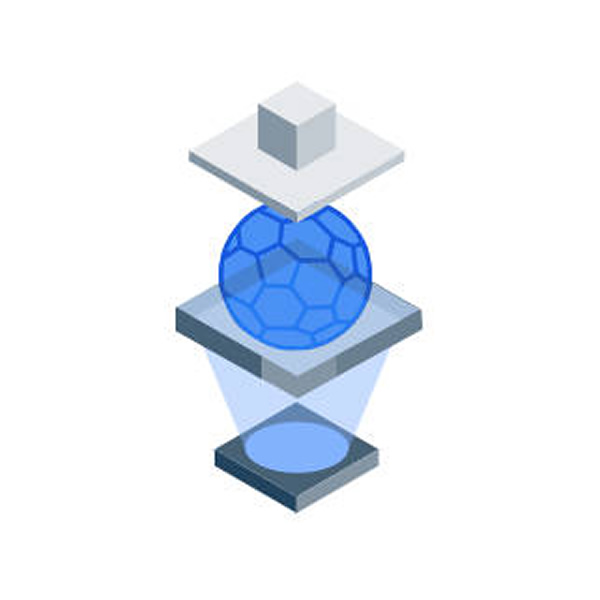
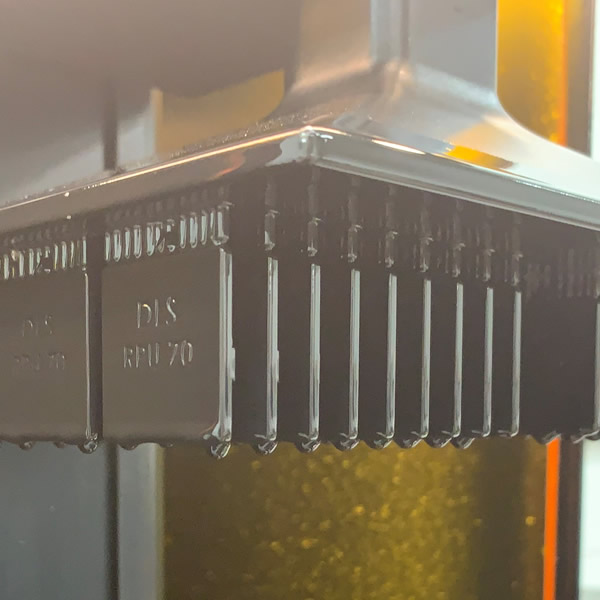
Carbon DLS (Digital Light Synthesis) is an advanced 3D printing technology,through the synergy of digital light projection, oxygen-permeable optics, and programmable liquid resins, produces end-use parts with excellent mechanical properties, high resolution, and fine surface finish.
Unlike traditional layer-by-layer forming processes, DLS uses continuous curing without pausing between layers, making the forming process smoother and more efficient. This characteristic gives parts isotropic mechanical performance, meaning strength remains consistent across different directions, significantly improving structural reliability and service life.
DLS materials are based on polyurethane or epoxy resins with excellent mechanical strength and elasticity, especially in the flexible material field where its rubber-like and silicone-like properties outperform most additive manufacturing processes. Post-forming secondary thermal treatment activates dormant components in the resin, giving parts better performance than simple UVlight curing for stronger physical properties.
Combined with the Carbon platform's programmable liquid resin system, DLS technology opens up new possibilities for mass customization, on-demand end-use part production, and innovative product design, helping enterprises break through the limitations of traditional manufacturing methods.
Carbon Digital Light Synthesis™ (DLS™) 3D Printing Service
High-Performing Prototypes and Serialized Production Parts | Free Shipping on All US OrdersHigh-Performing Prototypes and Serialized Production Parts | Free Shipping on All US Orders
Fused Deposition Modeling (FDM)
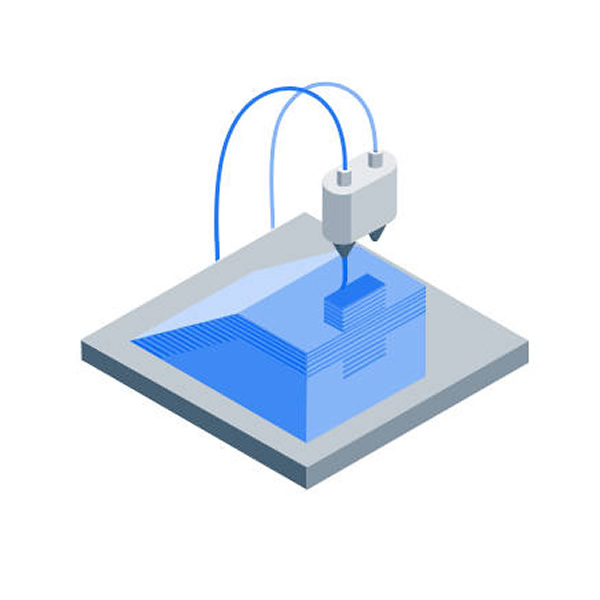
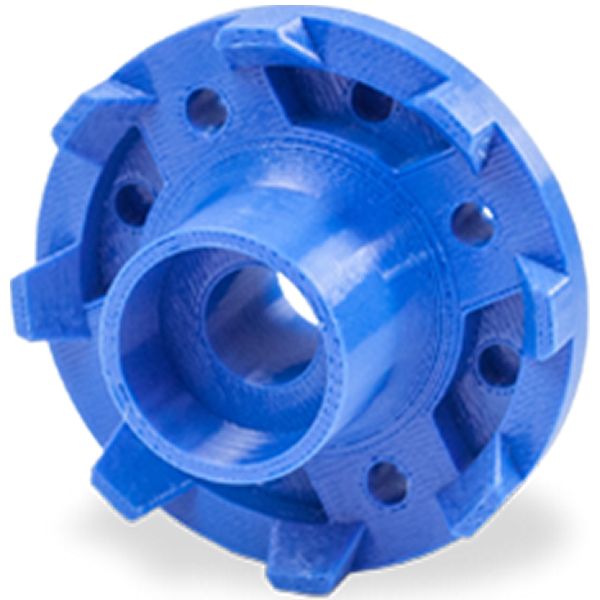
Fused Deposition Modeling (FDM) is one of the most popular and mature 3D printing technologies. Its working principle: thermoplastic material spools are precisely fed to the print head via motors, where the material is heated to melting point and extruded through the nozzle, depositing layer by layer onto the build platform to construct the complete part structure.
While FDM may not match the print speed of technologies like DLS or MJF, and is less efficient in part packing than powder bed processes, it offers significant advantages in large-format part manufacturing. FDM equipment can reach build sizes up to 24" × 36" × 36", producing dozens or even hundreds of parts in a single print depending on part size, making it suitable for low-volume production and rapid manufacturing of large structural components.
Additionally, FDM has the widest selection of thermoplastic materials among all 3D printing processes, covering everything from general-purpose to engineering-grade materials to meet strength, temperature resistance, toughness, and chemical stability requirements across various applications.
Fused Deposition Modeling (FDM) 3D Printing Service
High-Quality Large Format FDM 3D Printing 1-Day Expedites Available. Free Shipping on All US and International Orders. International prototype pricing includes tariffs.
Ready to Start Production?
Free shipping available for domestic 3D printing orders
KH-TAT Production-Grade Material Options
KH-TAT offers various 3D printing materials designed for end-use applications, including specialty engineering resins, high-performance thermoplastics, and durable polymers. Each material has unique mechanical and physical properties to meet diverse industry needs for part functionality, environmental adaptability, and service life.
General Purpose Production Materials
| Material Name | Process | Characterstics | Use Case Examples | Elongation At Break (%) | Data Sheets |
|---|---|---|---|---|---|
|
MJF Nylon 12 |
HP MJF |
Highly durable, heat resistant, water tight |
Housings, enclosures, watertight parts, general use |
15% - 20% |
MJF Nylon 12 Data Sheet |
|
SLS Nylon 12 |
SLS |
Highly durable, heat resistant, natural white appearance |
Housings, enclosures, watertight parts, general use |
18% |
SLS Nylon 12 Data Sheet |
|
MJF Polypropylene |
HP MJF |
Chemical resistant, low-moisture absorbtion, durable |
Piping, fluid systems, containers, medical parts |
20% |
MJF PP Data Sheet |
|
ABS-M30 |
FDM |
Strong, tough, lightweight, rigid |
Consumer electronics, housings, appliance parts |
2-7% |
ABS-M30 Data Sheet |
|
ASA |
FDM |
UV resistant, strong, lightweight, matte finish |
Outdoor applications, consumer parts, tools |
3-9% |
ASA Data Sheet |
|
UMA 90 |
Carbon DLS™ |
Single-cure resin, customizable color options, tougher than most SLA resins |
Prototyping, jigs, fixtures, general purpose |
17% |
UMA 90 Data Sheet |
|
RPU 70 |
Carbon DLS™ |
High flexural strength, tough, moderate heat resistance |
Housings, mechanical features, guides, end-use |
100% |
RPU 70 Data Sheet |
Engineered Production Materials
| Material Name | Process | Characterstics | Use Case Examples | Elongation At Break (%) | Data Sheets |
|---|---|---|---|---|---|
|
MJF Nylon 11 |
HP MJF |
Ductile, high impact and chemical resistance |
Snap fits, living hinges, sporting goods |
40% - 55% |
MJF Nylon 11 Data Sheet |
|
MJF Nylon 12, GF |
HP MJF |
Glass Bead Filled, highly stiff, dimensional stability |
Fixtures, tooling, housings |
10% |
Nylon 12, GF Data Sheet |
|
SLS Nylon 11EX |
SLS |
Excellent elasticity and ductility, impact resistant |
Snap fit and thin-wall designs, living hinges |
45% |
Nylon 11EX Data Sheet |
|
SLS Nylon 12, GF |
SLS |
Glass filled, highly stiff, dimensional stability |
Larger rigid parts, jigs, fixtures, enclosures |
9% |
SLS Nylon 12, GF Data Sheet |
|
Nylon 12, CF |
SLS |
Carbon filled, very stiff, high impact strength |
Under hood engine components, tooling |
4% |
Nylon 12, CF Data Sheet |
|
Nylon 12, AF |
SLS |
Aluminum filled, strong, stiff, wear resistance, detail reproduction |
Fixturing, wind tunnel models, automotive and aerospace components |
3% |
Nylon 12, AF Data Sheet |
|
Nylon 12, HST |
SLS |
Mineral filled, non-conductive, high stiffness and temperature resistance |
High temperature load bearing parts, enclosures, structural components |
3% - 5% |
Nylon 12, HST Data Sheet |
|
Nylon 12, FR |
SLS |
FAR 25.853 Flame-retardant, durable, slightly ductile |
Aerospace and automotive duct components, snap fits, electrical enclosures |
24% |
Nylon 12, FR Data Sheet |
|
PC-ABS |
FDM |
Strong, tough, heat resistant, flexural strength |
Enclosures and casings, tool bodies, panels |
6% |
PC-ABS Data Sheet |
|
Polycarbonate |
FDM |
High strength, high impact and heat resistance |
Mechanical components, tools, brackets |
2.5% - 4.8% |
PC Data Sheet |
|
ULTEM 9085 |
FDM |
High strength-to-weight ratio, chemical and heat resistant, flame retardant |
Aerospace parts, electrical enclosures, structural components |
2.2% - 5.8% |
ULTEM 9085 Data Sheet |
|
ULTEM 1010 |
FDM |
Very high thermal resistance and strength, chemical resistant, flame retardant |
Biocompatible devices, aerospace and automotive parts, tooling and fixtures |
2.0% - 3.3% |
ULTEM 1010 Data Sheet |
|
EPX 82 |
Carbon DLS™ |
High chemical resistance, impact strength & toughness, good temperature resistance |
Automotive housings and connectors, parts for use in industrial environments |
5.9% |
EPX 82 Data Sheet |
|
FPU 50 |
Carbon DLS™ |
Excellent elongation, impact and fatigue resistant |
Repetitive stress applications, living hinges, friction fits, clips |
280% |
FPU 50 Data Sheet |
Flexible & Rubber-Like Materials
| Material Name | Process | Characterstics | Use Case Examples | Elongation At Break (%) | Data Sheets |
|---|---|---|---|---|---|
|
TPU 88A |
HP MJF |
Shock absorbing, high flexability, durability and fatigue resistance |
Insoles, seals and gaskets, grips, shock absorbing enclosures |
120% - 220% |
TPU 88A Data Sheet |
|
EPU 40 |
Carbon DLS™ |
Extremely durable rubber-like, excellent elongation, Shore 68A |
Buttons, grommets, strain reliefs |
310% |
EPU 40 Data Sheet |
|
SIL 30 |
Carbon DLS™ |
Tear-resistant silicone urethane elastomer, Shore 35A durometer |
Wearable devices, cushioning, gaskets |
330% |
SIL 30 Data Sheet |
More materials are available! Select "Other" when quoting for custom requests.
Why Choose kh-tat for Your Production Needs?

Unlimited Options
Choose from millions of combinations of materials, surface finishes, tolerance levels, marking methods, and certifications to flexibly match your order requirements for truly customized manufacturing.

Easy to Use
No need to handle procurement, project management, logistics, or shipping yourself — we handle everything, parts arrive directly at your door, letting you focus on your core business.

Quality Assurance
KH-TAT is Certified to ISO 9001:2015, ISO 13485, IATF 16949:2016, and AS9100D, ensuring every part meets strict industry standards and quality requirements..