Start a New Die Casting Quote
STEP | STP | SLDPRT | STL | IPT | 3MF | 3DXML | PRT | SAT files and more!
Share drawings, sample photos, dimensions, or project notes and our team will follow up with a manufacturing review.
Die Casting Process Overview
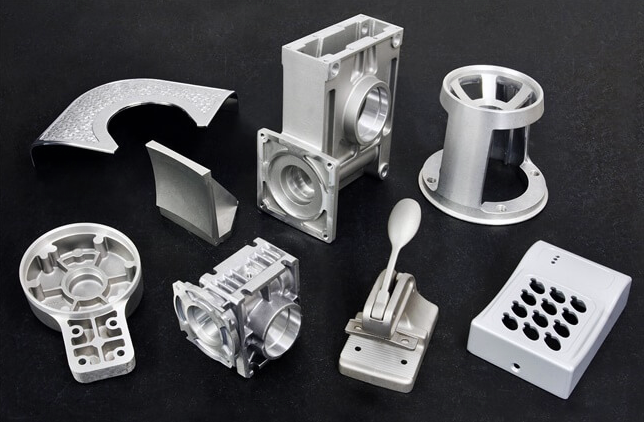
Similar to injection molding, die casting also requires the manufacture of molds, called dies, which can have one or more cavities.This process is suitable for softer alloys such as aluminum and zinc alloys due to their relatively low melting points.The working principle of die casting is to inject molten metal into the die cavity. After the metal melts, it forms the shape of the part, solidifies, and then the die is removed.Depending on the project scale, die casting can be low-pressure or high-pressure, and uses a sprue or plunger to pour the metal.Die casting can produce highly complex parts with strict tolerance requirements repetitively at extremely high production volumes.Modern die casting methods, such as squeeze casting and semi-solid metal casting, can produce high-quality parts for almost all industries.Die casting companies usually focus on aluminum or zinc casting, with aluminum accounting for about 80% of die castings.
Our project managers and experts will personally review and manually quote each die casting project to ensure your unique needs are met while providing a fast and convenient manufacturing experience.Please learn more about the process and our capabilities in the following sections.
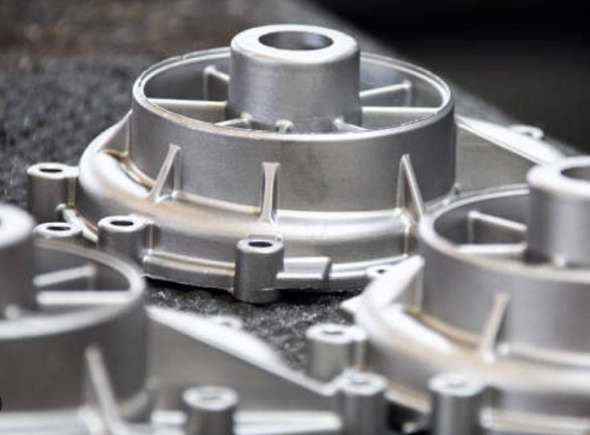
Kh-tat Die Casting Service

Start a Quote
Upload your files to the KH-TAT quotation engine and configure project parameters. Our team will communicate with you to ensure that specifications, delivery time, and price meet project requirements. Before starting mold manufacturing, we will provide a manufacturability design report for your approval.
Sample Approval
Once the project starts, we will manufacture a high-quality mold. After the mold is completed, we will send you a sample of the parts (T1 sample) for your review and confirmation.
Production Start-up
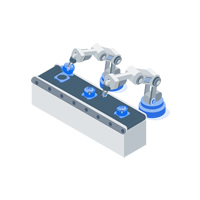
After sample confirmation, mass production begins immediately and parts are delivered. KH-TAT handles supplier management and logistics coordination throughout the process. You own the molds and can reorder at any time as needed.
Die Casting Process Types
KH-TAT collaborates with companies employing advanced die casting equipment and technology, primarily offering two mainstream die casting processes:
- Hot Chamber Die Casting:Hot chamber die casting (also known as gooseneck die casting) is currently the most commonly used die casting process, particularly suitable for low-melting-point alloys such as zinc, magnesium, and aluminum. The metal is loaded into a storage tank and melted by connecting to or within a furnace. The gooseneck structure forms a storage cavity within the storage tank, connected to the injection cavity on the fixed side of the mold via a nozzle. A plunger pushes molten metal from the storage tank into the storage cavity; once full, the plunger descends, injecting the metal along the gooseneck channel into the mold. Under pressure, the mold remains closed; after the metal cools and solidifies, the mold is opened, and the casting is ejected by an ejector pin.
- Cold Chamber Die Casting:In cold chamber die casting, the casting chamber is maintained at room temperature, without a container for molten metal. The metal is melted in a separate furnace and manually injected into the casting chamber through a pouring hole using a ladle. The mold is directly connected to the die-casting chamber. Molten metal is forced into the mold by a pressure rod and held to solidify under high pressure. This process is suitable for materials with relatively high melting points, such as aluminum.
Die-casting Metal Materials
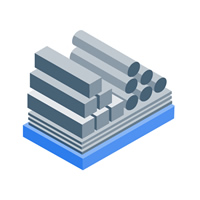
In die-casting manufacturing, you can choose from a variety of metal materials depending on the intended use of your product. For example, cast aluminum parts are often used in the aerospace or automotive industries because their corrosion resistance and lightweight properties are crucial. Please feel free to let us know if you have specific material requirements.
Aluminum Die Casting
Aluminum alloys are the most commonly used material for die casting, offering full recyclability and ease of use. Due to aluminum's relatively high melting point, cold chamber casting is typically employed. Engineers choose cast aluminum primarily for its extremely high strength-to-weight ratio, dimensional stability, and a variety of surface treatment options. Other properties of cast aluminum alloys include:
- High-temperature performance
- Good corrosion resistance
- Excellent stiffness
- High thermal and electrical conductivity
Zinc Die Casting
Zinc is the easiest die casting metal to cast and is commonly used in hot chamber die casting processes. Molten zinc possesses excellent casting fluidity and a low melting point, and its strength and rigidity allow for the manufacture of thinner-walled parts with more detailed designs and tighter tolerances. The low melting point of zinc alloys enables faster cooling and solidification, achieving the highest production speeds among die casting materials. Zinc's balanced mechanical and physical properties include:
- High impact strength
- High hardness
- Excellent stability
- High surface finish, easy to electroplate
- Low melting point
KH-TAT offers the most commonly used Zamak and ZA die casting zinc alloys:
- Zamak 2 (ZA-2)
- Zamak 3 (ZA-3)
Available Die Casting Finishes
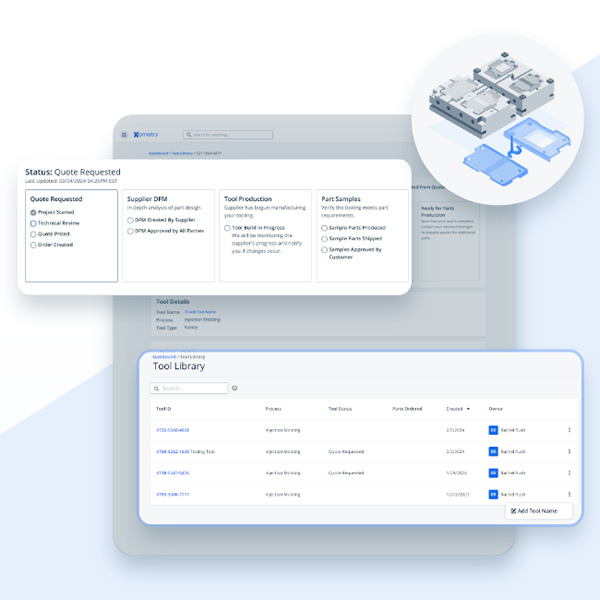
Built-in Tool Management: The KH-TAT platform incorporates multiple functions to simplify mold project management and enhance customer production transparency. Through the mold library, you can centrally view all mold quotes and orders in one space. The mold details page provides information on the current status, milestones, specific details, and related activities. Regardless of the project's stage, you can easily contact the KH-TAT team members responsible for your project.
The tool library and tool details page offer several advantages:
- More efficient management of tool quotes and orders
- Clear tool organization and categorization
- Detailed status updates and tool information
- Easy contact with the expert team
- Transparent and controllable project workflow
Die Casting Advantages and Disadvantages
Advantages of Die Casting
Complex Geometry
Die casting technology reliably produces thin-walled, geometrically complex, and durable custom parts with excellent dimensional stability.
Strength
Die-cast metal parts are generally stronger and have better high-temperature resistance than injection-molded plastic parts. Metals such as aluminum have an extremely high strength-to-weight ratio.
Precision
Typical tolerances for die casting range from +/- 0.003" to 0.005" per inch, and can be as small as +/- 0.001" depending on specifications, geometry, and material.
Custom Surface Finishes
Metal surface finishes can produce smooth or textured surfaces, supporting painting and electroplating, effectively preventing corrosion and improving appearance.
Disadvantages of Die Casting
Mold Costs
While the unit cost of die-cast parts is relatively low, mold manufacturing and maintenance require a high initial investment.
Not Suitable for Small Batch Orders
Due to the high initial mold costs, small-batch production is uneconomical. Die casting is recommended for batches exceeding 1000 pieces.
Delivery Time
Several preparatory steps are required before formal production, including manufacturability design optimization and sample approval, typically taking several weeks.
Our expert team will work closely with you throughout the process, providing advice and solutions to meet your unique needs as quickly as possible.
Download Our Free Die Casting Design Guide
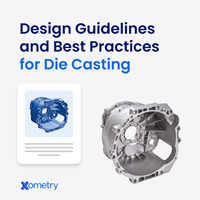
Design stronger, highly manufacturable metal die-cast parts while minimizing tooling costs and avoiding common casting defects.
Die Casting Applications
Die casting is a widely used process with enormous production potential, suitable for various applications and industries. It is particularly suitable for small to medium-sized die-cast products with complex structures. Typical applications include consumer goods, industrial products, automotive parts, aerospace components, and medical devices. Die casting is an ideal choice when high-volume production of metal parts is required, and the parts are too large for processes such as metal injection molding (MIM).
Common application areas include:
- Aerospace and automotive parts
- Connector housings
- Pumps and piping systems
- Outdoor lighting
- Gears
- Home appliances and lighting equipment
Why Choose Kh-tat for Die Casting?

Endless Options
Choose from millions of possible combinations of materials, finishes, tolerances, markings, and certifications for your order.

Easy to Use
Get started with our easy-to-use platform and let our experts take care of managing the project from locating the right manufacturing partner to delivery logistics.

Vetted Network
We are ISO 9001:2015, ISO 13485, and AS9100D certified. Only the top shops that apply to become Suppliers make it through our qualification process.