Start a New Stereolithography Quote
STEP | STP | SLDPRT | STL | IPT | 3MF | 3DXML | PRT | SAT files and more!
Share drawings, sample photos, dimensions, or project notes and our team will follow up with a manufacturing review.
High-Resolution, High-Precision Parts Without Molds
Stereolithography (SLA) is a high-performance 3D printing technology that produces extremely accurate, detail-rich resin parts for direct end-use production, low-volume manufacturing, and rapid prototyping.
KH-TAT offers over 20 specialty SLA materials from brands like Accura, Somos, and Formlabs to meet various engineering needs and accelerate time-to-market.
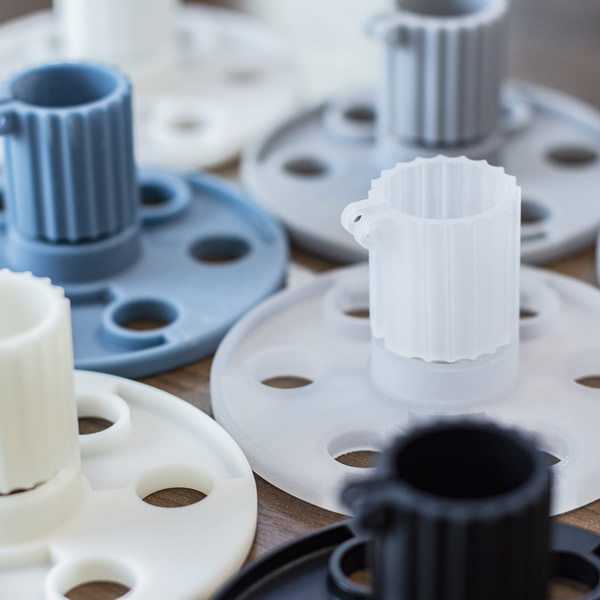
Formlabs Resin Material System
KH-TAT Instant Quote engine now supports Formlabs SLA resin materials.Formlabs is a key innovator in the Stereolithography field, offering a rich range of cost-effective engineering resins that achieve professional-grade printing results, adapting to various engineering and design needs.
From general prototyping to high-performance functional applications, Formlabs materials help users produce high-resolution parts with specific mechanical, thermal, and visual properties.
General Purpose Materials
General Purpose SLA Materials Available at Xometry:
| Material Name | Short Description | Flexural Strength (MPa) | Elongation at Break (%) | Notched Izod Impact (J/m) | HDT @ 0.45 MPa (°C) | Technical Datasheet |
|---|---|---|---|---|---|---|
|
Accura 25 |
White, general purpose |
55 MPa |
13.0% |
19 J/m |
58°C |
|
|
Accura ABS Black (SL 7820) |
Black, general purpose |
75 MPa |
6.0% |
39 J/m |
51°C |
|
|
Formlabs Grey V5 |
Grey, general purpose |
103 MPa |
13.0% |
32 J/m |
71°C |
|
|
Formlabs White V5 |
Bright white, general purpose |
103 MPa |
13.0% |
32 J/m |
71°C |
|
|
Formlabs Color Resin V5 |
Vibrant color options, general purpose |
91 MPa |
15.0% |
34 J/m |
62°C |
*Material Properties are with Post-Thermal Cure
Durable Stereolithography Materials
Durable SLA Materials Available at Xometry:
| Material Name | Short Description | Flexural Strength (MPa) | Elongation at Break (%) | Notched Izod Impact (J/m) | HDT @ 0.45 MPa (°C) | Technical Datasheet |
|---|---|---|---|---|---|---|
|
Accura Xtreme Grey |
Grey, durable |
52 MPa |
14.0% |
35 J/m |
62°C |
|
|
Accura Xtreme White 200 |
White, durable |
75 MPa |
7.0% |
55 J/m |
47°C |
|
|
Formlabs Tough 1000 |
Dark grey, extra ductile |
29 MPa |
180% |
72 J/m |
55.3°C |
|
|
Formlabs Tough 1500 V2 |
Grey, durable, compliant |
41 MPa |
155.0% |
45 J/m |
66°C |
|
|
Formlabs Tough 2000 |
Grey, durable |
71 MPa |
51.0% |
41 J/m |
54°C |
|
|
Somos EvoLVe 128 |
Off-white, durable |
67 MPa |
11.0% |
38.9 J/m |
52.3°C |
|
|
Somos Taurus |
Charcoal gray, durable, robust |
62.7 MPa |
17.0% |
35.8 J/m |
91°C |
*Material Properties are with Post-Thermal Cure
Clear Stereolithography Materials
Clear SLA Materials Available at Xometry:
| Material Name | Short Description | Flexural Strength (MPa) | Elongation at Break (%) | Notched Izod Impact (J/m) | HDT @ 0.45 MPa (°C) | Technical Datasheet |
|---|---|---|---|---|---|---|
|
Accura 60 |
Clear, rigid, and strong |
87 MPa |
5.0% |
15 J/m |
53°C |
|
|
Accura ClearVue |
Clear, excellent clarity |
72 MPa |
3.0% |
40 J/m |
51°C |
|
|
Formlabs Clear v5 |
Colorless clear |
103 MPa |
8.0% |
29 J/m |
69°C |
|
|
Somos WaterClear Ultra 10122 |
Colorless, clear, polishes well |
84 MPa |
7.5% |
25 J/m |
47°C |
|
|
Somos WaterShed XC 11122 |
Near-colorless clear |
68.7 MPa |
15.5% |
25 J/m |
50°C |
*Material Properties are with Post-Thermal Cure
Highly Stiff Stereolithography Materials
Ceramic or Glass Reinforced Materials Available at Xometry:
| Material Name | Short Description | Flexural Strength (MPa) | Elongation at Break (%) | Notched Izod Impact (J/m) | HDT @ 0.45 MPa (°C) | Technical Datasheet |
|---|---|---|---|---|---|---|
|
Accura Bluestone* |
Blue, highly stiff composite |
124 MPa |
1.4% |
13 J/m |
65°C |
|
|
Formlabs Rigid 10K* |
Off-white, highly stiff composite |
103 MPa |
1.0% |
18 J/m |
218°C |
|
|
Somos PerFORM* |
Off-white, highly stiff composite |
146 MPa |
1.2% |
20 J/m |
268°C |
*Material Properties are with Post-Thermal Cure
Specialty Stereolithography Materials
Specialized SLA Materials Available at Xometry:
| Material Name | Short Description | Flexural Strength (MPa) | Elongation at Break (%) | Notched Izod Impact (J/m) | HDT @ 0.45 MPa (°C) | Technical Datasheet |
|---|---|---|---|---|---|---|
|
Formlabs ESD |
Black, ESD-safe |
61 MPa |
12.0% |
26 J/m |
62.2°C |
|
|
Formlabs High Temp* |
Translucent, high HDT (238°C) |
97 MPa |
2.3% |
17 J/m |
238 °C |
|
|
Accura SL 5530 |
Translucent, Fluid Resistant |
109-120MPa |
2.7-4.4 % |
21 J/m |
68 °C |
*Material Properties are with Post-Thermal Cure
Navigating Stereolithography (SLA) Resins by Applications
Understanding key material properties and trade-offs is crucial for selecting the right resin for your SLA project.
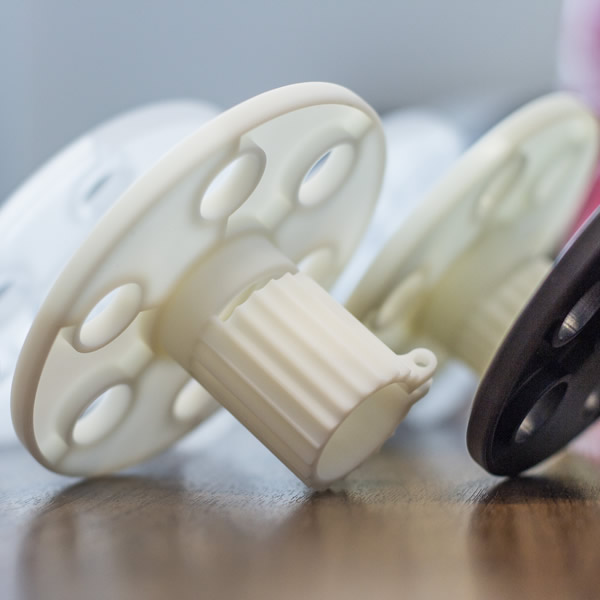
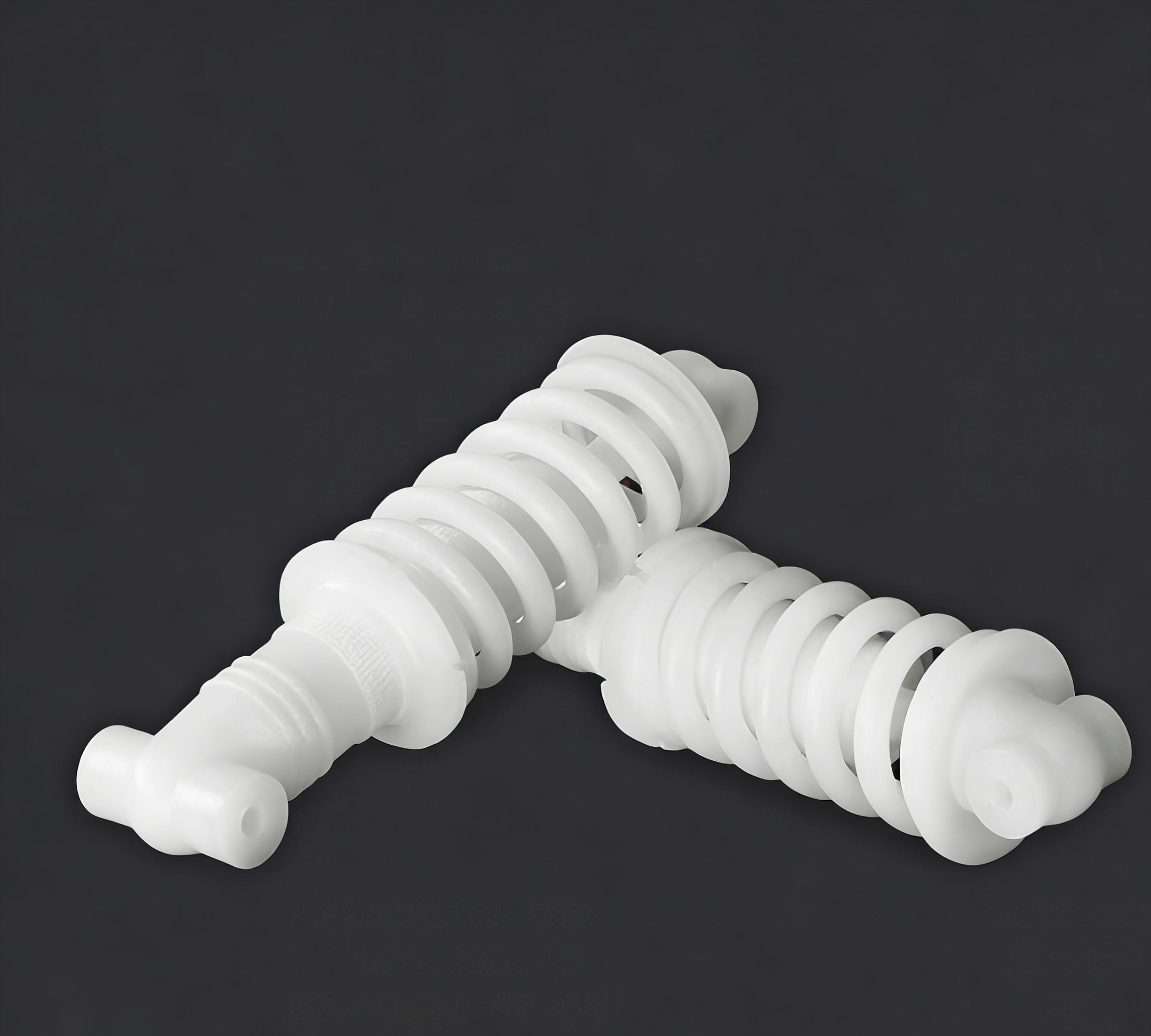
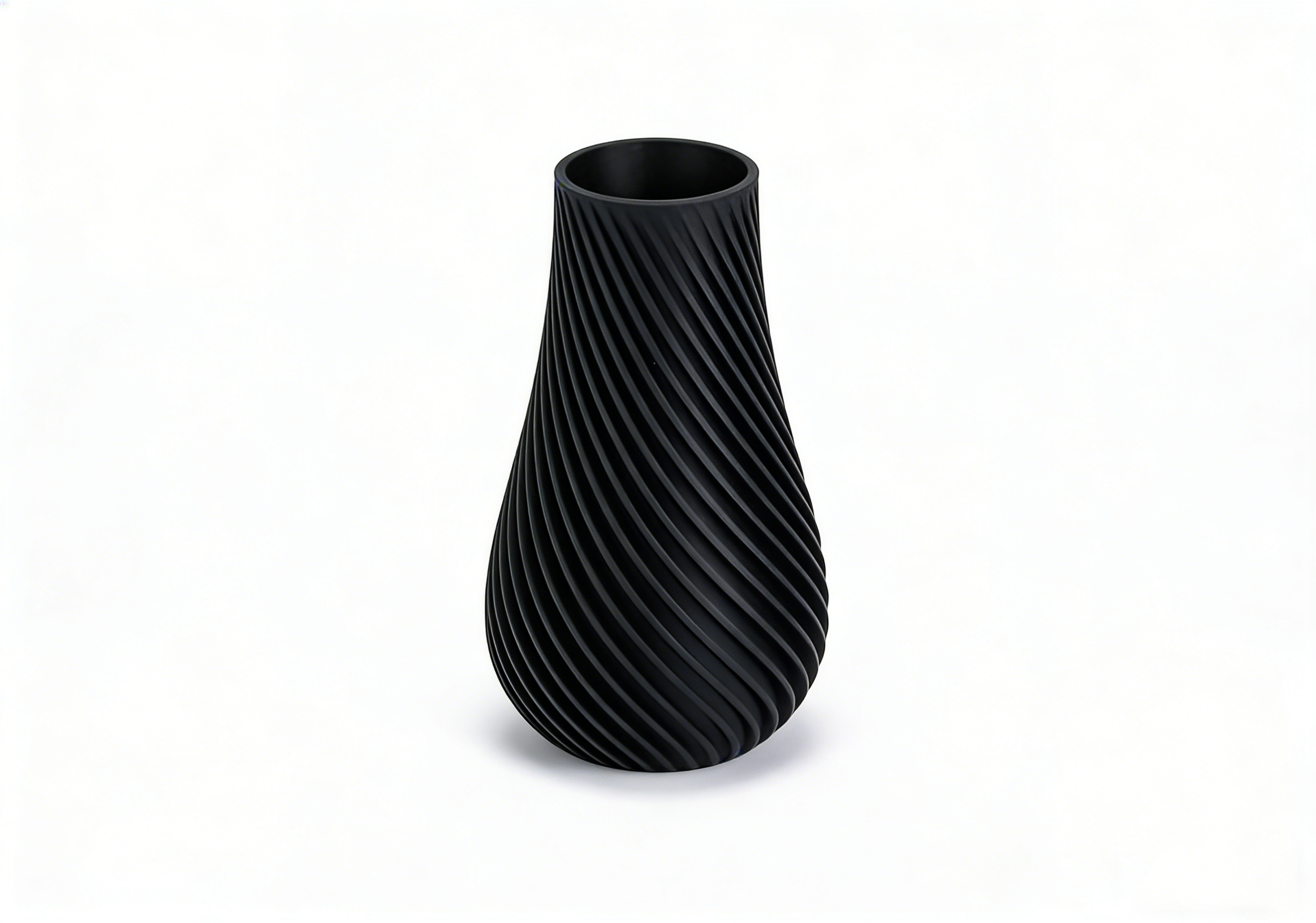
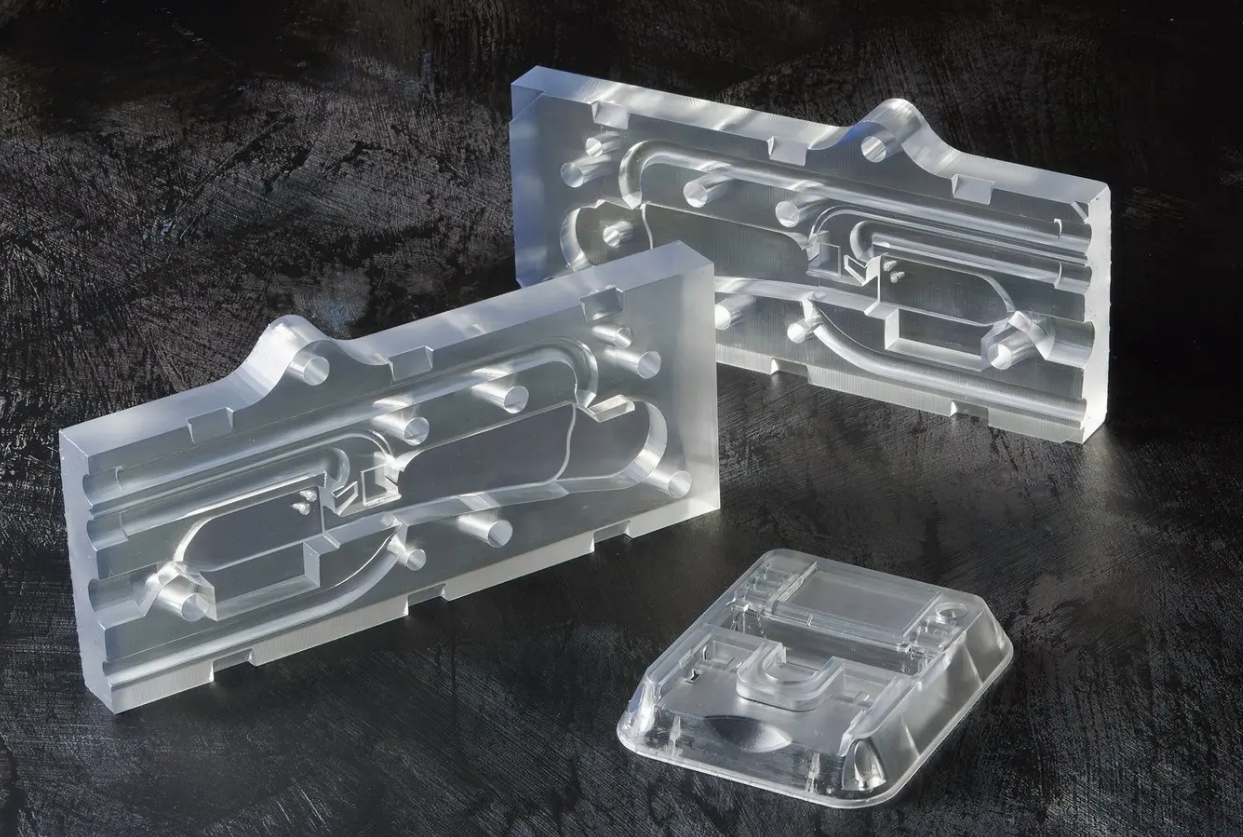
SLA 3D Printing Part Surface Finish Options
Ready to get started on your 3D printing quote?
Applications for Stereolithography
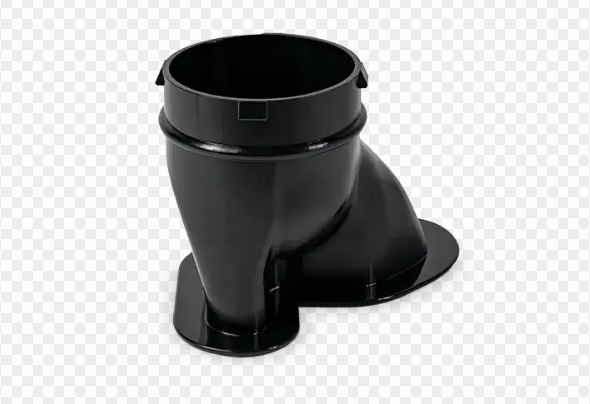
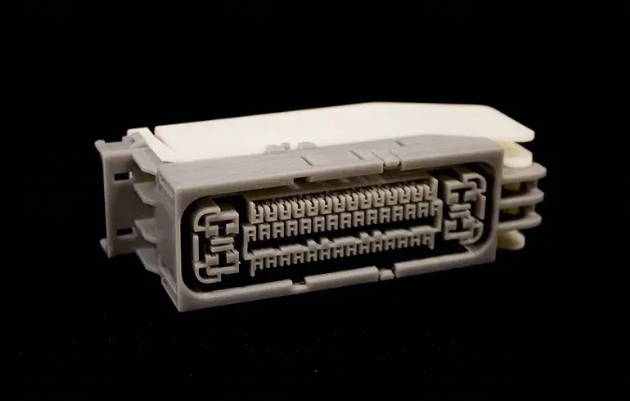
Concept Models
With SLA technology's high-speed response, precision advantages, and excellent surface finish, product developers can quickly obtain physical versions of design concepts for early validation and iterative optimization.
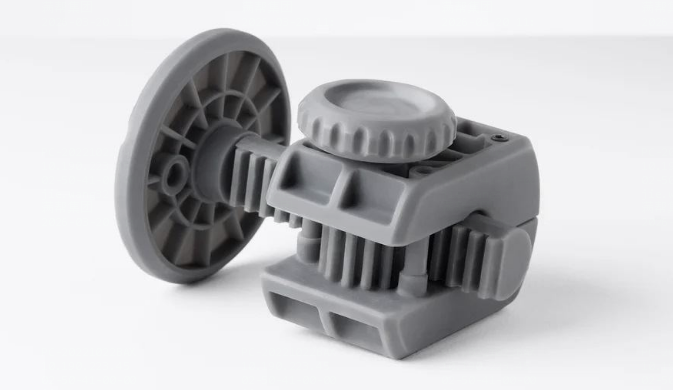
Rapid Prototyping
SLAprototypes are fully functional, with resin material options simulating polypropylene, polycarbonate, ABS, and rigid composites to meet diverse testing needs.
Direct Digital Manufacturing
SLAtechnology's high precision and good consistency make it an ideal choice for direct manufacturing of low-volume individual parts or customized products, capable of quickly responding to diverse production needs.
Advantages of SLA
Core Advantages of Stereolithography (SLA) 3D Printing
For 3D printed models requiring fine features and smooth surfaces, SLA is a technology direction worth prioritizing.KH-TAT's Stereolithography 3D Printing Services offers both standard and high-resolution options, suitable for fine part manufacturing, and can support product printing up to 29 inches or larger. SLA technology can produce complex features with good mechanical properties, commonly used for final assembly validation before injection molding.
Leveraging KH-TAT's manufacturing partner network, we can offer more material options than traditional 3D Printing Services providers, including various brand resins like Accura, Somos, and Formlabs.
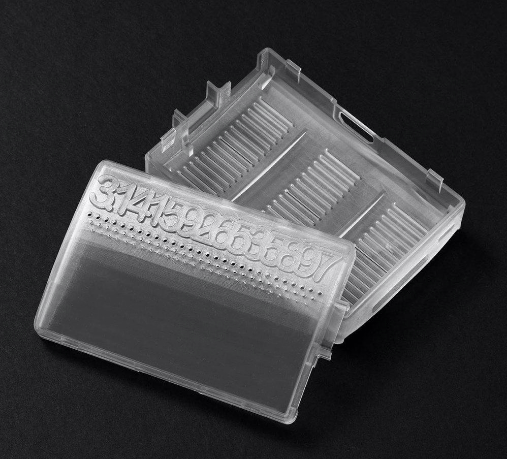
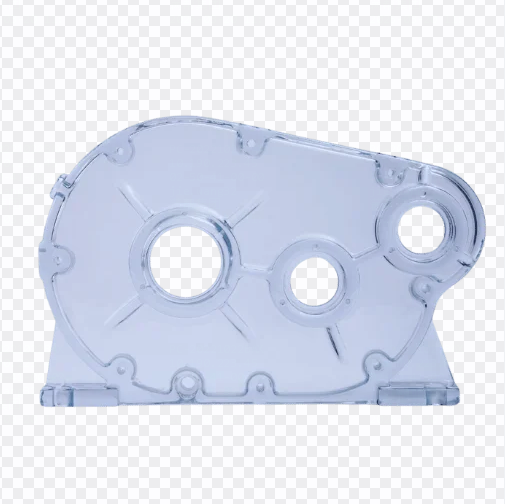
Excellent Surface Finish and Diverse Post-Processing Options
Strict Tolerance Control and High-Precision Detail Reproduction
High-Precision Forming of Complex Geometries
Curated Engineering Material System
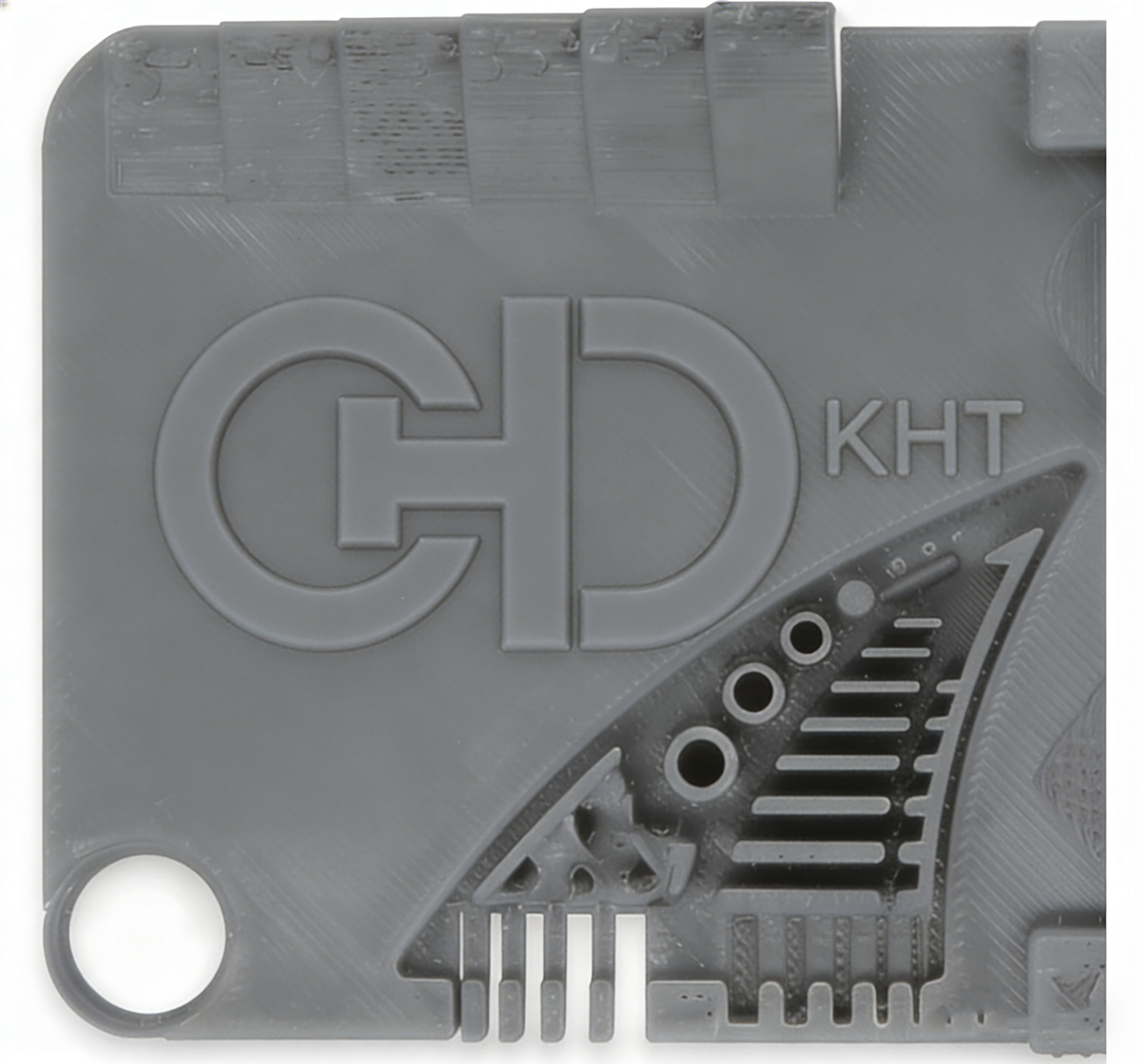
SLA General Tolerances
| Description | Standard Resolution | High Resolution | Formlabs Materials |
|---|---|---|---|
|
Build envelope |
Up to 29” x 25” x 21” |
10” x 10” x 10” |
13.5" x 7.5" x 7.5" |
|
Layer height |
.004" (100 microns) |
.002" (50 microns) |
.004" (100 microns) |
|
Tolerance, XY Plane |
±0.005” for the first inch is typical, plus ±0.002” per inch thereafter. |
±0.005” for the first inch is typical, plus ±0.002” per inch thereafter. |
±0.008" for the first inch is typical, plus ±0.003" per inch thereafter. |
|
Tolerance, Z Plane |
±0.010” for the first inch is typical, plus ±0.002” per inch thereafter. |
±0.010” for the first inch is typical, plus ±0.002” per inch thereafter. |
±0.012" for the first inch is typical, plus ±0.003" per inch thereafter. |
|
Minimum linear feature size |
Under .030” are at risk, and under .020” will not build. |
Under .020” are at risk, and under .010” will not build. |
Under .040" are at risk, and under .010" will not build. |
|
Minimum radial feature size |
.035" |
.030" |
.040" |
The table depicts the general tolerances for Xometry's stereolithography (SLA) services. Stresses during the build, support strategy, and other geometry considerations may cause deviation in tolerances and flatness. After completing a prototype build, improved tolerances may be possible with a manual quote review and must be approved on a case-by-case basis. General tolerances apply before secondary finishing or post-processing unless otherwise specified. Please check out Xometry's Manufacturing Standards for more information on tolerances per process.
Need to Compare Printing Processes?
Our quick reference guides let you quickly compare different 3D printing processes!
Stereolithography (SLA) 3D Printing Overview
How Stereolithography Works
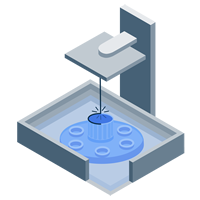
Stereolithography (SLA) is a photopolymerization-based additive manufacturing process, building 3D parts by selectively curing resin layer by layer through UV light exposure on a liquid photopolymer resin vat. UV light selectively cures the resin according to cross-sectional profiles defined in CAD files, matching design intent.
Support structures are automatically generated during pre-build setup and manually removed after printing. Finished parts are then washed in a solvent solution to remove uncured resin, and finally post-cured in a UV curing oven.
Standard SLA uses laser scanning of the resin surface; there are also Digital Light Processing (DLP) technology using projectors, and mask Stereolithography (mSLA) technology using LCD panels (such as Formlabs equipment), all of which are included in KH-TAT's service offerings.
KH-TAT's SLA 3D Printing Services offershigher resolution than many other 3D printing technologies, enabling customers to obtain parts with fine details and excellent surface finish. SLA technology is widely used in Prototyping and batch production scenarios, often serving as an effective supplement or alternative to injection molded parts.
StereolithographyIndustry Applications
With a wide range of applicable materials and fast delivery capabilities, even complex final-form parts can be efficiently realized. SLA technology has become an important tool in many manufacturing industries, primarily applied in automotive, consumer goods, and medical device engineering, cost-effectively producing complex parts with diverse surface finishes and fine details.
Depending on manufacturing requirements, parts can be stamped or engraved, with matte, natural, and other texture options available. SLA technology initially achieved significant results in automotive industryRapid Prototypingand design assistance, and is now gradually expanding to various mechanical modeling fields for larger-scale application deployment.
Why Choose kh-tat for SLA?

Unlimited Options
Choose from millions of combinations of materials, surface finishes, tolerance levels, marking methods, and certifications to flexibly match your order requirements for truly customized manufacturing.

Easy to Use
No need to handle procurement, project management, logistics, or shipping yourself — we handle everything, parts arrive directly at your door, letting you focus on your core business.

Quality Assurance
KH-TAT is Certified to ISO 9001:2015, ISO 13485, IATF 16949:2016, and AS9100D, ensuring every part meets strict industry standards and quality requirements.