General Manufacturing: Fit and Flexibility
- KH-TAT is not responsible for the fit of mating parts.
- KH-TAT is not responsible for the functionality of snap-fits, clips, or movable hinges.
SLS 3D Printing
- SLS Nylon 12 and its variants have a tolerance of ±0.015 inches, or ±0.002 inches per inch, whichever is greater. SLS Nylon 11 and its variants have a tolerance of ±0.020 inches, or ±0.003 inches per inch, whichever is greater.
- Parts with thicker, flatter, or wider geometries, or with uneven wall thickness, are prone to significant deviations or warping due to thermal shrinkage and stress variations.
- Threaded or precision features in the printed state may have limited functionality; tapping or the addition of threaded inserts is recommended.
- Manual quotation review can guarantee specific tolerance requirements, but each case must be approved.
- Unless otherwise specified, general tolerances apply to the state prior to secondary finishing or post-processing.
- Standard-sized holes can be drilled; holes smaller than 0.040 inches, irregular holes, or deep holes may shrink or sinter close.
- Front features smaller than 0.030 inches may not be fully formed or become very brittle.
- The surface roughness after printing is approximately 315-520 μin. Ra.
SLA 3D Printin
- Manual quotation review can guarantee specific tolerance requirements, but each case must be approved individually.
- Threads or precision features in the printed state may have limited functionality; subsequent tapping or the addition of threaded inserts is recommended for optimal functionality.
- Please refer to the specific specification table for tolerances of standard and high-resolution options.
- Unless otherwise specified, general tolerances apply to the state before secondary finishing or post-processing.
- The surface roughness after printing is approximately 60-120 μin Ra.
PolyJet 3D Printing
- The first inch of error is typically ±0.004 inches, and subsequent inch errors are ±0.002 inches.
- Protrusions smaller than 0.040 inches may not resolve completely, are extremely fragile, or may be damaged during post-processing. Feature sizes of 0.050 inches or larger are recommended.
- Shore A hardness values for rubbery materials are approximate; actual hardness may vary depending on geometry.
- Unless otherwise specified, general tolerances apply to the condition prior to secondary finishing or post-processing.
- Surface roughness is approximately 32-80 μin Ra.
HP MJF 3D Printing
- Parts with thick, flat, or wide geometries, or uneven wall thickness, are prone to significant deviations or warping due to thermal shrinkage and stress changes.
- Threads or precision features in the printed state may have limited functionality; tapping or adding threaded inserts is recommended.
- The color of the natural gray material may vary depending on feature size and forming direction; dyeing batches of parts black is recommended to ensure color consistency.
- The actual color of multi-colored parts may appear slightly duller than the digital model; KH-TAT cannot guarantee perfect color matching, and vapor smoothing can improve color vibrancy.
- To maintain surface quality, excessively thick designs can use a hollow structure, leaving unmelted powder inside the part.
- Unless otherwise specified, general tolerances apply to the state before secondary finishing or post-processing.
- Manual quotation review can guarantee specific tolerance requirements, but each case must be approved.
- Holes smaller than 0.040 inches or irregular deep holes may shrink or sinter closed.
- Front features smaller than 0.030 inches may not be fully formed or may become brittle.
- The surface roughness after printing is approximately 395-560 μin. Ra.
FDM 3D Printing
- The first inch tolerance is ±1/3 of the single-layer thickness, followed by ±0.002 inches per inch.
- For parts within the 14-inch x 16-inch range, use a 0.010-inch layer thickness; for parts exceeding this range, use a 0.013-inch layer thickness.
- Desktop FDM equipment uses a 0.008-inch layer thickness.
- The color and layer height of general-purpose FDM materials may vary depending on the supplier and equipment. For batch-to-batch consistency, it is recommended to use branded materials.
- Manual quotation review can guarantee specific tolerance requirements, but each case must be reviewed individually. Batch.
- Unless otherwise specified, KH-TAT selects the optimal build direction based on overall surface quality and minimum build time.
- Front features such as raised text smaller than 0.040 inches may not be fully rendered or may become brittle.
- Threads or precision features in the printed state may have limited functionality; tapping or adding threaded inserts is recommended.
- Holes smaller than 0.040 inches and horizontal holes may appear slightly elliptical due to interlayer step effects.
- Unless otherwise specified, general tolerances apply to the state before secondary finishing or post-processing.
- The surface roughness after printing is approximately 250-900 μm Ra.
DMLS 3D Printing
- The initial tolerance is typically ±0.005 inches, increasing to ±0.002 inches for each subsequent inch. However, KH-TAT does not guarantee tolerances for the first order of a new design, and tolerance expectations may vary depending on the material.
- Internal stresses, support strategies, and other geometric factors during manufacturing may cause deviations in tolerances and flatness.
- This process may not be suitable for parts and geometries requiring strict flatness.
- Threads or precision features in the printed state may have limited functionality; subsequent tapping or the addition of threaded inserts is recommended.
- Unless otherwise specified, general tolerances apply to the state prior to secondary finishing or post-processing.
- Protrusions smaller than 0.020 inches may not be fully formed or may become very brittle.
- The surface roughness after printing is approximately 200-1000 μm Ra.
Carbon DLS 3D Printing
- The initial tolerance is typically ±0.003 inches, increasing to ±0.010 inches for each subsequent inch. However, KH-TAT does not guarantee that the tolerances of the first order for a new design will meet requirements. Tolerance expectations may vary depending on the material.
- Internal stress, support strategies, and other geometric factors during manufacturing may cause deviations in tolerances and flatness.
- Parts with thicker, flatter, or wider geometries, as well as parts with uneven wall thickness, are prone to significant warping or dimensional deviations.
- Threads or precision features in the printed state may have limited functionality; subsequent tapping or the addition of threaded inserts is recommended. Achieve optimal functionality.
- After successful prototyping, a manual quotation review process can improve tolerance requirements, but approval is required on a case-by-case basis.
- Unless otherwise specified, general tolerances apply to the condition prior to secondary finishing or post-processing.
- Areas with support structures may show raised marks after support removal; these may be more pronounced in some materials.
- Raised features smaller than 0.030 inches may not be fully formed or may become very brittle.
- Features such as holes and slots smaller than 0.020 inches may be fully or partially closed.
- Post-printing surface roughness is approximately 40-80 μm Ra.
Metal Binder Jetting 3D Printing
- Depending on the size and geometry of the part, shrinkage after sintering may range from 0.8% to 2.5%.
- Internal geometries, such as slots and through-holes, may shrink by approximately 5%.
- KH-TAT does not guarantee tolerance compliance for the first order of a new design.
- After successful prototype manufacturing, tolerance requirements can be increased through a manual quotation review process, but each case must be evaluated and approved on a case-by-case basis.
- The metal binder jetting equipment prints with a layer thickness of 0.10 mm, and parts are typically aligned along the lowest Z-direction.
- Parts with feature dimensions smaller than 0.75 mm require appropriate thickening to ensure successful printing; the minimum feature dimension should be greater than 1 mm.
- Threads or precision features integrated into the model may have limited functionality after printing; subsequent machining or the addition of threaded inserts is recommended.
- Parts that have undergone tumble polishing may have polishing media particles trapped in small gaps or between text features.
- Unless otherwise specified, general tolerances apply to the state before secondary finishing or post-processing.
- The surface roughness in the printed state is approximately 120-315 μin Ra.
Polyurethane casting
- Tolerances are typically ±0.010 inches or ±0.003 inches per inch, whichever is greater. Irregular or excessively thick geometries may result in dimensional deviations or deformation due to shrinkage.
- Due to the thermal expansion of the liquid and the responsive characteristics of the flexible mold, shrinkage is expected to be +0.15%.
- Surface finishes are externally polished, resulting in a satin or matte finish. Growth lines may be present in internal or hard-to-reach areas. Polishing or custom surface finishes must be clearly defined and agreed upon at the time of ordering.
- Sharp corners and lettering features may be slightly rounded.
Tube Bending
- By default, the cut edge is perpendicular to the surface. Non-perpendicular cutting must be agreed upon when ordering.
- Tube bending is manufactured using rotary drawing or mandrel bending techniques. Compression bending, roll bending, and free bending methods must be agreed upon at the time of ordering.
- Tube thickness tolerance is independent of cutting tolerance and depends on the raw material tolerance range.
- The centerline radius will be matched with the nearest universal tool, not exceeding ±0.25 inches of the design value.
- Wall thickness deviation at the bend is normal, as the material is on the outside of the bend. Caused by stretching and internal compression. The amount of stretching depends on the bending process and material grade.
- Edge-to-edge tolerance of laser-cut features on the inner surface of the tube is ±0.010 inches.
- Tolerances for each feature in the bend are cumulative.
- Bending angle tolerance ±1 degree, rotation angle tolerance ±2 degrees, segment length tolerance ±0.030 inches.
- Overall end-to-end coverage tolerance not exceeding ±0.125 inches, end-to-end fit tolerance ±0.063 inches.
- Ovality at the bend should not exceed 10% of the average of the measured outer diameter and the nominal outer diameter.
- Holes with a diameter of 0.100 inches or smaller may be slightly larger than standard tolerances. Holes requiring drilling or precision machining must be manually inspected.
- Minor material protrusions or varying edge conditions may occur at the entry and exit points of the cutting profile.
- Larger burrs and lugs will be removed, but not completely by hand; standard post-cut surface treatment will be used.
- Slight halo discoloration may occur in the cut material due to spatter near the cut edge.
- Die marks on curved lines less than 1/32 inch are acceptable; sharp edges should be removed and aligned with the surrounding surface. Smooth transition between adjacent surfaces.
Slight "non-circular" deformation may occur on the straight sections between bends. This may also occur when the distance from the pipe end to the tangent at the bend end is less than the nominal outer diameter plus 1 inch.
All pipe bends should be free of wrinkles and creases.
Discoloration of the pipe may be due to localized heat treatment to correct the bend angle; slight dimensional deviations are acceptable.
The inside of the pipe should be free of debris, metal shavings, dirt, etc. Pipe ends may be capped before shipment to prevent foreign matter from entering.
Unless otherwise specified, the pipe is shipped without external anti-corrosion treatment or painting.
Laser Tube Cutting
- By default, the cut edge is perpendicular to the surface. If a non-perpendicular cut angle is required, it must be agreed upon when placing the order.
- Thickness tolerance is independent of cutting tolerance and depends on the tolerance range of the raw material.
- Edge-to-edge tolerance for laser-cut features on the inner surface of the tube is ±0.010 inches.
- Holes with a diameter of 0.100 inches or smaller may have dimensions slightly larger than the standard tolerance due to the impact of perforation. Holes requiring drilling or precision machining require manual review.
- Minor material protrusions or varying edge conditions may occur at the entry and exit points of the cutting profile.
- Larger burrs and lugs will be removed, but parts will not undergo complete manual deburring; standard post-cut surface treatment will be used.
- Slight halo discoloration may occur in the cut material near the cut edge due to spatter or splashes.
Metal Stamping
- All quotations are based on the following assumptions: the design has sufficient draft angle, radius, decompression groove, and feature set to facilitate manufacturing in this process.
- Critical functional tolerances should be discussed in the quotation to ensure tooling strategies, inspection gauges, and other quality control measures are included.
- Raw materials such as coils inherently possess unevenness, which may manifest as marks on flat stampings or die castings.
- Dimensions refer to the internal dimensions of the formed features.
- Angular tolerances are typically ±1 degree.
- Stamped parts should be free of cracks and other forming defects.
- Stamping and die-cut features will have straight walls, with a small burr at the bottom edge approximately 1/4 to 1/3 of the wall thickness.
- Larger burrs and lugs will be removed, but parts will not undergo complete manual deburring before shipment; instead, standard post-cut surface treatment methods will be used.
- Linear dimensions of internal holes should be measured at the minimum cross-section of the sheared surface or cutting feature.
- Die marks are a normal phenomenon in metal forming processes and can be reduced through secondary processing or optimization of die strategies. Identifying appearance features using the KH-TAT system is crucial during the quotation or project initiation phase.
- Material thickness varies during forming and stretching features.
- Part repeatability is typically less than ±0.004 inches.
Sheet Metal Fabrication
- For edge-to-edge and other cutting tolerances, please refer to sheet metal cutting standards.
- Sharp edges will be chamfered and deburred by default. Critical areas where sharp edges must be retained should be indicated on the drawings.
- Certain special sheet metal designs require custom molds and therefore require a quote, such as: hemming, flanging, rolled sheet metal, stampings, and welded assemblies. If your parts contain these features, please allow our quote team to review them to provide you with accurate costs and lead times.
Sheet metal cutting standards
- Thickness tolerances are independent of cutting tolerances, as they depend on the tolerance range of the raw material.
- Edge-to-edge tolerance of the sheet metal top surface is ±0.010 inches.
- Due to the inherent taper effect of laser cutting and waterjet cutting, thicker materials may exhibit dimensional deviations on the bottom surface.
- KH-TAT cannot guarantee the flatness of the sheet metal material being cut, unless it is ground or die-grade sheet metal.
- Holes with a diameter of 0.100 inches or smaller may have top surface dimensions slightly larger than the standard tolerance due to the tool piercing near the cutting line.
- Introducing the cutting profile... Due to variations in the location of the cut, small bumps or depressions may appear on the material surface, or there may be differences in edge condition.
Pre-processed or pre-textured sheets, such as brushed or polished sheets, may only have the desired finish on one side.
Cut products may be shipped with a protective film to prevent damage to the surface during transportation.
The edges of cut sheets may exhibit vertical stripes rather than smooth edges, which can affect the optical transparency of waterjet-cut transparent plastic edges.
Some cut material may exhibit slight halo discoloration near the cut edges due to splashing or over-spraying.
Our Manufacturing Standards
Manufacturing Standards
Products ordered through KH-TAT will meet the following minimum manufacturing standards. If your project requires a higher level of manufacturing, please specify the requirements in your engineering drawings, purchase orders, or specifications.
Finished Surface Appearance Requirements
- The surface coating will be uniform and consistent, including adjacent material surfaces of components.
- Finished surfaces will be free of defects, including notches, scratches, or other visible damage.
- Parts manufactured using sheet metal cutting and machining processes have different appearance standards; please refer to the relevant sections for details.
- Milling Steps, Tool Marks, and Chimney Marks
- Milled surfaces should be free of defects, including burrs, chimney marks, overcutting, etc., and meet the specified surface roughness requirements.
- Critical surfaces indicated on the drawings should be completely free of milling steps and obvious machining marks.
- All milled surfaces must meet surface roughness specifications.
- Notches, Burrs, and Sharp Edges
- All exposed edges must be deburred to ensure no sharp edges or metal chips.
- Unless otherwise specified in the selected surface treatment, parts manufactured using sheet metal cutting processes are not deburred by default.
- Foreign Object and Debris Control: The surface of the parts should be free of cutting fluid residue, metal shavings, foreign matter, and other process debris to ensure cleanliness meets requirements.
- Thread Requirements: Threads should be fully formed and machined to the dimensions and grades specified in the drawings.
- Thread surfaces should be free of defects, obvious damage, and contaminants.
- Coating Surface Requirements: The coating surface should be uniform and cover adjacent surfaces of the component.
- The coating surface should be free of machining marks, scratches, pits, protrusions, or visible exposed substrate.
- In some cases, minor defects that do not affect protective performance are acceptable.
- Weld Joint Requirements: Weld joints should be welded according to the customer-provided drawings.
- For welds without special requirements, slag and other surface contaminants must be removed.
- Weld joints should only be painted after welding is completed and the weld inspection is passed.
Countersunk Hole Requirements:
Countersunk holes should be perfectly round, manufactured to drawing specifications, and ensure a good fit with the matching screws.
The countersunk hole surface should be free of burrs, chatter marks, or other tooling defects.
Painted Surface Requirements:
The painted surface should maintain a uniform and continuous gloss effect.
The painted surface should be free of visible machining marks, scratches, wear, dust particles, fisheyes, orange peel texture, or exposed metal.
The painted surface should be inspected according to this standard at 1x magnification at an 18-inch distance.
Support Surface Requirements:
Unless otherwise specified, KH-TAT's additive manufacturing technicians will determine the support orientation and layout of the part to optimally balance product design requirements, manufacturing costs, and the impact of the support structure.
Processes requiring support structures may leave traces at support connections. Depending on the process, these traces can be reduced through secondary treatments such as grinding.
CNC Machining and Turning Standards
- For dimensional and positional features, unless otherwise specified, metal parts are subject to tolerances of ±0.005 inches, and plastic and composite parts are subject to tolerances of ±0.010 inches.
- Machining results in a surface roughness of Ra 125 or higher; machine marks may leave a swirling pattern.
- Sharp edges are chamfered and deburred by default; critical areas where sharp edges must be retained should be indicated on the drawings.
- Transparent plastics may have a matte or translucent swirl finish after machining; sandblasting will leave a uniform frosted texture on transparent plastic surfaces.
- KH-TAT cannot guarantee dimensional tolerances for foam or similar compressible materials.
- Unless otherwise agreed in the quotation, general tolerances for orientation and shape features, including parallelism, perpendicularity, cylindricity, concentricity, flatness, roundness, and straightness, are performed according to the relevant standards.
Learn More About CNC Machining
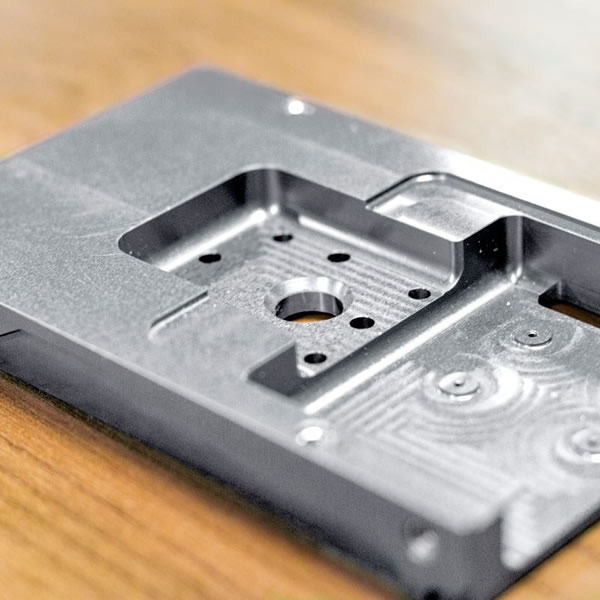
Custom Online CNC Machining Services
Instant quotes on custom metal and plastic machined parts | Quick turn prototypes and production parts in days | Free standard shipping on all US orders | International prototype pricing includes tariffs | ISO 9001:2015, ISO 13485, IATF 16949:2016, AS9100D certified. ITAR registered.
Die Casting Standards
- Typical mold machining tolerances are ±0.010 inches, with an additional ±0.001 inches added per inch when calculating shrinkage.
- Customers may request higher molding tolerances, but this may increase mold costs. Many stringent tolerances require mold manufacturing, sampling, and finishing. KH-TAT will perform post-machining on critical features until requirements are met.
- Critical tolerance features and surface finishes may require post-machining. Please specify this in the quotation before placing an order. Post-machining features will follow KH-TAT's CNC machining standards.
- KH-TAT will produce die castings based on the net-form model provided by the customer. These models must include sufficient machining allowance for subsequent processing. It is recommended that customers provide both the as-cast 3D model and the final model, along with all relevant technical drawings.
- Part repeatability is typically less than ±0.004 inches.
- As-cast surface roughness The surface finish is typically 64 μin. Standard die-cast surface finish is as-cast; a specific Ra value cannot be guaranteed without additional machining.
- Delivery time refers to the first piece shipment date. The remaining production cycle will be confirmed after the first piece is accepted.
- Initial shipments are typically five pieces, but may vary depending on size, origin, and material.
- All quotations are based on the assumption that the design has sufficient draft angle, radius, and core to meet manufacturing requirements.
- Unless otherwise explicitly stated, the mold core, side action, and tooling strategy are determined by KH-TAT.
- Unless otherwise explicitly agreed, the gating system, ejector location, weave line, and parting line are determined by KH-TAT.
- The parting line on a die-cast part appears as a thin ridge running through the part.
- Castings may have one or more gate marks, which will be trimmed or ground down.
- Circular, flat ejector pin marks will remain on the die-cast part.
Learn More About Die Casting
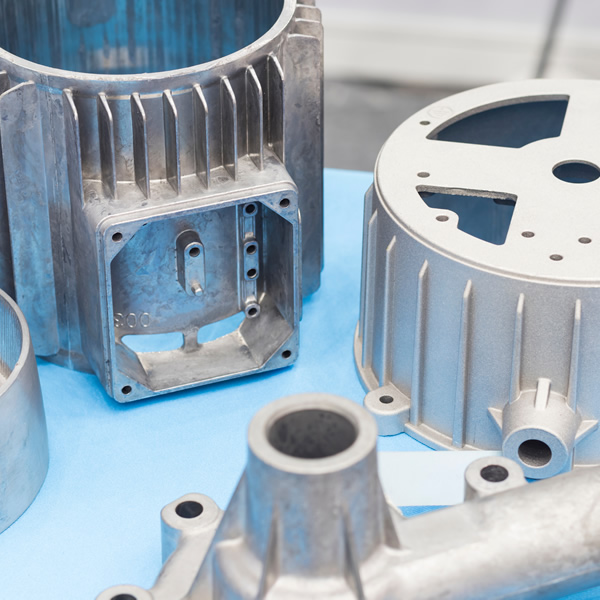
Custom Die Casting Services
Custom aluminum and zinc die casting for complex metal parts | Cost-effective tooling and rapid, scalable production | ISO 9001:2015, ISO 13485, IATF 16949:2016, AS9100D certified. ITAR registered.
Metal Extrusion Standards
- All quotations are based on the assumption that the design has sufficient wall thickness, radius, and feature set to facilitate manufacturing.
- Critical functional tolerances must be discussed and confirmed during the quotation process to ensure that tooling strategies, inspection gauges, and other quality control measures are included in the quotation.
- Linear cross-sectional dimension tolerances are the greater of ±0.010 inches or ±0.006 inches per inch, except for wall thickness.
- Wall thickness tolerance is ±10% of the specified dimension.
- External corner section angle tolerance is ±1 degree, and internal corner section angle tolerance is ±2 degrees.
- Critical tolerance features and surface finishes may require post-processing. Please specify this in the quotation before placing the order. Post-processing features will follow KH-TAT CNC machining standards.
- The customer-provided model must include material allowance suitable for subsequent processing. It is recommended to provide both the extrusion 3D model and the final model, along with all relevant technical drawings.
- The surface roughness of extrusion features is 125 μin. Ra.
- Typically, the torsion angle per 12 inches of length shall not exceed 0.5 degrees.
- Straightness tolerance shall not exceed 0.0125 inches per 12 inches of length.
- The minimum radius of sharp corners shall be 0.016 inches.
- When the corner radius is less than or equal to 0.188 inches, the standard tolerance is ±0.016 inches; when the corner radius is greater than 0.188 inches, the tolerance is ±10%.
Learn More About Injection Molding
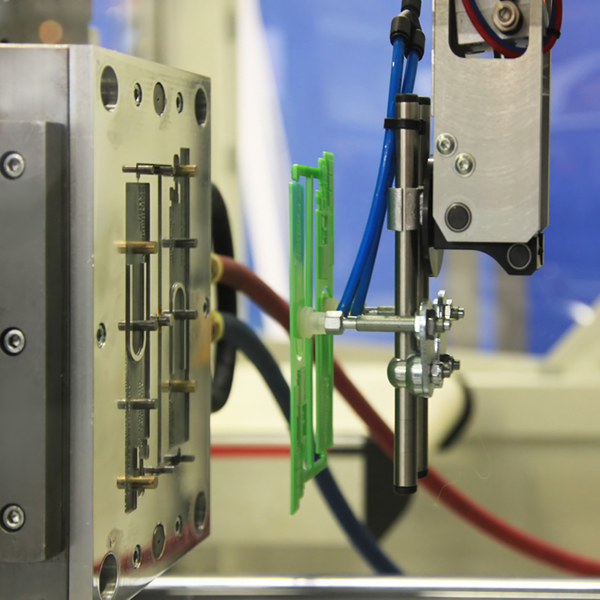
Custom Plastic Injection Molding Services
Instant injection molding quotes for plastic molded parts | Full-service from prototype to production runs | Virtually endless material and finishing options | Expert engineering reviews and project management included with every order
Plastic Injection Molding Standards
- Typical mold processing tolerances are ±0.005 inches, with an additional ±0.002 inches per inch added when calculating shrinkage.
- Customers can request tighter tolerances, but this may increase mold costs. Many tight tolerances require mold manufacturing, sampling, and finishing. KH-TAT will perform post-processing on critical features until requirements are met.
- Part repeatability is typically less than ±0.004 inches.
- The selected lead time refers to the first-piece shipment lead time. The remaining production lead time will be confirmed after the first piece is accepted.
- The initial shipment is typically 10 pieces, but this may vary depending on size, origin, and material.
- KH-TAT cannot guarantee a perfect match with Pantone color charts.
- All quotations are based on the assumption that the design has sufficient draft angle, radius, and core to meet manufacturing requirements.
- Unless otherwise expressly stated, the mold core, side action, and tooling strategy are determined by KH-TAT.
- Unless otherwise expressly agreed, the gating system, ejection location, weave line, and parting line are determined by KH-TAT.
Learn More About Metal Extrusion
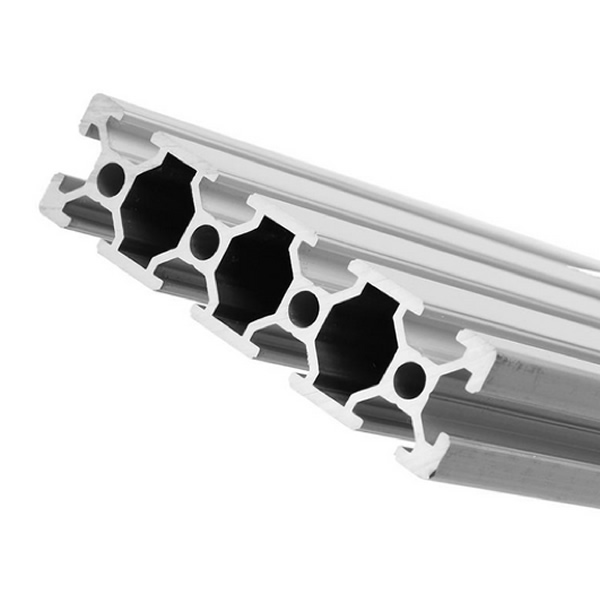
Metal Extrusion Services
High Quality, Low Cost Metal Extrusions With Xometry.
Plastic Extrusion
- All quotations are based on the following assumptions: the design has sufficient wall thickness, radius, and feature set to facilitate manufacturing in this process.
- Critical functional tolerances should be discussed in the quotation to ensure that tooling strategies, inspection gauges (if applicable), and other quality controls are included.
- Critical tolerance features and surface finishes may require post-processing; please specify these in the quotation before ordering. Post-processing features will follow KH-TAT's plastic CNC machining standards.
- The customer-supplied model must include sufficient material allowance for subsequent processing. KH-TAT recommends providing the extruded 3D model and final model along with all relevant technical drawings.
- Wall thickness is typically ±10% of the specified dimension.
- Angular tolerances are typically ±3 degrees for rigid materials and ±5 degrees for flexible materials.
- Twist angles are typically no more than 0.5 degrees per 12 inches of length. Radius and curvature are no more than 0.025 inches per 12 inches of length.
- The surface roughness of plastic extrusions will reach Ra 125. μin or better.
- The radius of sharp corners must be at least 0.016 inches.
- Unless otherwise agreed, the number of cavities within the extrusion tube will be limited to four.
- The dimensions inside the cavities are difficult to control, and the required tolerances are much larger than the standard tolerance range.
Learn More About Plastic Extrusion

Custom Plastic Extrusion Services
High Quality, Low Cost Custom Plastic Extrusions With Xometry